Libre Computer Project Single Board Computers: 8 Picks Ranked by Specs
As an Amazon Associate we earn from qualifying purchases. Links on this page are affiliate links.
Choosing a Libre Computer Project single board computer gives you access to low-power ARM architecture, standalone boards, and expansion storage. Available hardware spans 1GB to 4GB memory configurations, physical footprints ranging from compact 3.5-inch boards up to Raspberry Pi 3 form factor sizes, and multi-unit packs.
The Libre Computer 128GB eMMC 5.x Module ranks as the top pick because it provides fast storage upgrades on compatible boards with read speeds up to 250MB/s. This guide compares 8 products evaluated strictly against the specifications published on their listings to help you find the right fit.
Quick picks
Our 8 picks
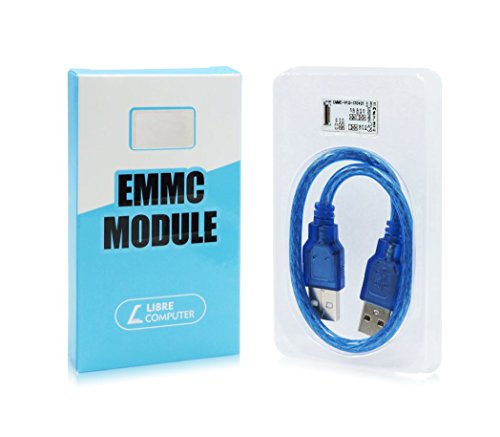
Libre Computer 128GB eMMC 5.x Module
Best for: fast storage upgrades on compatible boards
- Storage
- 128GB eMMC 5.x
- Operating System Support
- Linux, Android
This is an eMMC 5.x flash storage module designed for compatible Libre Computer boards. It provides 128GB of high-endurance storage with sequential speeds reaching up to 250MB/s read and up to 125MB/s write. You get up to 10K random 4K block performance, outperforming standard MicroSD cards for operating systems. It works across u-boot, Linux, and Android. It suits you if you need reliable onboard storage for sensitive workloads.
Pros
- Up to 250MB/s read and up to 125MB/s write speeds
- 128GB capacity built on the eMMC 5.x standard
- Up to 10K random 4K block performance
- Supported upstream across u-boot, Linux, and Android
Cons
- Storage add-on module rather than an independent computer board
- Write speed is limited to 125MB/s
Good fit if
- You own a Libre Computer board that supports the eMMC 5.x standard
- You need faster random I/O performance than standard MicroSD media allows
Skip if
- You need a complete single-board computer with processor and ports
- You require sustained write throughput higher than 125MB/s
Verdict: Libre Computer 128GB eMMC 5.x Module provides high-endurance, low-latency storage for compatible host boards. It offers up to 250MB/s read throughput without requiring an external USB bridge.
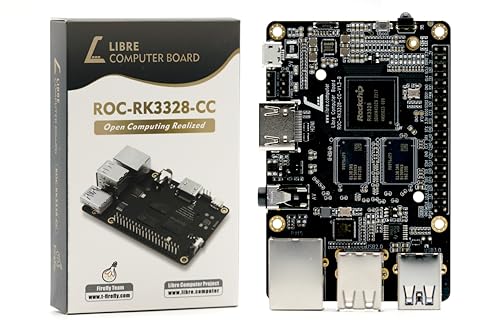
Libre Computer Renegade 4GB Single Board Computer
Best for: wired network storage and headless server builds
- Processor
- Quad 64-bit ARM Cortex-A53
- RAM Type
- DDR4
- Ethernet
- Gigabit Ethernet
- Video Resolution
- 4K 60FPS
- Operating System Support
- Ubuntu, Debian, Raspbian, Linux
View on Amazon: Libre Computer Renegade 4GB Single Board Computer
The Libre Computer Renegade 4GB Single Board Computer gives you a quad-core 1.4GHz ARM Cortex-A53 processor paired with 4GB of memory. It features Gigabit Ethernet and a 5Gbps USB 3.0 port for fast local networking and data transfers. Designed for network storage, micro-servers, and Linux utility builds, this board suits you if you need wired network speed and standard 40-pin header expansion without integrated wireless hardware.
Pros
- Dedicated Gigabit Ethernet interface
- High-speed 5Gbps USB 3.0 port
- 40-pin header compatible with Raspberry Pi pin functions
- eMMC module expansion slot and UHS Micro SD support
- 4K 60fps hardware decoding for H.265, H.264, and VP9
Cons
- No onboard Wi-Fi or Bluetooth hardware
- Raspberry Pi OS images require conversion software before booting
Good fit if
- You need wired Gigabit networking for a home server or NAS setup.
- You plan to connect external storage using USB 3.0 or an eMMC module.
- You prefer wired Ethernet connections over wireless interfaces.
Skip if
- You require built-in Wi-Fi or Bluetooth connectivity out of the box.
- You need out-of-the-box compatibility with standard Raspberry Pi software images.
Verdict: Libre Computer Renegade 4GB Single Board Computer delivers dependable Gigabit Ethernet and USB 3.0 throughput for compact home servers and network appliances. Its lack of onboard wireless keeps the board focused strictly on wired performance.

Libre Computer Tritium 1GB Quad-Core Board
Best for: open-source upstream Linux IoT projects
- RAM Capacity
- 1GB
- Operating System Support
- Ubuntu, Debian, Raspbian, Armbian
The Libre Computer Tritium is a quad-core single-board computer equipped with 1GB of memory and a Raspberry Pi-compatible GPIO interface. You get broad open-source operating system support, running Ubuntu, Debian, Raspbian, or Armbian without mandatory proprietary boot blobs. It suits developers and makers who need an upstream Linux-supported board for IoT appliances and light compute tasks without proprietary driver dependencies.
Pros
- Upstream Linux and u-boot support without proprietary boot blobs
- Raspberry Pi-style GPIO interface and form factor
- First-party and third-party images for Ubuntu, Debian, Raspbian, and Armbian
- Quad-core processing platform
Cons
- 1GB memory capacity
- Hardware availability timeline listed through 2023
- No onboard wireless connectivity listed in specifications
Good fit if
- You require upstream Linux and u-boot support without proprietary binary blobs.
- You are migrating projects using a standard Raspberry Pi GPIO interface.
- You deploy IoT applications on distributions like Ubuntu, Debian, or Armbian.
Skip if
- You need more than 1GB of system RAM for your workload.
- You require integrated Wi-Fi or Bluetooth hardware on the board.
Verdict: Libre Computer Tritium 1GB Quad-Core SBC provides strong upstream open-source software support and standard GPIO compatibility for embedded setups. It serves reliable open-source IoT deployments that fit within a 1GB memory limit.
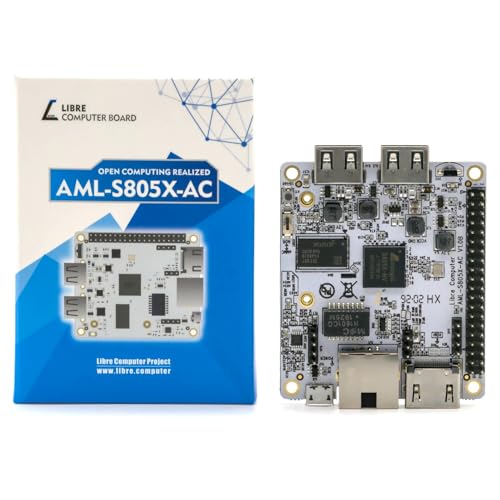
Libre Computer La Frite 1GB SBC
Best for: low-power embedded Linux and media decoding
- Processor
- Quad 64-bit ARM Cortex-A53
- RAM Capacity
- 1GB
- RAM Type
- DDR4
- Operating System Support
- Ubuntu, Debian, Raspbian
- Dimensions
- 3.5 × 2.5 × 0.75 inches
The Libre Computer La Frite 1GB SBC is a compact single-board computer built around a quad-core 1.2GHz ARM Cortex-A53 processor and 1GB of DDR4 memory. It draws 2W under standard loads and features hardware decoding for H.265, H.264, and VP9 video formats. You also get a 40-pin header and an eMMC expansion connector. This board fits basic headless setups, lightweight media tasks, and low-power embedded projects that need minimal electricity.
Pros
- Low 2W power consumption in standard operating scenarios
- Hardware video decoding support for H.265, H.264, and VP9
- Standard 40-pin header with Raspberry Pi pin compatibility
- Quad-core 1.2GHz 64-bit ARM processor paired with DDR4 RAM
Cons
- Limited to 1GB of system RAM
- No onboard eMMC flash storage included
Good fit if
- You need an energy-efficient board drawing around 2W for continuous tasks.
- You want dedicated hardware decoding for H.265 and VP9 video streams.
- You plan to run official Debian 12 or Ubuntu LTS ARM distributions.
Skip if
- You require more than 1GB of RAM for memory-heavy workloads.
- You need integrated flash storage rather than adding a separate card or module.
Verdict: Libre Computer La Frite 1GB SBC delivers an ultra-low 2W power profile and hardware-accelerated video decoding in a compact form factor. It is a dependable pick for basic headless services and lightweight embedded Linux deployments.
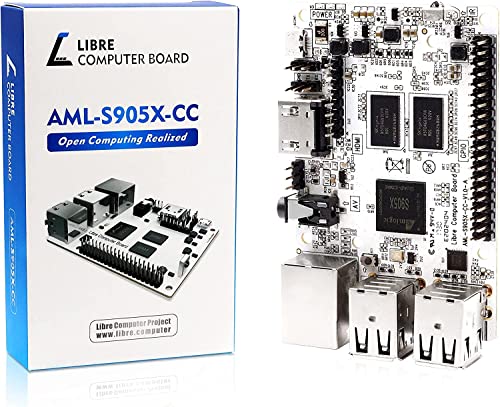
Libre Computer Le Potato 2GB 2-Pack
Best for: dual-node Linux setups and media playback
- Processor
- AML-S905X-CC ARM Cortex-A53
- RAM Capacity
- 2GB
- RAM Type
- DDR3
- Video Resolution
- 4K 60FPS
- Operating System Support
- Ubuntu 22.04 LTS, Raspbian 11
- Dimensions
- 8 × 5 × 1.5 inches
This package provides two single board computers built around a 1.5GHz quad-core Cortex-A53 processor and 2GB of DDR3 memory. Designed to match the Raspberry Pi 3 Model B form factor, each board shares identical 40-pin header layouts for pin compatibility. With 4K 60 frames per second multi-codec hardware decoding and UEFI GRUB support, it fits you if you need reliable low-power Linux hardware for dual-node setups.
Pros
- Quad-core 1.5GHz 64-bit ARM Cortex-A53 CPU with Mali-450 GPU
- 4K 60FPS hardware decoding for H.265, H.264, and VP9
- Form factor and 40-pin header match Raspberry Pi 3 Model B
- Supplies two complete 2GB boards in a single bundle
Cons
- Uses DDR3 memory rather than newer DDR4
- No integrated Wi-Fi or Bluetooth interfaces listed
- Memory capped at 2GB per board
Good fit if
- You need two matching low-power boards for multi-node Linux installations.
- You want to reuse existing Raspberry Pi 3 cases and 40-pin accessories.
- You require hardware-accelerated 4K 60FPS video decoding.
Skip if
- You need more than 2GB of RAM for memory-intensive applications.
- You require built-in wireless networking out of the box.
Verdict: Libre Computer Le Potato 2GB SBC 2-Pack provides two quad-core boards featuring Raspberry Pi 3 form factor compatibility and 4K hardware video decoding. It is a practical dual-unit choice for low-power Linux development and media playback.

Libre Computer Renegade 4GB SBC
Best for: compact network storage and media playback setups
- Processor
- ROC-RK3328-CC
- RAM Capacity
- 4GB
- RAM Type
- DDR4
- Ethernet
- Gigabit Ethernet
- Wireless Connectivity
- WiFi 5 BT4
- Video Resolution
- 4K 60FPS
This single board computer pairs a quad-core 1.4GHz ARM Cortex-A53 processor with 4GB of memory and WiFi 5 connectivity. You get Gigabit Ethernet, a 5Gbps USB 3 port, and 4K 60FPS hardware video decoding via the Mali-450 GPU. It suits you if you need a compact Linux board for network storage, media decoding, or headless server tasks requiring gigabit networking and wireless data.
Pros
- Gigabit Ethernet and 5Gbps USB 3 connectivity
- WiFi 5 and Bluetooth 4 wireless support
- 4K 60FPS hardware video decoding for H.265, H.264, and VP9
- 40-pin header compatible with Raspberry Pi alternate functions
Cons
- No onboard RF emitters; relies on external USB adapter for wireless
- Raspberry Pi software images require conversion before booting
Good fit if
- You need Gigabit Ethernet paired with USB 3 data speeds.
- You plan to run 4K video playback on Linux distributions.
- You use eMMC storage modules or UHS Micro SD cards.
Skip if
- You require built-in onboard WiFi without an external dongle.
- You want out-of-the-box support for unmodified Raspberry Pi software.
Verdict: Libre Computer Renegade 4GB SBC with WiFi 5 provides high-bandwidth USB 3 and Gigabit Ethernet for compact server setups. You will need to use conversion utilities if you plan to migrate existing Raspberry Pi images.

Libre Computer Sweet Potato 2GB SBC
Best for: low-power 24/7 servers and 4K media playback
- RAM Capacity
- 2GB
- Video Resolution
- 4K 60 FPS
- Operating System Support
- Fedora 42, Debian 13, Ubuntu 24.04 LTS
- Architecture
- ARM
- Dimensions
- 4.75 × 3 × 1 inches
The Libre Computer Sweet Potato 2GB SBC is an ARM-based single board computer built for continuous operation. You get 2GB of memory, a 1W idle draw, and hardware-accelerated 4K 60 FPS decoding across H.264, H.265, and VP9. It includes a UEFI BIOS that boots from MicroSD, eMMC, or USB storage. This board suits you if you need a dedicated media playback device or an efficient always-on server.
Pros
- Low 1W idle power draw designed for continuous operation
- Hardware-accelerated 4K 60 FPS decoding for H.264, H.265, and VP9
- UEFI BIOS supports booting via eMMC, MicroSD, and USB drives
- Standard USB Type-C power input providing up to 2A for peripherals
Cons
- Wi-Fi and Bluetooth require separate hardware via USB header
- Power over Ethernet requires a separate mezzanine board
- System memory is limited to 2GB
Good fit if
- You need a low-power 1W system for continuous server or VPN tasks.
- You want native 4K 60 FPS hardware video decoding using CoreELEC.
- You require flexible UEFI booting from MicroSD, eMMC, or USB storage.
Skip if
- You need built-in Wi-Fi or Bluetooth out of the box.
- You require more than 2GB of RAM for demanding multitasking.
- You want native onboard Power over Ethernet without add-on hardware.
Verdict: Libre Computer Sweet Potato 2GB SBC provides efficient 1W idle power usage and reliable 4K media decoding. It serves as a solid choice for continuous lightweight network hosting or media center duties.
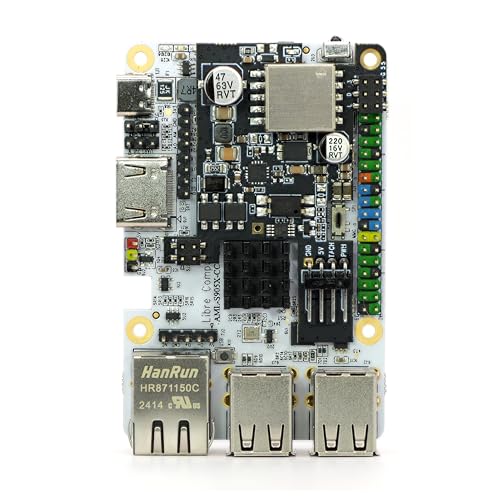
Libre Computer Sweet Potato 2GB SBC with PoE
Best for: energy-efficient 24/7 home servers and 4K media playback
- RAM Capacity
- 2GB
- Video Resolution
- 4K 60 FPS
- Operating System Support
- Ubuntu 22.04 LTS, Debian 12, CoreELEC
View on Amazon: Libre Computer Sweet Potato 2GB SBC with PoE
This single board computer pairs 2GB of memory with 15W PoE capability and 1W idle power draw. You get hardware-accelerated 4K video decoding for H.264, H.265, and VP9 codecs at 60 frames per second, plus a scriptable UEFI BIOS supporting eMMC, MicroSD, and USB drive boot. Power arrives through USB Type-C or PoE. It suits your needs if you deploy low-power 24/7 network appliances, VPN endpoints, or compact media servers.
Pros
- 1W idle power draw designed for continuous 24/7 operation
- Hardware-accelerated 4K 60 FPS decoding for H.264, H.265, and VP9
- UEFI BIOS supports boot from eMMC, MicroSD, USB flash, and USB hard drives
- Standard USB Type-C power input drawing up to 3A with 2A for peripherals
Cons
- Wireless connectivity requires add-on devices sold separately
- Booting from USB hard drives requires a separate power source
Good fit if
- You need a low-power 1W board for continuous 24/7 network or VPN operations.
- You plan to run 4K 60 FPS video playback using CoreELEC, Ubuntu 22.04 LTS, or Debian 12.
- You want flexible boot options via UEFI BIOS, including eMMC, MicroSD, and USB drives.
Skip if
- You need integrated onboard Wi-Fi or Bluetooth out of the box.
- You require more than 2GB of onboard memory for your workloads.
Verdict: Libre Computer Sweet Potato 2GB SBC with PoE delivers efficient 24/7 operation with 1W idle draw and native 4K 60 FPS media decoding. Its scriptable UEFI BIOS and flexible power options make it a practical pick for compact server and media roles.
Specifications side by side
| Spec | Libre Computer 128GB eMMC 5.x Module | Libre Computer Renegade 4GB Single Board Computer | Libre Computer Tritium 1GB Quad-Core Board | Libre Computer La Frite 1GB SBC | Libre Computer Le Potato 2GB 2-Pack | Libre Computer Renegade 4GB SBC | Libre Computer Sweet Potato 2GB SBC | Libre Computer Sweet Potato 2GB SBC with PoE |
|---|---|---|---|---|---|---|---|---|
| Processor | not specified | Quad 64-bit ARM Cortex-A53 | not specified | Quad 64-bit ARM Cortex-A53 | AML-S905X-CC ARM Cortex-A53 | ROC-RK3328-CC | not specified | not specified |
| RAM Capacity | not specified | not specified | 1GB | 1GB | 2GB | 4GB | 2GB | 2GB |
| RAM Type | not specified | DDR4 | not specified | DDR4 | DDR3 | DDR4 | not specified | not specified |
| Storage | 128GB eMMC 5.x | not specified | not specified | not specified | not specified | not specified | not specified | not specified |
| Ethernet | not specified | Gigabit Ethernet | not specified | not specified | not specified | Gigabit Ethernet | not specified | not specified |
| Wireless Connectivity | not specified | not specified | not specified | not specified | not specified | WiFi 5 BT4 | not specified | not specified |
| Video Resolution | not specified | 4K 60FPS | not specified | not specified | 4K 60FPS | 4K 60FPS | 4K 60 FPS | 4K 60 FPS |
| Operating System Support | Linux, Android | Ubuntu, Debian, Raspbian, Linux | Ubuntu, Debian, Raspbian, Armbian | Ubuntu, Debian, Raspbian | Ubuntu 22.04 LTS, Raspbian 11 | Ubuntu, Debian 12, Raspbian 11 | Fedora 42, Debian 13, Ubuntu 24.04 LTS | Ubuntu 22.04 LTS, Debian 12, CoreELEC |
| Networking | not specified | Gigabit Ethernet | not specified | not specified | not specified | not specified | not specified | not specified |
| Architecture | not specified | not specified | not specified | ARM | not specified | not specified | ARM | not specified |
| Connectivity | not specified | not specified | not specified | not specified | not specified | WiFi 5 | not specified | not specified |
| Dimensions | not specified | not specified | not specified | 3.5 × 2.5 × 0.75 inches | 8 × 5 × 1.5 inches | 4.75 × 3 × 1 inches | 4.75 × 3 × 1 inches | not specified |
| Size | 128GB | 4GB | H3 1GB | 1GB+No eMMC | 2GB 2-Pack | 4GB | 2GB | 2GB |
| Color | 5.x | Black | not specified | not specified | not specified | WiFi 5 BT4 | Board | Board+PoE |
| Model | LC-EMMC-5X-128GB | ROC-RK3328-CC-V1 | not specified | LC-SBC-AML-S805X-AC | not specified | not specified | LC-SBC-AML-S905X-CC-V2-2GB-UPC | not specified |
Libre Computer Project Lineup at a Glance
If you need wired network throughput and multitasking headroom, 4GB memory configurations suit server duties. The Libre Computer Renegade 4GB Single Board Computer provides Gigabit Ethernet and USB 3.0 for compact network appliances. For continuous operation and 4K video decoding, the Libre Computer Sweet Potato 2GB SBC reduces idle draw to 1W and supports Power over Ethernet setups.
For lightweight embedded tasks, smaller boards prioritize efficiency over high capacity. The Libre Computer La Frite 1GB SBC runs on a 2W power profile for basic headless deployments. To upgrade host board storage performance, the Libre Computer 128GB eMMC 5.x Module delivers read rates up to 250MB/s without an external USB bridge.
Where Libre Computer Hardware Fits
This lineup suits you if you build low-power ARM servers, 4K media nodes, or embedded IoT systems. Physical board sizes range from the compact 3.5-inch La Frite up to 4.75-inch boards matching standard single-board shapes. Memory configurations span from 1GB to 4GB, alongside add-on 128GB eMMC storage modules. No boards offer onboard RGB or LED lighting options.
Key hardware gaps exist across this catalog. You will find no system memory configurations exceeding 4GB. Onboard wireless is scarce, limited to a single WiFi 5 model, while other boards omit wireless entirely. The lineup also offers no included protective cases.
If you need dedicated audio for your build, you can compare the best single subwoofers ranked by hardware specifications.
How to Choose a Libre Computer Board
-
Sizing Your System Memory
You should evaluate your RAM requirements before selecting a board. Available configurations range from 1GB to 4GB. A 1GB memory capacity handles lightweight embedded tasks and dedicated background services. If you intend to run multiple applications or heavier server roles, choose a board with 4GB of RAM. The Libre Computer Renegade 4GB Single Board Computer offers the maximum memory capacity in this lineup. This extra headroom prevents memory exhaustion during concurrent tasks and keeps network services running without bottlenecking on swapped memory.
-
Selecting Primary Storage Media
You need to consider storage read speeds and bus bottlenecks for your workload. Standard boot cards can limit read and write performance on single board computers. Adding an onboard eMMC module delivers faster throughput directly through the board bus. The Libre Computer 128GB eMMC 5.x Module achieves up to 250MB/s read speeds without an external USB adapter bridge. Select dedicated eMMC storage if your deployment demands high-endurance writes, quick operating system boot times, and fast data retrieval for continuous local application operations.
-
Choosing Network Connectivity Options
You must inspect the network specifications based on where you place the unit. Some models focus purely on wired connections, while others include integrated wireless radios. If you need local wire-free connectivity, verify the presence of integrated WiFi. The Libre Computer Renegade 4GB SBC includes WiFi 5 alongside Gigabit Ethernet and USB 3 connectivity. Choosing integrated wireless eliminates external networking dongles for remote placements. If your setup sits near a network switch, pick a wired-only board to dedicate internal bandwidth directly to the Ethernet controller.
-
Evaluating Idle Power Draw
You should review the power draw specifications if your hardware operates continuously. Low idle draw reduces heat buildup and lowers long-term utility requirements for 24/7 nodes. Certain boards consume as little as 1W when idle, while maintaining capability for hardware decoding tasks. The Libre Computer Sweet Potato 2GB SBC features a 1W idle power specification alongside 4K media support. Check the baseline power profile before buying so you can match the board to your power supply capacity and enclosure thermal limits.
-
Verifying Board Dimensions
You must check physical board measurements before purchasing enclosures or mounting hardware. Sizes across this lineup vary from ultra-compact embedded designs to standard single-board profiles. The Libre Computer La Frite 1GB SBC measures 3.5 inches long, 2.5 inches wide, and 0.75 inches high. These compact dimensions fit tightly into small chassis spaces where standard boards cannot fit. Compare the length, width, and height listed in the specifications to ensure clearance for cables, heatsinks, and external port access inside your intended project case.
-
Checking Power Delivery Methods
You should examine how each board receives power before planning your cable routing. Standard boards depend on dedicated power inputs, but select hardware accepts power directly over network cabling. The Libre Computer Sweet Potato 2GB SBC with PoE includes Power over Ethernet capability alongside its scriptable UEFI BIOS. This feature lets you supply operating current and network data through a single Ethernet run. Choose a PoE-capable model if you install boards in ceiling mounts, utility closets, or remote enclosures without nearby outlets.
Frequently asked questions
Can you boot a Libre Computer board directly from an eMMC module?
Yes, compatible boards can boot directly from a dedicated eMMC module. The Libre Computer 128GB eMMC 5.x Module connects without requiring an external USB bridge. It provides up to 250MB/s read throughput, delivering lower latency and higher endurance than standard micro-SD cards. You can use it as primary system storage for compatible single-board computer models in the lineup.
Which Libre Computer models include built-in wireless networking?
Most Libre Computer boards focus on wired Ethernet, but specific configurations offer wireless options. The Libre Computer Renegade 4GB SBC variant includes integrated WiFi 5 and Bluetooth 4 connectivity alongside its Gigabit Ethernet port. Standard Renegade models omit wireless components to focus on wired stability. You should verify the exact product model if your deployment requires wireless communication out of the box.
Can you run standard Raspberry Pi operating system images on Libre Computer boards?
No, you cannot directly boot raw Raspberry Pi images without modification. You will need to use conversion utilities or dedicated upstream Linux distributions compiled for Libre Computer hardware. Boards like the Libre Computer Le Potato share the Raspberry Pi 3 physical form factor, but the underlying ARM system-on-chip architectures differ. Always source board-specific operating system images or utilize vendor tools to flash your system.
What power consumption should you expect from Libre Computer single board computers?
Power usage varies by model and workload, but Libre Computer hardware operates on very low power profiles. The Libre Computer Sweet Potato 2GB SBC draws approximately 1W at idle, while the Libre Computer La Frite 1GB SBC features an ultra-low 2W power profile. These low demands allow you to run continuous background servers and media tasks without requiring high-output power supplies or active cooling.
Does Libre Computer offer boards with Power over Ethernet support?
Yes, select models support Power over Ethernet for single-cable power and network delivery. The Libre Computer Sweet Potato 2GB SBC with PoE provides flexible power options, including PoE operation alongside its Gigabit network capabilities. This model also features native 4K 60 FPS media decoding and scriptable UEFI BIOS firmware. It is designed for clean network installations without dedicated wall adapters.
Which Libre Computer single board computers support 4K video playback?
Several Libre Computer boards feature hardware-accelerated video decoding capable of handling 4K media streams. The Libre Computer Le Potato 2GB and both Libre Computer Sweet Potato 2GB configurations provide dedicated 4K decoding support, with Sweet Potato reaching 60 FPS output. These capabilities allow you to use the boards as lightweight media center endpoints or 4K digital signage displays with minimal processor strain.
What are the physical dimensions of compact Libre Computer boards?
Board dimensions vary across the family to match different enclosure standards. The Libre Computer La Frite measures 2.5 inches wide, 0.75 inches high, and 3.5 inches long. In contrast, the Libre Computer Sweet Potato 2GB SBC measures approximately 3 inches wide, 1 inch high, and 4.75 inches long. You should measure your enclosure clearance to ensure your chosen board fits properly.