15 Best Single Board Computers with Android, Compared
As an Amazon Associate we earn from qualifying purchases. Links on this page are affiliate links.
Choosing the right single board computer with Android depends on your target workload, whether you build an edge AI device, a media streamer, or an embedded controller. We compared 15 models strictly based on the specifications published on their listings.
The Khadas VIM3 Pro Single Board Computer leads the list because its six-core A311D processor and 5.0 TOPS NPU provide strong processing and AI acceleration. This guide helps you choose the right board for your development setup, balancing compute performance, memory size, and peripheral connectivity.
Quick picks
The best fit for you
- You need dedicated AI acceleration for Android edge computing Khadas VIM3 Pro Single Board Computer Its six-core A311D processor and integrated 5.0 TOPS NPU deliver dedicated hardware processing for local machine learning tasks.
- You require native SATA connectivity for local Android storage Banana Pi M2 Berry Quad-Core SBC It includes an onboard SATA port alongside an Allwinner A40i processor for direct drive attachment.
- You need high RAM capacity and Wi-Fi 6 networking Orange Pi 4 Pro 12GB Single Board Computer It pairs 12GB of system memory with built-in WiFi 6 support for bandwidth-heavy wireless workloads.
- You want an x86 Intel architecture with HAT expansion Youyeetoo UP Board 16GB eMMC SBC Its Intel quad-core processor pairs with standard Raspberry Pi HAT support across a 3.3-inch board footprint.
Our 15 picks

Khadas VIM3 Pro Single Board Computer
Best for: Android edge AI and hardware development
- Operating System
- Android (what this guide is about)
- Processor
- Amlogic A311D
- RAM Type
- LPDDR4/X
- Ethernet
- Gigabit Ethernet
- Wireless Connectivity
- 2T2R AC Wi-Fi, Bluetooth 5.0
- Video Resolution
- 4Kx2K@60fps+1x1080P@60fps
The Khadas VIM3 Pro is an Android single board computer powered by a six-core Amlogic A311D processor. You get a built-in 5.0 TOPS neural processing unit, 4GB of RAM, and 32GB of onboard storage. It features dual independent display output, Gigabit Ethernet, and wireless connectivity. This board suits you if you need a compact Android system for edge AI inference, media decoding, and maker projects.
Pros
- 5.0 TOPS NPU for deep learning frameworks like TensorFlow and Caffe
- Amlogic A311D processor with four Cortex-A73 and two Cortex-A53 cores
- Dual independent display support with 4K 60fps video decoding
- Gigabit Ethernet with Wake-on-LAN and USB-C PD power support
Cons
- Only one standard USB 3.0 port listed
- Onboard storage is limited to 32GB
Good fit if
- You need on-device AI inference with dedicated neural network acceleration.
- You want an Android board capable of driving dual independent displays.
- You plan to connect external hardware using a 40-pin GPIO header.
Skip if
- You need multiple full-size USB 3.0 ports for accessories.
- You require more than 32GB of integrated storage out of the box.
Verdict: Khadas VIM3 Pro Single Board Computer provides balanced performance with its six-core A311D processor and dedicated 5.0 TOPS NPU. It handles Android development, hardware interfacing, and video decoding in a compact form factor.

Youyeetoo UP Board 16GB eMMC SBC
Best for: Intel x86 Android projects with HAT support
- Operating System
- Android (what this guide is about)
- Processor
- Quad Core Intel CPU
- RAM Capacity
- 1GB
- Storage
- 16GB eMMC
- Operating System Support
- Windows 10, Ubuntu, Android OS
- Dimensions
- 3.3 × 2.2 × 0.8 inches
The Youyeetoo UP Board Intel x86 SBC is a compact development platform running Android on an x86 architecture. It features a quad-core Intel processor paired with 1GB of system memory and 16GB of onboard eMMC storage. A standard 40-pin bus provides hardware compatibility with Raspberry Pi HAT accessories. This board suits you if you need an Intel-based Android system for embedded projects or IoT deployments.
Pros
- Quad-core Intel processor with 8th-generation HD graphics
- 40-pin bus compatible with Raspberry Pi HATs
- Built-in 16GB eMMC storage
- Compact footprint measuring 3.3 by 2.2 by 0.8 inches
Cons
- Limited to 1GB of RAM
- 16GB storage capacity limits large application installs
Good fit if
- You need an Intel x86 architecture board that runs Android.
- You want to use Raspberry Pi HAT accessories via a 40-pin bus.
- You require an operating temperature range between 32°F and 140°F.
Skip if
- You need more than 1GB of memory for demanding tasks.
- You require onboard storage greater than 16GB eMMC.
Verdict: Youyeetoo UP Board Intel x86 SBC pairs an Intel quad-core processor and Raspberry Pi HAT expandability into a tiny 3.3-inch form factor. Its 1GB RAM makes it strictly suited for lightweight embedded tasks.

Orange Pi Zero LTS Single Board Computer
Best for: compact embedded Android and GPIO projects
- Operating System
- Android (what this guide is about)
- Processor
- Allwinner H3 Quad-core Cortex-A7
- RAM Capacity
- 512MB
- Ethernet
- 100M
- Video Resolution
- 4K
- Operating System Support
- Android, Ubuntu, Debian
This compact single board computer runs Android on an Allwinner H3 quad-core Cortex-A7 processor paired with 512MB of memory. It features a Mali400MP2 graphics core, a 100M Ethernet port, and dual USB 2.0 connections. You get a space-saving board designed to embed into tight enclosures, making it a viable fit if you need lightweight Android functionality, basic networking, and Raspberry Pi GPIO compatibility for embedded hardware projects.
Pros
- Allwinner H3 quad-core Cortex-A7 processor with Mali400MP2 GPU
- Integrated 100M Ethernet network port
- Raspberry Pi-compatible GPIO header pinout
- Dedicated serial debugging port and USB OTG support
Cons
- Limited to 512MB of system memory
- Wired networking capped at 100M Ethernet
- Provides only one standard USB 2.0 host port
Good fit if
- You need a small board to embed into space-constrained enclosures.
- You want 100M wired Ethernet paired with Raspberry Pi-compatible GPIO headers.
- You run lightweight Android workloads that fit within 512MB of RAM.
Skip if
- You need more than 512MB of RAM for demanding applications.
- You require Gigabit Ethernet transfer rates.
Verdict: Orange Pi Zero 512MB Single Board Computer delivers essential Android capability in a miniature footprint with Allwinner H3 processing and 100M Ethernet. It works well for embedded installations where physical dimensions matter more than large memory capacity.
WayPonDEV Banana Pi Quad-Core SBC
Best for: space-constrained embedded and IoT Android projects
- Operating System
- Android (what this guide is about)
- Processor
- Allwinner H3, Quad-core Cortex-A7
- RAM Capacity
- 512MB
- RAM Type
- DDR3 SDRAM
- Wireless Connectivity
- Wi-Fi (AP6212), BT
- Operating System Support
- Android, Debian linux, Ubuntu
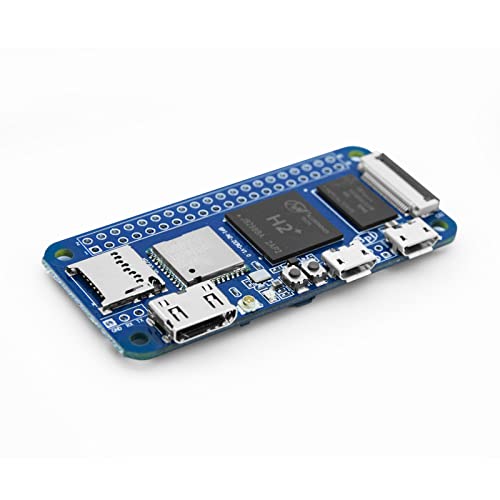
The WayPonDEV Banana Pi M2 Zero is a compact single-board computer built for lightweight Android implementations. It runs on an Allwinner H3 quad-core Cortex-A7 processor paired with 512MB of DDR3 memory. Measuring 65mm by 30mm and weighing 15 grams, it includes integrated Wi-Fi, Bluetooth, and a 40-pin GPIO header. You will find it suited for space-constrained IoT deployments, basic educational programming, and compact embedded setups requiring minimal operating overhead.
Pros
- Compact footprint measuring 65mm by 30mm and weighing 15g
- Allwinner H3 quad-core Cortex-A7 processor with Android support
- Integrated Wi-Fi and Bluetooth wireless connectivity
- 40-pin Raspberry Pi-compatible GPIO header for peripherals
Cons
- Limited to 512MB of DDR3 system memory
- No integrated wired Ethernet jack listed
Good fit if
- You need an ultra-compact, lightweight board for tight project enclosures.
- You require a 40-pin GPIO header for connecting sensors and hardware.
- You run lightweight Android or Linux setups with minimal memory demands.
Skip if
- You need more than 512MB of RAM for demanding applications.
- You require a native onboard RJ45 Ethernet port.
Verdict: WayPonDEV Banana Pi M2 Zero Compact Board provides an ultra-small form factor with wireless connectivity and basic quad-core processing. It works well for minimal embedded Android projects where physical space is your primary constraint.

WayPonDEV Banana Pi 16GB eMMC SBC
Best for: compact Android networking and lightweight display projects
- Operating System
- Android (what this guide is about)
- Processor
- Amlogic S905X3 Quad-Core-Cortex-A55
- RAM Capacity
- 2GB
- RAM Type
- LPDDR4
- Storage
- 16GB eMMC
- Ethernet
- Gigabit
The WayPonDEV Banana Pi Quad-Core SBC gives you a compact 65mm by 65mm footprint running Android. It pairs an Amlogic S905X3 quad-core processor reaching 2.0 GHz with 2GB of LPDDR4 memory and 16GB of onboard eMMC storage. For connectivity, you get dual-band 2.4G and 5G Wi-Fi, Bluetooth 4.2, two USB 3.0 ports, and Gigabit Ethernet. It suits you if you want a small board for lightweight tasks and basic display setups.
Pros
- Onboard Gigabit Ethernet and dual-band Wi-Fi
- Two high-speed USB 3.0 ports
- Compact 65mm by 65mm board size weighing 58g
- Built-in 16GB eMMC storage
Cons
- Limited to 2GB LPDDR4 memory
- Uses older Bluetooth 4.2 standard
Good fit if
- You need Gigabit Ethernet and dual-band Wi-Fi on a compact square board.
- You want built-in 16GB eMMC flash memory without adding external cards.
- You require dual USB 3.0 connections for high-speed peripherals.
Skip if
- You need more than 2GB of RAM for heavy multitasking.
- You require more than 16GB of onboard storage out of the box.
Verdict: WayPonDEV Banana Pi Quad-Core SBC delivers solid networking and USB 3.0 connectivity in a pocket-sized 65mm square form factor. It provides a balanced set of specs for running Android on basic projects.
Youyeetoo Banana Pi M2 Zero
Best for: compact Android and lightweight embedded projects
- Operating System
- Android (what this guide is about)
- Processor
- Quad Core ARM Cortex A7 CPU H3
- RAM Capacity
- 512MB
- RAM Type
- SDRAM
- Wireless Connectivity
- WiFi (AP6212) & Bluetooth
- Operating System Support
- Raspbian, Android, Armbian, Ubuntu
You get an ultra-compact single board computer featuring a quad-core ARM Cortex-A7 Allwinner H3 processor paired with 512MB of SDRAM. The board includes onboard AP6212 Wi-Fi, Bluetooth, and a mini HDMI output for displays. It features a 40-pin GPIO header compatible with Raspberry Pi accessories alongside micro USB power input. This board suits lightweight Android projects and compact embedded hardware setups needing wireless connectivity.
Pros
- Quad-core ARM Cortex-A7 H3 processor
- Onboard AP6212 Wi-Fi and Bluetooth
- 40-pin Raspberry Pi-compatible GPIO header
- Mini HDMI port for video output
Cons
- Limited to 512MB SDRAM
- Uses mini HDMI rather than a standard full-size port
- Power input uses micro USB instead of USB-C
Good fit if
- You need an ultra-compact board with built-in Wi-Fi and Bluetooth for Android.
- You plan to interface with hardware via 40-pin GPIO connections like UART, SPI, or I2C.
- You have a standard 5V 2A micro USB power supply.
Skip if
- You require more than 512MB of RAM for demanding applications.
- You need native full-size HDMI output without using an adapter.
Verdict: Youyeetoo Banana Pi M2 Zero SBC provides a quad-core H3 processor, wireless networking, and a 40-pin GPIO header in a tiny footprint. It serves as a practical option for basic Android and lightweight embedded projects.

Youyeetoo Banana Pi M2 Zero
Best for: compact, low-power Android embedded projects
- Operating System
- Android (what this guide is about)
- Processor
- Quad Core ARM Cortex A7 CPU H3
- RAM Capacity
- 512MB
- RAM Type
- SDRAM
- Wireless Connectivity
- WiFi (AP6212) & BT
- Operating System Support
- Raspbian, Android, Armbian, Ubuntu
The Youyeetoo Banana Pi M2 Zero is a compact single-board computer running Android. It pairs an Allwinner H3 quad-core ARM Cortex-A7 processor with 512MB of SDRAM for lightweight computing tasks. You get integrated AP6212 Wi-Fi and Bluetooth, a mini HDMI output, and a 40-pin GPIO header compatible with Raspberry Pi accessories. This board suits you if you need a minimal, low-power Android setup for dedicated embedded installations or compact hardware projects.
Pros
- Quad-core ARM Cortex-A7 Allwinner H3 processor
- Integrated AP6212 Wi-Fi and Bluetooth
- 40-pin Raspberry Pi-compatible GPIO header
- Mini HDMI video output
Cons
- 512MB SDRAM limits multitasking
- Requires a micro USB 5V 2A power input instead of USB-C
- Mini HDMI port requires a dedicated cable or adapter
Good fit if
- You need a compact Android board with integrated Wi-Fi and Bluetooth.
- You want Raspberry Pi-compatible 40-pin GPIO pinouts for hardware interfacing.
Skip if
- You require more than 512MB of RAM for demanding applications.
- You prefer full-sized HDMI and USB-C connectivity.
Verdict: Youyeetoo Banana Pi M2 Zero delivers basic Android functionality in an ultra-small form factor with wireless connectivity. Its 512MB RAM and Allwinner H3 processor make it practical strictly for lightweight, space-constrained tasks.

Banana Pi M2 Berry Quad-Core SBC
Best for: Android storage projects needing SATA support
- Operating System
- Android (what this guide is about)
- Processor
- Allwinner R40/V40, Cortex-A7
- RAM Capacity
- 1GB
- RAM Type
- LPDDR3
- Ethernet
- Gigabit Ethernet
- Wireless Connectivity
- WiFi, Bluetooth 4.0
The WayPonDEV Banana Pi M2 Berry is a single-board computer built with an Allwinner quad-core Cortex-A7 processor and 1GB of LPDDR3 memory. It runs Android alongside Linux systems and features a dedicated SATA interface for direct hard drive storage. With Gigabit Ethernet, four USB 2.0 ports, onboard Wi-Fi, and a Raspberry Pi 3 form factor, it suits you if you need networked Android storage or basic media setups.
Pros
- Built-in SATA interface for connecting hard drives
- Gigabit Ethernet port plus onboard Wi-Fi and Bluetooth 4.0
- Raspberry Pi 3 form factor and GPIO compatibility
- Four USB 2.0 ports alongside MIPI DSI and CSI camera interfaces
Cons
- Limited to 1GB LPDDR3 memory
- No onboard eMMC flash storage included
- Uses USB 2.0 ports without faster USB 3.0 support
Good fit if
- You need a SATA interface to connect external hard drives.
- You plan to reuse existing Raspberry Pi 3 cases and accessories.
- You require wired Gigabit Ethernet and onboard wireless connectivity.
Skip if
- You need more than 1GB of RAM for multitasking.
- You require high-speed USB 3.0 transfer ports.
Verdict: WayPonDEV Banana Pi M2 Berry SBC delivers versatile storage potential with its native SATA port and standard Raspberry Pi 3 layout. It provides a practical, low-power option for Android projects that do not require heavy multitasking memory.

WayPonDEV Banana Pi M2 Zero SBC
Best for: compact low-power Android IoT projects
- Operating System
- Android (what this guide is about)
- Processor
- Allwinner H3 quad-core Cortex A7
- RAM Capacity
- 512MB
- RAM Type
- DDR3
- Storage
- 32GB TF card
- Wireless Connectivity
- 802.11b/g/n Wi-Fi, Bluetooth
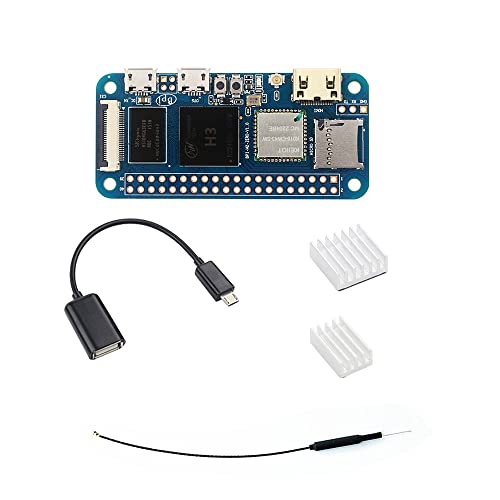
The WayPonDEV Banana Pi M2 Zero is a compact single-board computer built for IoT and educational projects. You get a quad-core Allwinner H3 Cortex-A7 processor paired with 512MB of RAM and a Mali400MP2 GPU. It supports Android alongside multiple Linux distributions. With built-in 802.11b/g/n Wi-Fi, Bluetooth, a 40-pin expansion header, and an included metal case set, it suits you if you build compact connected devices.
Pros
- Quad-core Allwinner H3 Cortex-A7 processor with Mali400MP2 GPU
- Ultra-compact footprint measuring 65mm by 30mm
- Built-in 802.11b/g/n Wi-Fi and Bluetooth connectivity
- 40-pin expansion header supporting UART, SPI, and I2C
- Includes metal case set, antenna, OTG cable, and 32GB TF card
Cons
- Limited to 512MB of system memory
- Uses mini HDMI and micro USB rather than full-sized ports
- One micro USB port restricted to power delivery only
Good fit if
- You need an ultra-small single-board computer for embedded IoT deployments.
- You want an Android-compatible board with an included case, antenna, and storage card.
- You require 40-pin GPIO pinouts for sensors and hardware peripherals.
Skip if
- You run memory-heavy Android applications requiring more than 512MB of RAM.
- You require full-size HDMI or standard USB Type-A ports without adapters.
Verdict: WayPonDEV Banana Pi M2 Zero IoT Board delivers a miniature Allwinner H3 platform tailored for lightweight Android and IoT embedded installations. Its bundled metal case and accessories provide an all-in-one setup for compact low-power builds.

Orange Pi 5 Plus Single Board Computer
Best for: high-performance Android media and networking setups
- Operating System
- Android (what this guide is about)
- Processor
- Rockchip RK3588
- RAM Capacity
- 4GB
- RAM Type
- LPDDR4/4x
- Ethernet
- 2x 2.5G Ethernet
- Video Resolution
- 8K@60Hz
The Orange Pi 5 Plus is an 8-core single board computer powered by the Rockchip RK3588 processor with Android support. It gives you configurations ranging from 4GB to 16GB of LPDDR4/4x RAM, alongside dual 2.5G Ethernet ports, two HDMI outputs, and an HDMI input. With support for 8K video decoding and an M.2 slot for NVMe SSD expansion, this board suits you if you need a high-throughput Android media or networking setup.
Pros
- Rockchip RK3588 8-core processor reaching up to 2.4GHz
- Dual 2.5G Ethernet ports and dual HDMI outputs plus HDMI input
- Supports up to 8K at 60Hz video decoding
- M.2 M-Key slot for NVMe SSD and M.2 E-Key for wireless cards
Cons
- Wi-Fi and Bluetooth require an add-on M.2 E-Key card
- Onboard eMMC requires an optional add-on module
Good fit if
- You need 8K display support with multiple HDMI connections.
- You want dual 2.5G Ethernet ports for network-heavy projects.
- You plan to run Android with fast NVMe solid-state storage.
Skip if
- You want integrated onboard Wi-Fi without buying an expansion module.
- You need a simple, low-power board for basic tasks.
Verdict: Orange Pi 5 Plus 8-Core Single Board Computer delivers serious processing power, dual 2.5G networking, and 8K decoding for advanced Android projects. It is a capable choice when you need extensive peripheral connectivity and fast local storage.

Orange Pi 3B 8GB Single Board Computer
Best for: memory-heavy Android 11 and edge AI projects
- Operating System
- Android (what this guide is about)
- Processor
- Rockchip RK3566
- RAM Capacity
- 8GB
- RAM Type
- LPDDR4/4X
- Ethernet
- Gigabit LAN
- Wireless Connectivity
- Wi-Fi 5, BT 5.0
The Orange Pi 3B 8GB Single Board Computer gives you a compact platform powered by a quad-core Rockchip RK3566 processor clocked at 1.8 GHz. It pairs 8GB of LPDDR4/4X RAM with a built-in 0.8 TOPS NPU and 4K video decoding. You get Gigabit Ethernet, Wi-Fi 5, and an M.2 M-KEY slot alongside Android 11 support, making it a capable choice if you need ample memory for media, edge processing, or custom embedded projects.
Pros
- 8GB of LPDDR4/4X system memory
- Supports 4K at 60 fps H.265, H.264, and VP9 video decoding
- Onboard M.2 M-KEY slot for storage expansion
- Gigabit Ethernet, Wi-Fi 5, and Bluetooth 5.0 connectivity
Cons
- eMMC storage module is not included onboard
- Official Android support is limited to Android 11
- Processor clock frequency is capped at 1.8 GHz
Good fit if
- You need 8GB of RAM for memory-heavy Android applications.
- You plan to add high-speed storage via an M.2 M-KEY drive.
- You require 4K at 60 fps hardware video decoding.
Skip if
- You need an Android version newer than Android 11.
- You require pre-soldered onboard eMMC storage out of the box.
Verdict: Orange Pi 3B 8GB Single Board Computer delivers generous memory and M.2 expansion for Android 11 media and edge setups. Its quad-core processor and 4K video decoding handle everyday playback and lightweight AI tasks reliably.

KICKPI Allwinner H618 2GB SBC
Best for: 4K Android media streaming and compact IoT projects
- Operating System
- Android (what this guide is about)
- Processor
- Allwinner H618
- RAM Capacity
- 2GB
- RAM Type
- DDR
- Storage
- 16GB eMMC
- Ethernet
- Gigabit Ethernet
The KICKPI Allwinner H618 Single Board Computer provides a compact platform running Android 12 or Ubuntu 22.04. It pairs an Allwinner H618 quad-core Cortex-A53 processor with 2GB of DDR memory and 16GB of onboard eMMC storage. You get 4K at 60Hz HDMI video decoding, dual-band Wi-Fi, and Gigabit Ethernet for network connectivity. This board suits you if you need a lightweight Android system for media streaming, set-top boxes, or basic hardware projects.
Pros
- Allwinner H618 processor with 4K at 60Hz hardware decoding
- Dual-band 2.4GHz/5GHz Wi-Fi, Bluetooth, and Gigabit Ethernet
- Built-in 16GB eMMC storage with SD card expansion
- Official support for Android 12 and Ubuntu 22.04
Cons
- External USB connectivity is limited to USB 2.0 speeds
- 20-pin expansion header provides fewer pins than standard 40-pin layouts
Good fit if
- You need 4K 60Hz video playback for a media player or set-top box.
- You require Gigabit Ethernet and dual-band Wi-Fi for network connections.
- You prefer onboard 16GB eMMC storage over booting strictly from micro SD.
Skip if
- You need high-speed USB 3.0 ports for fast external file transfers.
- You require more than 2GB of RAM for demanding applications.
Verdict: KICKPI Allwinner H618 Single Board Computer delivers reliable 4K video decoding and wired Gigabit networking for dedicated media playback and lightweight embedded Android setups.
KICKPI Android Single Board Computer with 2GB RAM
Best for: embedded Android display and IoT gateway projects
- Operating System
- Android (what this guide is about)
- Processor
- Allwinner A133
- RAM Capacity
- 2GB
- Storage
- 16GB eMMC
- Ethernet
- Gigabit Ethernet
- Wireless Connectivity
- Wi-Fi, Bluetooth, 4G LTE
View on Amazon: KICKPI Android Single Board Computer with 2GB RAM
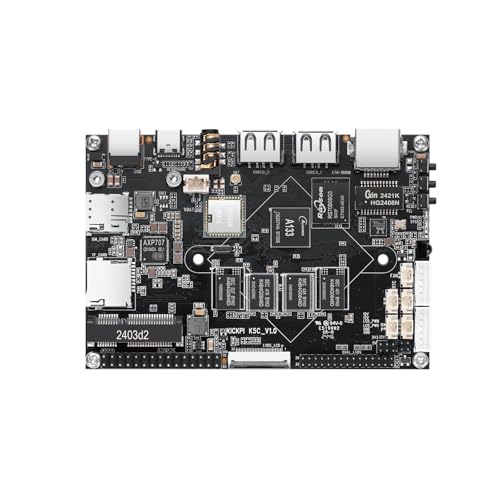
This board is an entry-level Android single board computer built around the Allwinner A133 quad-core processor and PowerVR GE8300 graphics. You get 2GB of system memory alongside 16GB of onboard eMMC storage, paired with Gigabit Ethernet, Wi-Fi, and Bluetooth. Display output is handled via MIPI-DSI and LVDS interfaces. It suits you if you need a compact Android-driven hardware platform for display panels, IoT gateways, or embedded monitoring systems.
Pros
- Flexible power via 12V DC, battery, or PoE
- Gigabit Ethernet plus Wi-Fi and Bluetooth
- MIPI-DSI and LVDS display outputs up to 1920x1200
- 30-pin expansion interface for GPIO, I2C, SPI, and UART
Cons
- No standard HDMI port listed
- Cortex-A53 processor capped at 1.5GHz
- Limited to 2GB memory and 16GB storage
Good fit if
- You need PoE, battery, or 12V DC input options for your Android hardware setup.
- You connect displays directly via MIPI-DSI or LVDS interfaces.
- You require Gigabit Ethernet and expansion pins for embedded IoT deployments.
Skip if
- You require a standard HDMI output to connect to regular monitors or TVs.
- You need more than 2GB of RAM or 16GB of storage for heavier Android tasks.
Verdict: KICKPI Android Single Board Computer with 2GB RAM delivers targeted I/O, display interfaces, and flexible power options for embedded IoT projects. Its modest memory and processor specs suit lightweight industrial terminals rather than intensive desktop computing.

Orange Pi 4 Pro 12GB Single Board Computer
Best for: Wi-Fi 6 Android edge computing projects
- Operating System
- Android (what this guide is about)
- Processor
- Allwinner A733
- RAM Capacity
- 12GB
- RAM Type
- LPDDR5
- Ethernet
- Gigabit Ethernet
- Wireless Connectivity
- Wi-Fi 6, Bluetooth 5.4
Orange Pi 4 Pro is an octa-core single board computer compatible with Android. You get 12GB of LPDDR5 RAM, an Allwinner A733 processor clocked up to 2.0GHz, and built-in Wi-Fi 6 with Bluetooth 5.4. It also provides a 3 TOPS NPU for machine learning tasks and Gigabit Ethernet with PoE support. This setup suits you if you deploy high-throughput wireless Android applications or local edge computing nodes.
Pros
- Wi-Fi 6 and Bluetooth 5.4 wireless connectivity
- 12GB LPDDR5 system memory
- 3 TOPS NPU supporting INT8, INT16, FP16, and BF16
- Octa-core CPU with dual Cortex-A76 and hexa Cortex-A55 cores
- Gigabit Ethernet port with PoE support
Cons
- No integrated onboard eMMC storage listed
- No power supply or PoE injector included
Good fit if
- You need high-speed Wi-Fi 6 wireless networking for Android.
- You run memory-intensive tasks requiring 12GB of LPDDR5 RAM.
- You plan to run local AI inference via a 3 TOPS NPU.
Skip if
- You require built-in onboard flash storage out of the box.
- You need an included heatsink or enclosure for thermal management.
Verdict: Orange Pi 4 Pro 12GB SBC delivers fast Wi-Fi 6 networking, 12GB of memory, and dedicated AI acceleration for demanding Android deployments. It packages dual Cortex-A76 and hexa Cortex-A55 compute into a compact 3.5 by 2.2-inch footprint.

Orange Pi 5 Ultra RK3588 SBC
Best for: Wi-Fi 6E Android projects and AI workloads
- Operating System
- Android (what this guide is about)
- Processor
- Rockchip RK3588
- RAM Capacity
- 8GB
- RAM Type
- LPDDR5
- Wireless Connectivity
- Wi-Fi 6E, Bluetooth 5.3
- Video Resolution
- 8K@60FPS
The Orange Pi 5 Ultra provides an eight-core Rockchip RK3588 processor paired with fast LPDDR5 memory and Android support. You get modern wireless networking through Wi-Fi 6E and Bluetooth 5.3, alongside a built-in 6 TOPS NPU for onboard artificial intelligence tasks. It features an HDMI 2.1 output for 8K video and an HDMI 2.0 input port. This board fits your needs if you run demanding Android media or vision workflows.
Pros
- Wi-Fi 6E and Bluetooth 5.3 wireless connectivity
- Rockchip RK3588 8-core processor with 6 TOPS NPU
- Fast LPDDR5 memory standard
- HDMI 2.1 output supporting up to 8K at 60 FPS plus HDMI 2.0 input
Cons
- Requires separate eMMC module for onboard storage socket
- Features only one HDMI display output instead of dual outputs
Good fit if
- You need Wi-Fi 6E network speeds for Android streaming or data transfers.
- You require an HDMI 2.0 input port alongside 8K video output.
- You want hardware acceleration for AI tasks via an integrated 6 TOPS NPU.
Skip if
- You need dual HDMI display outputs rather than an HDMI input port.
- You prefer out-of-the-box integrated eMMC flash storage.
Verdict: Orange Pi 5 Ultra 8GB SBC delivers high wireless throughput with Wi-Fi 6E and strong processing performance via the RK3588 processor. It is a capable choice if you need advanced video interfaces and integrated NPU hardware for Android development.
Specifications side by side
| Spec | Khadas VIM3 Pro Single Board Computer | Youyeetoo UP Board 16GB eMMC SBC | Orange Pi Zero LTS Single Board Computer | WayPonDEV Banana Pi Quad-Core SBC | WayPonDEV Banana Pi 16GB eMMC SBC | Youyeetoo Banana Pi M2 Zero | Youyeetoo Banana Pi M2 Zero | Banana Pi M2 Berry Quad-Core SBC | WayPonDEV Banana Pi M2 Zero SBC | Orange Pi 5 Plus Single Board Computer | Orange Pi 3B 8GB Single Board Computer | KICKPI Allwinner H618 2GB SBC | KICKPI Android Single Board Computer with 2GB RAM | Orange Pi 4 Pro 12GB Single Board Computer | Orange Pi 5 Ultra RK3588 SBC |
|---|---|---|---|---|---|---|---|---|---|---|---|---|---|---|---|
| Processor | Amlogic A311D | Quad Core Intel CPU | Allwinner H3 Quad-core Cortex-A7 | Allwinner H3, Quad-core Cortex-A7 | Amlogic S905X3 Quad-Core-Cortex-A55 | Quad Core ARM Cortex A7 CPU H3 | Quad Core ARM Cortex A7 CPU H3 | Allwinner R40/V40, Cortex-A7 | Allwinner H3 quad-core Cortex A7 | Rockchip RK3588 | Rockchip RK3566 | Allwinner H618 | Allwinner A133 | Allwinner A733 | Rockchip RK3588 |
| RAM Capacity | not specified | 1GB | 512MB | 512MB | 2GB | 512MB | 512MB | 1GB | 512MB | 4GB | 8GB | 2GB | 2GB | 12GB | 8GB |
| RAM Type | LPDDR4/X | not specified | not specified | DDR3 SDRAM | LPDDR4 | SDRAM | SDRAM | LPDDR3 | DDR3 | LPDDR4/4x | LPDDR4/4X | DDR | not specified | LPDDR5 | LPDDR5 |
| Storage | not specified | 16GB eMMC | not specified | not specified | 16GB eMMC | not specified | not specified | not specified | 32GB TF card | not specified | not specified | 16GB eMMC | 16GB eMMC | not specified | not specified |
| Ethernet | Gigabit Ethernet | not specified | 100M | not specified | Gigabit | not specified | not specified | Gigabit Ethernet | not specified | 2x 2.5G Ethernet | Gigabit LAN | Gigabit Ethernet | Gigabit Ethernet | Gigabit Ethernet | not specified |
| Wireless Connectivity | 2T2R AC Wi-Fi, Bluetooth 5.0 | not specified | not specified | Wi-Fi (AP6212), BT | 2.4G & 5G WiFi, BT 4.2 | WiFi (AP6212) & Bluetooth | WiFi (AP6212) & BT | WiFi, Bluetooth 4.0 | 802.11b/g/n Wi-Fi, Bluetooth | not specified | Wi-Fi 5, BT 5.0 | Dual-Band Wi-Fi, Bluetooth | Wi-Fi, Bluetooth, 4G LTE | Wi-Fi 6, Bluetooth 5.4 | Wi-Fi 6E, Bluetooth 5.3 |
| Video Resolution | 4Kx2K@60fps+1x1080P@60fps | not specified | 4K | not specified | not specified | not specified | not specified | not specified | not specified | 8K@60Hz | 4K@60fps | 4K at 60Hz | 1920x1200 at 60Hz | not specified | 8K@60FPS |
| Operating System Support | Khadas OOWOW, Android, LibreELEC, Ubuntu | Windows 10, Ubuntu, Android OS | Android, Ubuntu, Debian | Android, Debian linux, Ubuntu | Android, Linux | Raspbian, Android, Armbian, Ubuntu | Raspbian, Android, Armbian, Ubuntu | Android, Debian, Ubuntu, TinaLinux | Android, Debian Linux, Ubuntu Linux | Orange Pi OS, Ubuntu, Debian, Android | Orange Pi OS, Android, Debian, Ubuntu | Android 12, Ubuntu 22.04 | Android 10, Ubuntu 16.04 | Android, Debian, Ubuntu, OpenHarmony | Linux, Ubuntu, Debian, Android |
| Memory | not specified | not specified | not specified | not specified | not specified | not specified | not specified | not specified | not specified | not specified | not specified | not specified | 2GB RAM | not specified | not specified |
| Operating System | Android | Android | Android | Android | Android | Android | Android | Android | Android | Android | Android | Android | Android | Android | Android |
| Use | not specified | not specified | not specified | not specified | not specified | not specified | not specified | not specified | IoT | not specified | not specified | not specified | not specified | not specified | not specified |
| Networking | not specified | not specified | not specified | not specified | not specified | not specified | not specified | not specified | not specified | not specified | not specified | Gigabit Ethernet | Gigabit Ethernet | WiFi 6 | WiFi 6E |
| Dimensions | not specified | 3.3 × 2.2 × 0.8 inches | not specified | not specified | 2.56 × 2.56 × 0.39 inches | not specified | not specified | 3.35 × 2.2 × 0.39 inches | 2.56 × 1.18 × 0.12 inches | not specified | not specified | 3.16 × 2.2 × 0.75 inches | 4.33 × 2.95 × 0.79 inches | 3.5 × 2.2 × 0.5 inches | not specified |
| Weight | not specified | not specified | not specified | 0.53 ounces | not specified | not specified | not specified | not specified | not specified | not specified | not specified | 2.12 ounces | not specified | 2 ounces | not specified |
| Size | Pro | not specified | Pi Zero Lts | not specified | 65mm×65mm, 58g | not specified | not specified | not specified | 65mm × 30mm x 3mm | not specified | not specified | 2G and 16G | not specified | not specified | 8GB+Power Supply |
| Color | Blue | 1G RAM & 16G eMMC | not specified | not specified | Blue | not specified | not specified | Blue | Mali400MP2 GPU | 4GB+Power Supply | Pi 3B 8GB | Black | Black | 12GB | 8GB |
| Model | VIM3 Pro | not specified | Orange Pi Zero LTS | Banana Pi M2 Zero Allwinner H3 SBC | Banana Pi BPI-M2 Pro | not specified | not specified | Banana Pi M2 Berry Allwinner A40i SBC | Banana Pi M2 Zero Open Source | Orange Pi 5 Plus | not specified | KICKPI K2B | KICKPI K5C | Orange Pi 4 Pro | not specified |
When you organize your workbench, you can compare dimensions and cycle times across the best single serve single serve brewers using published specifications.
Choosing the Right Android Single Board Computer
-
Evaluate Processor and Decoding Specs
Look closely at the processor type and supported hardware media decoding. If your Android build runs media centers or complex multi-threaded software, examine whether the board includes an eight-core processor like the Rockchip RK3588 found on the Orange Pi 5 Plus. This platform delivers 8K hardware video decoding to handle high-resolution video streams smoothly. For basic headless Android services or standard dashboards, lower-tier quad-core processors handle typical operating system overhead without the extra computing power. Matching the processor to your playback resolution avoids performance bottlenecks.
-
Check for Integrated eMMC Storage
Examine whether the board includes integrated flash storage or relies entirely on removable cards. Boards equipped with onboard storage, such as the WayPonDEV Banana Pi 16GB eMMC SBC, offer reliable, fixed system storage directly on the circuit board. An onboard 16GB eMMC module provides a dedicated partition for the core Android operating system and essential applications. If your project involves continuous reading and writing in embedded environments, integrated eMMC flash delivers a stable boot option that will not vibrate loose or require an external card reader.
-
Verify Wi-Fi Generation Standards
Review the wireless networking standard if you plan to install your Android board away from a physical Ethernet drop. Higher-bandwidth installations benefit from modern wireless standards. For example, the Orange Pi 5 Ultra RK3588 SBC includes Wi-Fi 6E connectivity, giving you access to 6 GHz wireless bands and lower latency in crowded network environments. If your deployment handles high-bitrate video feeds or rapid cloud syncing, prioritize boards with modern Wi-Fi 6 or 6E hardware. Basic IoT sensors or offline kiosks, by contrast, function adequately on older wireless revisions.
-
Select Appropriate Ethernet Speeds
Inspect the Ethernet port specifications to match your data transfer needs. Basic embedded devices that only send small telemetry packets operate fine on 100M Ethernet interfaces. However, if your Android setup functions as a network gateway, local media server, or streaming client, verify that the board includes Gigabit Ethernet. The KICKPI Allwinner H618 2GB SBC provides a Gigabit Ethernet port, allowing sustained high-speed data transfers across local networks. Choosing the correct port speed ensures your local network transfers do not encounter physical interface constraints.
-
Assess Dimensions and Enclosure Space
Measure your installation area before selecting a board size. Single board computers vary widely in physical dimensions, from full-sized developer boards down to miniature footprints. If you are building an ultra-compact IoT node or fitting hardware into a tight commercial enclosure, examine the exact length and width specifications. The WayPonDEV Banana Pi M2 Zero SBC measures just 65mm by 30mm by 3mm, making it suitable for tight enclosures where standard boards cannot fit. Ensure your chosen board dimensions accommodate both physical mounting clearance and necessary cable connections.
-
Review Peripheral Expansion Options
Check the physical header layout and accessory compatibility if you plan to connect specialized sensors, daughterboards, or physical controls. Certain boards incorporate standard Raspberry Pi HAT support directly into their hardware layout. The Youyeetoo UP Board 16GB eMMC SBC features this expansion capability alongside an Intel x86 processor architecture, allowing you to attach existing add-on boards and industrial modules. If your Android deployment interacts with external relays, switches, or custom display panels, make sure the board provides the specific pin configuration your peripherals demand.
Frequently asked questions
Can an x86 processor run Android on a single board computer?
Yes, specific boards feature x86 architectures that support Android builds. The Youyeetoo UP Board uses an Intel quad-core processor paired with 16GB eMMC storage. It also includes Raspberry Pi HAT expandability within a compact 3.3-inch by 2.2-inch layout. Because it has 1GB of RAM, you should reserve it for lightweight embedded Android installations.
Which Android single board computer has built-in eMMC storage?
Several boards integrate onboard eMMC memory directly onto the printed circuit board. For example, the KICKPI Allwinner H618 model and the WayPonDEV Banana Pi BPI-M2 Pro both come standard with 16GB eMMC storage. Onboard eMMC flash delivers reliable local operating system installation without relying entirely on external micro-SD cards for basic boot operations.
What wired networking options are available on Android single board computers?
Networking capabilities vary widely across boards depending on their designated controllers. Models like the Orange Pi Zero LTS feature 100M Ethernet for basic connectivity, while boards like the KICKPI K2B provide Gigabit Ethernet. For high-bandwidth local area networks, the Orange Pi 5 Plus steps up with dual 2.5G networking ports to transfer high-volume traffic quickly.
Which single board computers support Wi-Fi 6 or Wi-Fi 6E on Android?
Modern boards provide updated wireless standards for faster wireless throughput. The Orange Pi 4 Pro includes Wi-Fi 6 connectivity alongside a dual Cortex-A76 and hexa Cortex-A55 processor configuration. If you need the 6GHz band, the Orange Pi 5 Ultra provides Wi-Fi 6E alongside an integrated Rockchip RK3588 processor and dedicated NPU hardware.
Can you use an Android single board computer for 4K or 8K video playback?
Yes, several Android boards include dedicated video decoding hardware for high-resolution displays. The KICKPI K2B with an Allwinner H618 processor and the Orange Pi 3B both feature 4K video decoding. If your project demands higher display output, the Orange Pi 5 Plus supports 8K decoding powered by its Rockchip RK3588 processor.
What is the smallest form factor available for an Android SBC?
Ultra-compact options reach dimensions as small as 65mm by 30mm. The WayPonDEV Banana Pi M2 Zero measures 65mm by 30mm by 3mm and weighs approximately 0.033 pounds. These miniature boards use Allwinner H3 processors and fit inside cramped enclosures, making them practical for space-constrained IoT installations and basic embedded displays.
Can you connect an M.2 SSD to an Android single board computer?
Yes, specific boards integrate M.2 expansion slots directly on the circuit board. The Orange Pi 3B provides M.2 expansion alongside its quad-core processor and 8GB of memory. This allows you to add fast solid-state storage to your Android 11 build, making it useful for local data recording or edge AI applications.