Best Single Board Computers with Gigabit Ethernet in 2026: 11 Picks Ranked by Specs
As an Amazon Associate we earn from qualifying purchases. Links on this page are affiliate links.
Finding the right single board computer with gigabit ethernet lets you run fast local network services without bottlenecking data throughput. We compared 11 options using specifications published on their listings to help you evaluate actual hardware capabilities.
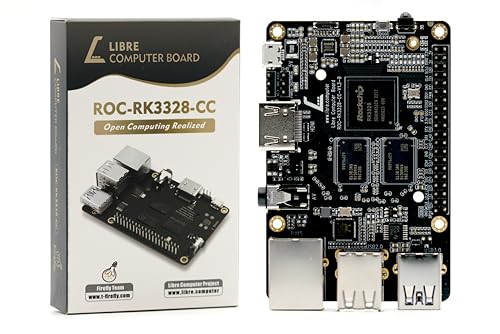
The Libre Computer Renegade 4GB Single Board Computer earns the top position because its dedicated Gigabit Ethernet port and 4GB memory deliver balanced throughput for wired network appliances and lightweight servers. This guide helps you choose the right board architecture, port configuration, and memory size for your networking requirements.
Quick picks
The best fit for you
- You need a dependable wired server with USB 3.0. Libre Computer Renegade 4GB Single Board Computer It provides 4GB of memory, Gigabit Ethernet, and USB 3.0 connectivity for wired network appliances.
- You need dedicated routing hardware with multi-gigabit throughput. WayPonDEV Banana Pi Wi-Fi 7 Router Board It provides four Gigabit Ethernet ports and dual 10GbE cages for high-bandwidth setups.
- You need fast onboard storage expansion with six processor cores. Radxa Rock 4A+ 6-Core Single Board Computer It pairs a 6-core processor with Gigabit Ethernet and 4-lane PCIe 2.1 expansion.
- You need a compact carrier for your compute module. Waveshare CM4 Nano Base Board with Gigabit Ethernet It measures 2.2 by 1.61 inches while supplying Gigabit Ethernet for your module.
Our 11 picks
Libre Computer Renegade 4GB Single Board Computer
Best for: wired network appliances and lightweight servers
- Networking
- Gigabit Ethernet (what this guide is about)
- Processor
- Quad 64-bit ARM Cortex-A53
- RAM Type
- DDR4
- Ethernet
- Gigabit Ethernet
- Video Resolution
- 4K 60FPS
- Operating System Support
- Ubuntu, Debian, Raspbian, Linux
View on Amazon: Libre Computer Renegade 4GB Single Board Computer Affiliate link
The Libre Computer Renegade is a single-board computer built around a quad-core 1.4GHz ARM Cortex-A53 processor. For wired network setups, it pairs native Gigabit Ethernet with a 5Gbps USB 3.0 port and 4GB of memory. It suits you if you need a dependable base for a small file server, local network appliance, or headless Linux utility where stable wired throughput matters most.
Pros
- Dedicated Gigabit Ethernet port for fast local networking
- High-speed 5Gbps USB 3.0 port for external drives
- Standard 40-pin header compatible with Raspberry Pi pin layouts
- UEFI bootloader support with mainline Linux 6.x kernel compatibility
Cons
- No integrated Wi-Fi or Bluetooth hardware onboard
- Raspberry Pi OS images require conversion tools before booting
Good fit if
- You need Gigabit Ethernet and USB 3.0 for network storage or a micro-server.
- You deploy standard 64-bit Linux distributions like Ubuntu or Debian.
- You want to reuse hardware hats using a standard 40-pin header.
Skip if
- You need built-in wireless networking without plugging in external USB dongles.
- You rely on standard Raspberry Pi software configurations without modifying images.
Verdict: Libre Computer Renegade 4GB Gigabit SBC delivers dependable Gigabit Ethernet and USB 3.0 connectivity for open-source Linux projects. It is an effective hardware choice whenever you prioritize wired data transfer over onboard wireless.

Waveshare CM4 Nano Base Board with Gigabit Ethernet
Best for: Compact CM4 projects needing Gigabit Ethernet
- Networking
- Gigabit Ethernet (what this guide is about)
- Ethernet
- Gigabit Ethernet
- Dimensions
- 2.2 × 1.61 × 0.39 inches
- Weight
- 0.71 ounces
View on Amazon: Waveshare CM4 Nano Base Board with Gigabit Ethernet Affiliate link
The Waveshare Nano Base Board for CM4 provides a compact carrier platform measuring 2.2 by 1.61 inches. You get a Gigabit Ethernet port, a standard 40-pin GPIO header, USB 2.0, and a Micro SD card socket for Compute Module 4 Lite boards. It matches the footprint of the compute module itself. This setup suits you if you need wired networking and essential expansion in tight installations.
Pros
- Gigabit Ethernet port for wired networking
- Compact 2.2 by 1.61-inch footprint matching the CM4 module size
- Standard 40-pin GPIO header plus CSI and DSI connectors
- Onboard Micro SD card socket for CM4 Lite models
Cons
- Raspberry Pi Compute Module 4 is not included
- USB connectivity is limited to USB 2.0 speeds
- Micro SD card socket only functions with CM4 Lite variants
Good fit if
- You already own or plan to purchase a Raspberry Pi Compute Module 4.
- You need Gigabit Ethernet in an enclosure with strict space limits.
- You want standard 40-pin GPIO pins on a minimal carrier board.
Skip if
- You need an all-in-one computer board that includes an integrated CPU.
- You require USB 3.0 throughput for external peripherals.
Verdict: Waveshare Nano Base Board for CM4 pairs Gigabit Ethernet and standard GPIO headers with a minimal footprint matching the compute module itself. It offers a practical foundation when you supply your own compatible module for tight embedded installations.

Waveshare Compute Module 4 to Pi 4 Adapter
Best for: turning a CM4 into a Pi 4B
- Networking
- Gigabit Ethernet (what this guide is about)
- Ethernet
- Gigabit Ethernet
View on Amazon: Waveshare Compute Module 4 to Pi 4 Adapter Affiliate link
The Waveshare Compute Module 4 to Pi 4 Adapter turns a Raspberry Pi Compute Module 4 into a standard Raspberry Pi 4B form factor. It provides a 10/100/1000M adaptive Gigabit Ethernet port, four USB 3.0 ports, and a PoE header. You get compatibility with Raspberry Pi 4B series HATs. This board suits you if you have a CM4 module and require standard I/O ports.
Pros
- Onboard RJ45 10/100/1000M adaptive Gigabit Ethernet port
- Four USB 3.0 ports with backward compatibility
- Onboard PoE header for connecting PoE HATs
- Supports both CM4 Lite and CM4 eMMC series boards
Cons
- Compute Module 4 is not included and must be purchased separately
- Requires an external power supply providing at least 5V 2A
Good fit if
- You already own a compatible Raspberry Pi Compute Module 4.
- You need Gigabit Ethernet and four USB 3.0 ports in a Pi 4 layout.
- You plan to use standard Raspberry Pi 4B expansion HATs.
Skip if
- You want an all-in-one single board computer that works out of the box.
- You do not have a dedicated 5V 2A power source.
Verdict: Waveshare Compute Module 4 to Pi 4 Adapter delivers Gigabit Ethernet and standard Raspberry Pi 4B port connectivity to your standalone CM4 board. It offers an effective baseboard solution if you already have the compute hardware.

WayPonDEV Banana Pi Wi-Fi 7 Router Board
Best for: advanced OpenWRT multi-gigabit routing projects
- Networking
- Gigabit Ethernet (what this guide is about)
- Processor
- MediaTek MT7988A (Filogic 880)
- RAM Capacity
- 4GB
- RAM Type
- DDR4
- Storage
- 8GB eMMC, 128MB SPI-NAND flash
- Ethernet
- 2x 10GbE SFP, 4x GbE
View on Amazon: WayPonDEV Banana Pi Wi-Fi 7 Router Board Affiliate link
The Banana Pi Quad-Core Router Board with 10GbE SFP provides an advanced networking platform equipped with four Gigabit Ethernet LAN ports and two 10GbE SFP cages. Driven by a quad-core MediaTek MT7988A processor with 4GB DDR4 memory, it gives you dedicated hardware throughput for custom routing setups. You also get an M.2 slot for NVMe storage expansion and miniPCIe slots, making this board suitable for complex home gateways.
Pros
- Four Gigabit Ethernet ports and two 10GbE SFP optical cages
- Quad-core MediaTek MT7988A processor with 4GB DDR4 memory
- M.2 Key-M slot supporting 2280 NVMe solid-state drives
- Two miniPCIe slots with PCIe 3.0 interfaces for add-in cards
Cons
- Requires separate miniPCIe modules for wireless functionality
- No integrated display outputs listed in specifications
- Larger footprint than compact SBCs at 148mm by 100.5mm
Good fit if
- You need multiple physical Gigabit ports combined with dual 10GbE SFP connections.
- You plan to build a custom OpenWRT router, firewall, or network gateway.
- You want onboard NVMe SSD expansion for local caching or network storage.
Skip if
- You require standard HDMI or video outputs for a desktop interface.
- You want out-of-the-box Wi-Fi without installing add-on expansion modules.
Verdict: Banana Pi Quad-Core Router Board with 10GbE SFP delivers expansive network bandwidth via its four Gigabit ports and dual 10GbE cages. It is a capable hardware foundation if you want to build a dedicated high-throughput gateway.

Radxa Rock 4A+ 6-Core Single Board Computer
Best for: Gigabit networking and PCIe M.2 storage
- Networking
- Gigabit Ethernet (what this guide is about)
- Processor
- Rockchip OP1
- RAM Capacity
- 4GB
- Storage
- 32GB eMMC
- Ethernet
- Gigabit Ethernet
- Video Resolution
- 4K
View on Amazon: Radxa Rock 4A+ 6-Core Single Board Computer Affiliate link
The Radxa Rock 4A+ 6-Core SBC is a compact single-board computer built around the Rockchip OP1 6-core processor. For wired networking, you get dedicated Gigabit Ethernet for reliable data transfers. It also integrates onboard eMMC storage, 4K HDMI display output, and an M.2 M Key connector with 4-lane PCIe 2.1 support. This setup suits you if you need steady network throughput alongside high-speed storage options.
Pros
- Rockchip OP1 6-core processor
- Gigabit Ethernet connectivity
- M.2 M Key connector with 4-lane PCIe 2.1
- HDMI output with up to 4K support
- 32GB onboard eMMC storage and 4GB RAM
Cons
- No wireless networking or Wi-Fi listed in specifications
- M.2 slot operates on older PCIe 2.1 generation
Good fit if
- You need Gigabit Ethernet paired with 4-lane PCIe 2.1 M.2 expansion.
- You want 32GB of onboard eMMC storage ready out of the box.
Skip if
- You require integrated Wi-Fi or wireless connectivity.
- You need faster PCIe 3.0 or PCIe 4.0 data transfer rates.
Verdict: Radxa Rock 4A+ 6-Core SBC delivers Gigabit Ethernet and 4-lane PCIe 2.1 expansion backed by a 6-core Rockchip processor. It gives you dependable network capability and fast onboard storage for small form factor setups.

XYGStudy Compute Module 5 Mini Base Board
Best for: Raspberry Pi Compute Module 5 builds
- Networking
- Gigabit Ethernet (what this guide is about)
- Ethernet
- Gigabit Ethernet RJ45
View on Amazon: XYGStudy Compute Module 5 Mini Base Board Affiliate link
This carrier board gives your Raspberry Pi Compute Module 5 a full physical interface setup. You get a Gigabit Ethernet RJ45 port for wired networking, two USB 3.2 Gen 1 Type-A ports, a 16-pin PCIe Gen2/3 x1 slot, and a color-coded 40-pin GPIO header. It suits you if you are deploying CM5 Lite or eMMC modules and require high-speed wired connectivity along with PCIe expansion.
Pros
- Gigabit Ethernet RJ45 port
- 16-pin PCIe Gen2/3 x1 expansion connector
- Two USB 3.2 Gen 1 Type-A ports
- Color-coded 40-pin Raspberry Pi GPIO header
- Supports both CM5 Lite and CM5 eMMC modules
Cons
- Requires a separate Compute Module 5 to operate
- Secondary USB 2.0 lines require 6-pin FFC wiring instead of standard ports
Good fit if
- You already have or plan to purchase a Raspberry Pi Compute Module 5.
- You need Gigabit Ethernet combined with PCIe Gen2/3 x1 capability.
Skip if
- You need an all-in-one single board computer that includes CPU and RAM.
- You require standard Type-A sockets for all USB connections.
Verdict: XYGStudy Compute Module 5 Mini Base Board provides a dependable breakout for CM5 modules with Gigabit Ethernet and PCIe connectivity. It serves as a practical, compact carrier when building custom setups around Raspberry Pi compute hardware.
Khadas VIM3L Single Board Computer
Best for: low-power edge AI and media networking
- Networking
- Gigabit Ethernet (what this guide is about)
- Processor
- Amlogic S905D3
- RAM Type
- LPDDR4/X
- Storage
- 16MB SPI Flash
- Ethernet
- Gigabit Ethernet with WOL
- Wireless Connectivity
- 2T2R AC Wi-Fi, Bluetooth 5.0
View on Amazon: Khadas VIM3L Single Board Computer Affiliate link
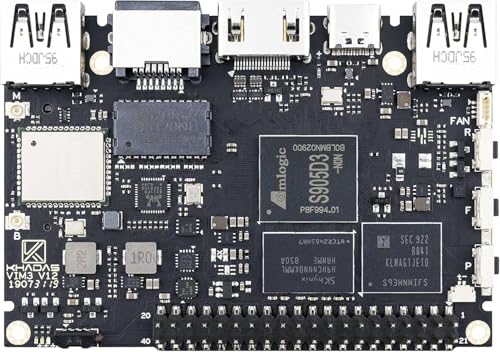
This Khadas single board computer pairs an Amlogic S905D3 processor with Gigabit Ethernet featuring Wake-on-LAN support. You get a built-in neural processing unit rated at 1.2 TOPS, dual-band AC Wi-Fi, Bluetooth 5.0, and 4K video decoding at 60 frames per second. Power delivery runs over USB-C PD or VIN. It suits you if you need a compact networked board for edge AI workloads, media playback, or low-power home server applications.
Pros
- Gigabit Ethernet with Wake-on-LAN support
- 1.2 TOPS NPU for INT8 neural network inference
- 4K 60fps multi-video decoding support
- USB-C Power Delivery and VIN power inputs
- 2T2R AC Wi-Fi and Bluetooth 5.0 connectivity
Cons
- Power supply is not included in the box
- Onboard storage limited to 16MB SPI flash
Good fit if
- You need Wake-on-LAN support on a wired Gigabit network connection.
- You deploy lightweight deep learning models using TensorFlow or Caffe.
- You build home media playback setups requiring 4K 60fps decoding.
Skip if
- You want an included power supply and cables in the box.
- You need multi-gigabit networking speeds exceeding 1 Gbps.
Verdict: Khadas S905D3 Single Board Computer delivers reliable Gigabit Ethernet with Wake-on-LAN and hardware AI acceleration in a compact footprint. It serves as a capable foundation for network-attached edge projects and media processing.

Banana Pi WiFi 7 Router Board
Best for: custom multi-gigabit OpenWRT routers and gateways
- Networking
- Gigabit Ethernet (what this guide is about)
- Processor
- MediaTek MT7987A (Filogic 880)
- RAM Capacity
- 2GB
- RAM Type
- DDR4
- Storage
- 8GB eMMC, 256MB NAND, 32MB NOR
- Ethernet
- 1x 2.5G SFP, 1x 2.5G RJ45, 4x GbE LAN
View on Amazon: Banana Pi WiFi 7 Router Board Affiliate link
This router development board pairs a quad-core ARM Cortex-A53 processor with 2GB of DDR4 memory and 8GB of eMMC storage. For networking setups, you get four Gigabit Ethernet LAN ports alongside a 2.5 Gigabit WAN port, a 2.5G SFP slot, and a modular Wi-Fi 7 card. It suits you if you plan to build a custom OpenWRT network gateway, home router, or dedicated network appliance.
Pros
- Four dedicated Gigabit Ethernet LAN ports
- 2.5G RJ45 WAN port and 2.5G SFP optical slot
- Included tri-band Wi-Fi 7 wireless module
- M.2 Key-B and miniPCIe slots for 4G, 5G, or NVMe expansion
Cons
- 8GB onboard eMMC storage limits local capacity
- No display output ports listed
- PoE support requires separate module welding
Good fit if
- You want four Gigabit LAN ports alongside 2.5G WAN and SFP connections.
- You plan to run an OpenWRT router or gateway with tri-band Wi-Fi 7.
- You need cellular failover using M.2 Key-B or SIM card slots.
Skip if
- You require an onboard display output such as HDMI for desktop use.
- You want high onboard storage without adding a microSD card or NVMe SSD.
Verdict: WayPonDEV Banana Pi Router Board with Wi-Fi 7 delivers four Gigabit LAN ports and multi-gigabit uplink options for dedicated router projects. Its built-in Wi-Fi 7 card and cellular expansion slots give you a flexible hardware foundation for custom network gateways.

KICKPI Allwinner H618 2GB SBC
Best for: compact 4K media streaming and lightweight networking
- Networking
- Gigabit Ethernet (what this guide is about)
- Processor
- Allwinner H618
- RAM Capacity
- 2GB
- RAM Type
- DDR
- Storage
- 16GB eMMC
- Ethernet
- Gigabit Ethernet
View on Amazon: KICKPI Allwinner H618 2GB SBC Affiliate link
The KICKPI Allwinner H618 2GB SBC is a compact single-board computer built for networking and media tasks. It features an Allwinner H618 quad-core processor, 2GB of system memory, and 16GB of onboard eMMC storage. You get Gigabit Ethernet alongside dual-band Wi-Fi for fast network transfers, plus 4K video decoding via HDMI. It suits you if you need a dedicated Android 12 or Ubuntu 22.04 device for low-power streaming and light edge projects.
Pros
- Gigabit Ethernet alongside dual-band 2.4GHz and 5GHz Wi-Fi
- 16GB onboard eMMC storage plus micro SD expansion
- Hardware decoding for 4K video at 60Hz via HDMI
- Dual operating system support for Android 12 and Ubuntu 22.04
Cons
- External USB connectivity is limited to USB 2.0 speeds
- Expansion interface provides 20 pins rather than a standard 40-pin layout
Good fit if
- You need a compact media streaming endpoint with Gigabit networking.
- You want integrated eMMC storage out of the box without buying extra boot media.
- You intend to build embedded projects on Android 12 or Ubuntu 22.04.
Skip if
- You require USB 3.0 throughput for fast external storage drives.
- You need a 40-pin header for compatibility with standard expansion HATs.
Verdict: KICKPI Allwinner H618 2GB SBC provides reliable Gigabit networking and capable 4K hardware decoding on an efficient low-power board. It is a practical platform for lightweight home servers, media setups, and custom embedded tasks.

KICKPI Android Single Board Computer with 2GB RAM
Best for: compact IoT builds and embedded display terminals
- Networking
- Gigabit Ethernet (what this guide is about)
- Processor
- Allwinner A133
- RAM Capacity
- 2GB
- Storage
- 16GB eMMC
- Ethernet
- Gigabit Ethernet
- Wireless Connectivity
- Wi-Fi, Bluetooth, 4G LTE
View on Amazon: KICKPI Android Single Board Computer with 2GB RAM Affiliate link
The KICKPI single board computer combines an Allwinner A133 quad-core processor with 2GB of RAM and 16GB of onboard eMMC storage. You get integrated Gigabit Ethernet alongside WiFi, Bluetooth, and cellular 4G module support for networking. Power options include 12V DC input, battery operation, or PoE. This board suits your embedded projects, touch panels, or IoT edge setups that require dedicated wired networking and flexible display outputs like MIPI and LVDS.
Pros
- Built-in Gigabit Ethernet with integrated WiFi and Bluetooth
- Triple power support via 12V DC, battery, or PoE
- Dedicated MIPI-DSI and LVDS display outputs
- Onboard 16GB eMMC flash storage
Cons
- RAM is limited to 2GB with no higher capacity options
- No standard HDMI port listed in the specifications
- Operating system support in specifications is limited to Android
Good fit if
- You need Gigabit Ethernet with flexible power choices like PoE or battery.
- You build embedded systems using MIPI-DSI or LVDS display panels.
- You require onboard eMMC storage and cellular 4G expansion capability.
Skip if
- You need more than 2GB of RAM for heavy workloads.
- You require a plug-and-play full-size HDMI video output.
Verdict: KICKPI 2GB RAM Gigabit Single Board Computer delivers wired networking, onboard storage, and versatile display interfaces for embedded designs. Its flexible 12V, battery, and PoE power options simplify installation across remote and industrial hardware setups.
Khadas VIM3L Single Board Computer
Best for: edge AI and 4K media setups
- Networking
- Gigabit Ethernet (what this guide is about)
- Processor
- Amlogic S905D3
- RAM Type
- LPDDR4/X
- Storage
- 16MB SPI Flash
- Ethernet
- Gigabit Ethernet
- Wireless Connectivity
- 2T2R AC Wi-Fi, Bluetooth 5.0
View on Amazon: Khadas VIM3L Single Board Computer Affiliate link
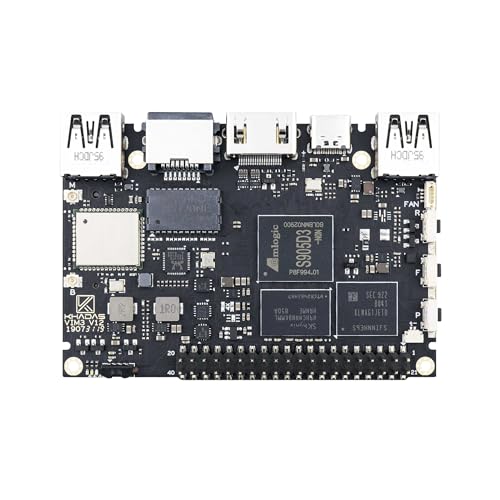
The Khadas VIM3L Single Board Computer provides low-power computing driven by a 12nm Amlogic S905D3 processor. For local networking, you get a Gigabit Ethernet port with Wake-on-LAN support alongside dual-band Wi-Fi 5 and Bluetooth 5.0. It also integrates an onboard 1.2 TOPS NPU for machine learning tasks and multi-video decoding up to 4K at 60 fps. This board suits you if you need compact, network-connected hardware for edge AI or media applications.
Pros
- Gigabit Ethernet with Wake-on-LAN support
- Onboard NPU with up to 1.2 TOPS for deep learning inference
- Multi-video decoding up to 4K at 60 fps with dual display support
- 2T2R AC Wi-Fi with RSDB and Bluetooth 5.0
Cons
- Does not include a USB-C power supply in the box
- Does not include storage media in the box
Good fit if
- You need Gigabit Ethernet with Wake-on-LAN for remote network boot and power control.
- You want hardware acceleration for deep learning models like TensorFlow and Caffe.
- You plan to decode 4K video at 60 fps across independent display outputs.
Skip if
- You need a bundle that includes an out-of-the-box power adapter.
- You require network speeds higher than 1 Gbps.
Verdict: Khadas VIM3L Single Board Computer delivers reliable Gigabit networking and dedicated 1.2 TOPS neural acceleration in an efficient 12nm footprint. It is a capable choice for compact home servers and edge inferencing projects.
Specifications side by side
| Spec | Libre Computer Renegade 4GB Single Board Computer | Waveshare CM4 Nano Base Board with Gigabit Ethernet | Waveshare Compute Module 4 to Pi 4 Adapter | WayPonDEV Banana Pi Wi-Fi 7 Router Board | Radxa Rock 4A+ 6-Core Single Board Computer | XYGStudy Compute Module 5 Mini Base Board | Khadas VIM3L Single Board Computer | Banana Pi WiFi 7 Router Board | KICKPI Allwinner H618 2GB SBC | KICKPI Android Single Board Computer with 2GB RAM | Khadas VIM3L Single Board Computer |
|---|---|---|---|---|---|---|---|---|---|---|---|
| Processor | Quad 64-bit ARM Cortex-A53 | not stated | not stated | MediaTek MT7988A (Filogic 880) | Rockchip OP1 | not stated | Amlogic S905D3 | MediaTek MT7987A (Filogic 880) | Allwinner H618 | Allwinner A133 | Amlogic S905D3 |
| RAM Capacity | not stated | not stated | not stated | 4GB | 4GB | not stated | not stated | 2GB | 2GB | 2GB | not stated |
| RAM Type | DDR4 | not stated | not stated | DDR4 | not stated | not stated | LPDDR4/X | DDR4 | DDR | not stated | LPDDR4/X |
| Storage | not stated | not stated | not stated | 8GB eMMC, 128MB SPI-NAND flash | 32GB eMMC | not stated | 16MB SPI Flash | 8GB eMMC, 256MB NAND, 32MB NOR | 16GB eMMC | 16GB eMMC | 16MB SPI Flash |
| Ethernet | Gigabit Ethernet | Gigabit Ethernet | Gigabit Ethernet | 2x 10GbE SFP, 4x GbE | Gigabit Ethernet | Gigabit Ethernet RJ45 | Gigabit Ethernet with WOL | 1x 2.5G SFP, 1x 2.5G RJ45, 4x GbE LAN | Gigabit Ethernet | Gigabit Ethernet | Gigabit Ethernet |
| Wireless Connectivity | not stated | not stated | not stated | Wi-Fi 7 | not stated | not stated | 2T2R AC Wi-Fi, Bluetooth 5.0 | Wi-Fi 7 (802.11a/b/g/n/ac/ax/be) | Dual-Band Wi-Fi, Bluetooth | Wi-Fi, Bluetooth, 4G LTE | 2T2R AC Wi-Fi, Bluetooth 5.0 |
| Video Resolution | 4K 60FPS | not stated | not stated | not stated | 4K | not stated | 4K at 75fps | not stated | 4K at 60Hz | 1920x1200 at 60Hz | 4K at 75fps |
| Operating System Support | Ubuntu, Debian, Raspbian, Linux | not stated | not stated | OpenWRT | not stated | not stated | not stated | OpenWRT | Android 12, Ubuntu 22.04 | Android 10, Ubuntu 16.04 | not stated |
| Memory | not stated | not stated | not stated | not stated | not stated | not stated | not stated | not stated | not stated | 2GB RAM | not stated |
| Operating System | not stated | not stated | not stated | not stated | not stated | not stated | not stated | not stated | Android | Android | not stated |
| Use | not stated | not stated | not stated | Home, NAS | not stated | not stated | Home | Home, NAS | not stated | not stated | Home |
| Networking | Gigabit Ethernet | Gigabit Ethernet | Gigabit Ethernet | Gigabit Ethernet | Gigabit Ethernet | Gigabit Ethernet | Gigabit Ethernet | Gigabit Ethernet | Gigabit Ethernet | Gigabit Ethernet | Gigabit Ethernet |
| Connectivity | not stated | not stated | not stated | not stated | not stated | not stated | Bluetooth 5.0 | not stated | not stated | not stated | Bluetooth 5.0 |
| Dimensions | not stated | 2.2 × 1.61 × 0.39 inches | not stated | 5.82 × 3.96 × 0.79 inches | not stated | not stated | not stated | 5.82 × 3.97 × 0.78 inches | 3.16 × 2.2 × 0.75 inches | 4.33 × 2.95 × 0.79 inches | not stated |
| Weight | not stated | 0.71 ounces | not stated | 8.82 ounces | not stated | not stated | not stated | not stated | 2.12 ounces | not stated | not stated |
| Size | 4GB | not stated | not stated | 148mm x 100.5mm x 20mm | not stated | not stated | not stated | Bundle1 | 2G and 16G | not stated | not stated |
| Color | Black | not stated | CM4 To Pi 4B | Bundle1 | not stated | not stated | not stated | 2GB | Black | Black | not stated |
| Model | ROC-RK3328-CC-V1 | Nano Base Board (B) | CM4-to-Pi4-Adapter | BPI-R4 Wi-Fi 7 Tri-Band Router Board | Radxa ROCK 4AP 4GB 32GB | CM5-IO-BASE-A | not stated | BPI-R4 Lite WiFi7 Router Board | KICKPI K2B | KICKPI K5C | not stated |
For a related comparison, read best single kayaks.
How to Choose a Gigabit Single Board Computer
-
System Memory Capacity
You need to balance your memory allocation against your background services. Single board computers in this category typically offer 2GB or 4GB of RAM. If you plan to run lightweight network routing, a DNS sinkhole, or a basic file share, 2GB is often sufficient. If you run multiple background services or larger server software, choose 4GB instead. For example, the Libre Computer Renegade 4GB provides extra headroom so your system avoids exhausting memory during peak traffic loads.
-
Built-In Storage Options
Consider how your operating system and network logs will be stored. Some boards rely solely on external cards, while others include soldered eMMC flash or PCIe lanes for expansion. Solid-state eMMC storage offers dependable throughput and reduces the risk of card corruption during sudden power drops. If your application logs high volumes of network traffic, prioritize boards offering built-in flash or high-speed buses. The Radxa Rock 4A+ 6-Core Single Board Computer includes 32GB of storage alongside a 4-lane PCIe 2.1 expansion interface.
-
Operating System Compatibility
Check the supported operating system before you finalize your hardware choice. Different boards target different software platforms, ranging from open-source Linux distributions to mobile operating systems. If you plan to deploy standard networking tools, verify that the board supports a Linux release. If you need a dedicated media playback setup or a touch interface, an Android platform might be more suitable. For instance, the KICKPI Allwinner H618 2GB SBC lists Android as its native operating system for media and lightweight tasks.
-
Power Delivery Flexibility
Review how you will deliver electricity to your single board computer in its final operating environment. Standard boards rely on simple DC barrel plugs or USB connections, which require placing the hardware near a dedicated wall outlet. For installations in network closets, ceilings, or remote enclosures, flexible input options make deployment easier. The KICKPI Android Single Board Computer with 2GB RAM lists 12V, battery, and PoE power options, allowing you to run power and data across a single Ethernet drop.
-
Remote Wake and Acceleration
Look for specialized network and hardware acceleration features if you run an always-on edge appliance. Standard boards keep Ethernet links active, but some models add Wake-on-LAN functionality so you can power up the hardware remotely across your local network. Dedicated neural processing units also offload computational tasks without slowing standard traffic routing. The Khadas VIM3L Single Board Computer pairs Gigabit Ethernet with Wake-on-LAN and a 1.2 TOPS neural acceleration processor, giving you hardware-level support for edge inferencing and automated network wakeups.
-
Physical Board Dimensions
Measure your project enclosure before selecting a board. Physical dimensions vary significantly across Gigabit models, from full router layouts measuring over 5 inches long down to miniature embedded carriers. Compact boards fit into tight spaces but may cluster ports closely together. Larger boards provide wider spacing for wiring and thermal clearance. For extremely tight spaces, the Waveshare CM4 Nano Base Board with Gigabit Ethernet measures just 1.61 inches wide by 2.2 inches long, making it suitable for compact embedded enclosures.
Frequently asked questions
What network speeds can you expect from a Gigabit Ethernet single board computer?
You can expect theoretical data transfer speeds up to 1,000 megabits per second, which equals roughly 125 megabytes per second. Real-world throughput depends heavily on processor bandwidth and interface design. For example, the Radxa Rock 4A+ pairs Gigabit networking with a 6-core Rockchip processor and PCIe 2.1 expansion to prevent throughput bottlenecks during heavy data movement.
Can you power a Gigabit single board computer using Power over Ethernet?
Yes, select single board computers support Power over Ethernet directly or via specific hardware configurations. For example, the KICKPI K5C features native PoE power options alongside standard 12V and battery inputs. This allows you to supply both system power and network data through a single Ethernet cable, simplifying deployments in industrial or remote environments.
What is the difference between a standalone single board computer and a carrier board?
A standalone model contains an integrated processor, memory, and network chip on a single board, such as the Libre Computer Renegade. In contrast, carrier options like the Waveshare CM4 Nano Base Board or XYGStudy CM5 Base Board provide physical Gigabit ports and connectors but require you to attach an external compute module to function.
Can a single board computer function as a dedicated multi-port network router?
Yes, specialized single board computers feature multiple network interfaces designed for routing tasks. The WayPonDEV Banana Pi BPI-R4 includes four Gigabit LAN ports alongside dual 10GbE SFP cages and Wi-Fi 7 hardware. These interfaces allow you to handle multi-gigabit uplinks, route traffic across separate local networks, and run dedicated OpenWRT router firmware.
Does Gigabit Ethernet support Wake-on-LAN on single board computers?
Wake-on-LAN support depends on the specific hardware controller implemented by the manufacturer. Certain networking-focused boards include this capability natively. For instance, the Khadas VIM3L specifies Wake-on-LAN support alongside its Gigabit Ethernet port. This feature enables you to trigger system startup or wake the board remotely across your local area network.
Which operating systems run on single board computers with Gigabit Ethernet?
Operating system support depends on the board processor and manufacturer firmware images. Many boards target open-source Linux distributions for network appliances, while others run mobile platforms. For example, the KICKPI K2B and K5C come configured with Android, whereas boards like the Libre Computer Renegade focus on open-source Linux for lightweight server deployments.
How does onboard storage affect Gigabit network transfer performance?
Storage write speeds determine whether a board can write incoming network traffic without throttling. If you write data across a Gigabit link, you need storage capable of sustaining up to 125 megabytes per second. Boards like the Radxa Rock 4A+ include 32GB onboard storage and PCIe expansion, while the KICKPI K2B provides 16GB eMMC storage.