Best Single Board Computers Under $50: 11 Spec-Based Picks
As an Amazon Associate we earn from qualifying purchases. Links on this page are affiliate links.
Finding the best single board computers under $50 requires checking published specs, not marketing claims. This guide compares 11 options ranked by their technical data. The top pick is the Freenove Ultimate Starter Kit for Raspberry Pi. It leads because it provides a comprehensive parts bundle for learning electronics with guided projects. Each selection is based strictly on the specifications listed on the product pages. This approach helps you decide which board matches your specific hardware needs. You can compare features like connectivity, memory, and form factor to find the right fit for your next embedded project.
Quick picks
The best fit for you
- You want guided electronics learning projects Freenove Ultimate Starter Kit for Raspberry Pi The Freenove kit includes a comprehensive parts bundle for building without sourcing components.
- You need a compact board with wireless MiiElAOD Banana Pi Quad-Core Single Board Computer The MiiElAOD BPI-M2 Zero offers a compact form factor with wireless capabilities.
- You require upstream Linux support for development Libre Computer Tritium 2GB SBC with USB WiFi The Libre Computer Tritium supports open-source software stacks and includes USB WiFi.
- You need integrated MCU with Linux KLAYERS Luckfox Lyra Ultra Linux Board The KLAYERS Luckfox Lyra Ultra features a dual-core architecture with onboard storage.
- You need Gigabit Ethernet and WiFi 5 Orange Pi Zero 3 Single Board Computer The Orange Pi Zero 3 provides wired stability and WiFi 5 connectivity.
Our 11 picks

Freenove Ultimate Starter Kit for Raspberry Pi
Best for: learning electronics with guided projects
View on Amazon: Freenove Ultimate Starter Kit for Raspberry Pi
This is a hardware bundle for Raspberry Pi boards, not a computer itself. It includes 223 electronic components, sensors, and wires. The kit supports models like the Pi 5, Zero 2 W, and 4B. It provides five sets of code, including Python and Scratch. A 962-page digital tutorial covers 128 projects. It suits beginners who need a complete parts list for learning electronics.
Pros
- Includes 223 electronic components and modules
- Supports 128 step-by-step projects
- Provides code in Python, C, Java, and Scratch
- Compatible with Raspberry Pi 5, 4B, and Zero series
Cons
- Does not include the Raspberry Pi board
- Tutorial is digital only, no paper manual
- Requires separate power supply for the Pi
Good fit if
- You are new to Raspberry Pi and need parts
- You want to learn through 128 guided projects
- You prefer digital tutorials over physical manuals
Skip if
- You need a complete computer with the board included
- You want to start coding without hardware
- You prefer printed instruction booklets
Verdict: Freenove Raspberry Pi Starter Kit is a comprehensive parts bundle for learners. It fits users who want to build electronics projects without sourcing individual components. It is not a computer but a resource for one.

MiiElAOD Banana Pi Quad-Core Single Board Computer
Best for: basic embedded projects needing wireless
- Processor
- Allwinner H3/H2+, Quad-core Cortex-A7
- RAM Capacity
- 512MB
- RAM Type
- DDR 3 SDRAM
- Wireless Connectivity
- WiFi (AP6212) & Bluetooth
View on Amazon: MiiElAOD Banana Pi Quad-Core Single Board Computer
This single board computer uses the Allwinner H3/H2+ quad-core processor. It includes 512MB of DDR3 RAM. The board features onboard WiFi and Bluetooth. It offers a 40-pin GPIO header compatible with Raspberry Pi. This setup suits basic embedded projects. It fits users needing low-cost computing with wireless connectivity.
Pros
- Allwinner H3/H2+ quad-core processor
- 512MB DDR3 RAM
- Onboard WiFi and Bluetooth
- 40-pin Raspberry Pi-compatible GPIO
Cons
- Only 512MB RAM limits multitasking
- Quad-core Cortex-A7 is older architecture
- No mention of included case or power supply in base specs
Good fit if
- You need a Raspberry Pi-compatible board
- You require onboard wireless connectivity
- You are building simple embedded systems
Skip if
- You need more than 512MB RAM
- You require modern high-performance processing
- You want a complete kit with case
Verdict: MiiElAOD BPI-M2 Zero Single Board Computer provides essential specs for hobbyists. It fits those needing a compact, wireless-capable board for basic tasks.

Youyeetoo Banana Pi M2 Zero
Best for: basic hobbyist electronics projects
- Processor
- Quad Core ARM Cortex A7 CPU H3
- RAM Capacity
- 512MB
- RAM Type
- SDRAM
- Wireless Connectivity
- WiFi (AP6212) & BT
- Operating System Support
- Raspbian, Android, Armbian, Ubuntu
This single board computer uses a Quad Core ARM Cortex A7 H3 processor and 512MB SDRAM. It includes onboard WiFi and Bluetooth for wireless connectivity. You get a Mini HDMI port and a 40-pin GPIO header for projects. It supports operating systems like Raspbian and Ubuntu. This model suits beginners who need basic computing power and standard expansion headers for small DIY electronics.
Pros
- Quad Core ARM Cortex A7 H3 processor
- 512MB SDRAM memory capacity
- Onboard WiFi and Bluetooth connectivity
- 40-pin Raspberry Pi-compatible GPIO header
- Mini HDMI video output
Cons
- Only 512MB RAM limits multitasking
- No onboard storage or eMMC mentioned
- Uses Micro USB for power input
Good fit if
- You need a low-cost starter board for learning Linux
- You require standard GPIO pins for sensor projects
- You want built-in wireless connectivity without adapters
Skip if
- You need more than 512MB of RAM for heavy tasks
- You require built-in storage for the operating system
- You want a modern high-performance processor
Verdict: Youyeetoo Banana Pi M2 Zero provides essential specs for entry-level hobbyists who prioritize GPIO access and wireless features over processing power or memory capacity.

Libre Computer Tritium 2GB SBC with USB WiFi
Best for: upstream Linux development and media decoding
- Processor
- Quad 64-bit 1GHz ARM Cortex-A53
- RAM Capacity
- 2GB
- RAM Type
- DDR3
- Wireless Connectivity
- WiFi 4
- Video Resolution
- 4K
- Operating System Support
- Ubuntu, Debian 12, Raspbian 12, Linux
View on Amazon: Libre Computer Tritium 2GB SBC with USB WiFi
This single-board computer pairs a 1GHz quad-core ARM Cortex-A53 processor with 2GB of DDR3 memory and 4K video decoding. It runs mainline Linux distributions like Ubuntu and Debian with standardized UEFI bootloader support. The board includes a 40-pin GPIO header and an external Wi-Fi 4 USB adapter, making it practical if you want standard open-source OS support.
Pros
- 2GB DDR3 memory with hardware-accelerated 4K video decoding
- Standardized UEFI bootloader and upstream Linux kernel support
- Raspberry Pi compatible 40-pin GPIO header and onboard IR sensor
- Includes a heatsink and GenBasic USB Wi-Fi adapter in the box
Cons
- Clock speed is limited to 1GHz across the Cortex-A53 cores
- Uses DDR3 memory rather than newer LPDDR4 memory
- Wireless connectivity relies on older Wi-Fi 4 speeds
Good fit if
- You need upstream Linux, Debian, or Ubuntu support with UEFI boot capabilities
- You want a 40-pin GPIO header layout for hardware projects
- You require 4K H.265 and VP9 video decoding for media playback
Skip if
- You need CPU clock speeds faster than 1GHz for compute-heavy workloads
- You require faster networking than Wi-Fi 4 provides
Verdict: Libre Computer Tritium 2GB SBC fits Linux developers who need upstream kernel compatibility and 4K playback on low-power hardware.

Waveshare Compute Module 5 PoE IO Board
Best for: Raspberry Pi Compute Module 5 integration
This is a base board for the Raspberry Pi Compute Module 5. It features a standard CM5 socket and a 40-pin GPIO header. The design supports Power over Ethernet, allowing you to connect network and power through a single cable. It includes an NVMe slot for faster storage access compared to SD cards. You also get MIPI, HDMI, USB, and Ethernet ports. This board suits integrators who need a compact, reliable foundation for CM5 projects.
Pros
- Supports Power over Ethernet for single-cable connectivity
- Includes NVMe slot for faster read/write speeds
- Standard CM5 socket and 40-pin GPIO header
- Features MIPI, HDMI, USB, and Ethernet connectors
Cons
- Does not include the Compute Module 5 itself
- Requires separate power supply if not using PoE
- No built-in display or input peripherals
Good fit if
- You are integrating a Raspberry Pi Compute Module 5 into a custom device
- You need Power over Ethernet to simplify cabling
- You want faster storage performance via NVMe
Skip if
- You need a complete computer ready to use out of the box
- You are looking for a standalone board without a module
- You require a built-in display or keyboard
Verdict: Waveshare CM5 IO Board with PoE is a specialized carrier board for the Raspberry Pi Compute Module 5. It is best for developers and integrators who need a compact, PoE-enabled foundation for custom embedded projects.

XYGStudy Raspberry Pi Compute Module 5 PoE IO Board
Best for: PoE integration with existing CM5 modules
View on Amazon: XYGStudy Raspberry Pi Compute Module 5 PoE IO Board
This is an input/output board designed for the Raspberry Pi Compute Module 5. It features a standard CM5 socket and a 40-pin GPIO header. The board supports Power over Ethernet, allowing you to connect network and power through a single cable. It is suitable for evaluating the module or integrating it into end products. You get a base platform rather than a complete computer.
Pros
- Supports Power over Ethernet for combined power and data
- Standard CM5 socket for all Compute Module 5 variants
- Includes a 40-pin GPIO header
- Suitable for end-product integration
Cons
- Does not include the Compute Module 5 itself
- Requires separate power or PoE switch
- Sold as a base board only
Good fit if
- You already own a Raspberry Pi Compute Module 5
- You need PoE connectivity for your project
- You are building a custom embedded device
Skip if
- You need a complete computer out of the box
- You do not have a Compute Module 5
- You want a pre-assembled system
Verdict: XYGStudy CM5 PoE IO Board provides a reliable base for your module with PoE support. It fits developers who already have the CM5 and need network integration.

KLAYERS Luckfox Lyra Ultra Linux Board
Best for: Linux SBCs with integrated MCU
- Processor
- RK3506B Cortex-A7 & Cortex-M0
- Storage
- 8GB eMMC
- Operating System Support
- Linux
- Architecture
- ARM
This single board computer uses the RK3506B processor with a triple-core Cortex-A7 CPU and a Cortex-M0 MCU. It includes 8GB of onboard eMMC storage. The board supports Linux and offers DDR2/DDR3 expansion slots. You get built-in audio and video codecs for media tasks. This setup suits developers needing a compact Linux base with integrated MCU capabilities.
Pros
- RK3506B processor with Cortex-A7 and Cortex-M0 cores
- 8GB onboard eMMC storage
- Built-in audio and video codecs
- Supports Linux operating system
Cons
- Requires external DDR2 or DDR3 memory expansion
- Sold as development board only without accessories
- Limited to ARM architecture
Good fit if
- You need a Linux-based SBC with an integrated MCU
- You want onboard eMMC for reliable storage
- You are building an audio or video project
Skip if
- You require a complete kit with cables and cases
- You need Windows or macOS compatibility
- You want a plug-and-play desktop replacement
Verdict: KLAYERS Luckfox Lyra Ultra provides a unique dual-core architecture for Linux projects. It fits developers who need an integrated MCU and onboard storage in a compact form factor.

KICKPI Allwinner H618 2GB SBC
Best for: budget IoT gateways and dev projects
- Processor
- Allwinner H618
- RAM Capacity
- 2GB
- RAM Type
- DDR
- Storage
- 16GB eMMC
- Ethernet
- Gigabit Ethernet
- Wireless Connectivity
- Dual-Band Wi-Fi, Bluetooth
The KICKPI K2B is a compact single board computer built around the Allwinner H618 quad-core processor. It pairs 2GB of DDR RAM with 16GB of eMMC storage for reliable local data retention. You get dual-band Wi-Fi, Bluetooth, and Gigabit Ethernet for robust connectivity. The Mali-G31 MP2 GPU supports 4K@60Hz video decoding, making it suitable for multimedia tasks. It runs Android 12 or Ubuntu 22.04, offering flexibility for various development projects.
Pros
- Allwinner H618 quad-core processor with Mali-G31 MP2 GPU
- 16GB eMMC storage for stable operation
- Dual-band Wi-Fi and Gigabit Ethernet connectivity
- 4K@60Hz hardware video decoding support
- Supports both Android 12 and Ubuntu 22.04
Cons
- Only 2GB of RAM limits heavy multitasking
- 16GB storage may fill up quickly with large projects
- No mention of included power supply or case
Good fit if
- You need a budget-friendly SBC for IoT gateways
- You want dual OS support for development
- You require Gigabit Ethernet for stable networking
Skip if
- You need more than 2GB of RAM for complex tasks
- You require high-end graphics performance
- You need a large storage capacity for media libraries
Verdict: KICKPI K2B 2GB Allwinner H618 SBC fits developers needing a dual-OS platform with solid networking. It is a practical choice for IoT projects that do not demand high RAM or storage.
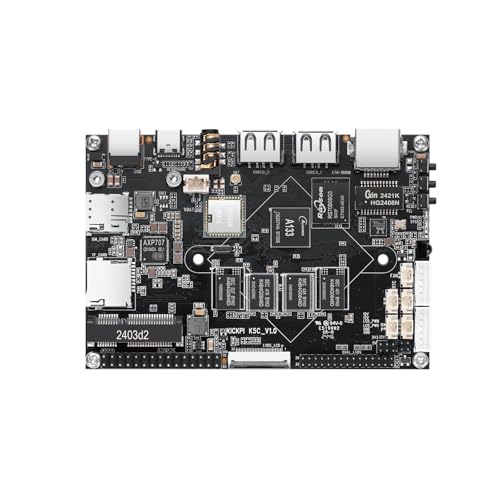
KICKPI Android Single Board Computer with 2GB RAM
Best for: IoT gateways and industrial displays
- Processor
- Allwinner A133
- RAM Capacity
- 2GB
- Storage
- 16GB eMMC
- Ethernet
- Gigabit Ethernet
- Wireless Connectivity
- Wi-Fi, Bluetooth, 4G LTE
- Video Resolution
- 1920x1200 at 60Hz
View on Amazon: KICKPI Android Single Board Computer with 2GB RAM
The KICKPI K5C is a single board computer built for embedded projects. It uses an Allwinner A133 quad-core processor running at 1.5GHz. You get 2GB of RAM and 16GB of eMMC storage. The board includes gigabit Ethernet and supports 4G LTE modules. It also offers flexible power options like PoE. This setup suits users needing reliable wired connectivity for industrial or IoT applications.
Pros
- Allwinner A133 quad-core processor at 1.5GHz
- 2GB RAM with 16GB eMMC storage
- Gigabit Ethernet and 4G LTE support
- PoE, battery, and 12V DC power options
- MIPI-DSI and LVDS display interfaces
Cons
- Only 2GB of RAM limits multitasking
- No built-in Wi-Fi requires 4G module or dongle
- Android 10 is an older operating system
Good fit if
- You need gigabit Ethernet for stable wired connections
- You want PoE power for easy installation
- You are building an IoT gateway
Skip if
- You require built-in Wi-Fi without extra hardware
- You need more than 2GB of RAM
- You want the latest Android version
Verdict: The KICKPI K5C Allwinner A133 2GB RAM fits developers who need wired stability and PoE power for embedded projects. It is a practical choice for IoT gateways and industrial displays.

M5Stack Cardputer Pocket ESP32-S3 Board
Best for: compact IoT and embedded prototyping
- Processor
- ESP32-S3
The M5Stack Cardputer Adv Version is a card-sized single board computer built around the ESP32-S3 Stamp-S3A core. This pocket-sized unit is designed for rapid prototyping, IoT development, and embedded system learning. It delivers strong processing power in a compact form factor. You will find it suitable for developers who need a portable, spec-focused tool for embedded projects without the bulk of larger boards.
Pros
- Powered by the ESP32-S3 Stamp-S3A core
- Card-sized, pocket-sized body for portability
- Optimized for rapid prototyping and IoT development
- Ideal for embedded system learning
Cons
- Limited to embedded and IoT tasks rather than general computing
- No display or input peripherals included in the board itself
- Not suitable for desktop or high-performance workloads
Good fit if
- You are building IoT prototypes
- You need a portable embedded development board
- You are learning embedded systems
Skip if
- You need a full desktop computer
- You require a built-in display
- You want to run general-purpose operating systems
Verdict: M5Stack Cardputer Adv ESP32-S3 is a specialized tool for developers focused on IoT and embedded systems. It fits you if you need a compact, powerful core for prototyping, but it is not for general computing needs.

Orange Pi Zero 3 Single Board Computer
Best for: Users needing Gigabit Ethernet and WiFi 5
- Processor
- Allwinner H618
- RAM Capacity
- 1GB
- RAM Type
- LPDDR4
- Storage
- 16MB SPI flash
- Ethernet
- Gigabit Ethernet
- Wireless Connectivity
- WiFi 5, Bluetooth 5.0
The Orange Pi Zero 3 is a compact single board computer built around the Allwinner H618 quad-core processor. It pairs this chip with 1GB of LPDDR4 RAM and 16MB of SPI flash storage. Connectivity includes Gigabit Ethernet, WiFi 5, and Bluetooth 5.0. The board supports 4K video output and runs Linux or Android. It suits users needing a small, wired-capable device for basic computing tasks.
Pros
- Allwinner H618 quad-core processor
- Gigabit Ethernet port
- WiFi 5 and Bluetooth 5.0
- 4K video resolution support
Cons
- Only 16MB SPI flash storage
- 1GB RAM capacity
- No eMMC storage option in this variant
Good fit if
- You need Gigabit Ethernet connectivity
- You want WiFi 5 support
- You require a compact SBC for Linux projects
Skip if
- You need more than 1GB of RAM
- You require large internal storage
- You need WiFi 6 connectivity
Verdict: Orange Pi Zero 3 1GB SBC offers solid wired connectivity and decent processing power for its size, making it a strong option for users who prioritize Ethernet and WiFi 5 over high RAM or storage capacity.
Specifications side by side
| Spec | Freenove Ultimate Starter Kit for Raspberry Pi | MiiElAOD Banana Pi Quad-Core Single Board Computer | Youyeetoo Banana Pi M2 Zero | Libre Computer Tritium 2GB SBC with USB WiFi | Waveshare Compute Module 5 PoE IO Board | XYGStudy Raspberry Pi Compute Module 5 PoE IO Board | KLAYERS Luckfox Lyra Ultra Linux Board | KICKPI Allwinner H618 2GB SBC | KICKPI Android Single Board Computer with 2GB RAM | M5Stack Cardputer Pocket ESP32-S3 Board | Orange Pi Zero 3 Single Board Computer |
|---|---|---|---|---|---|---|---|---|---|---|---|
| Processor | not specified | Allwinner H3/H2+, Quad-core Cortex-A7 | Quad Core ARM Cortex A7 CPU H3 | Quad 64-bit 1GHz ARM Cortex-A53 | not specified | not specified | RK3506B Cortex-A7 & Cortex-M0 | Allwinner H618 | Allwinner A133 | ESP32-S3 | Allwinner H618 |
| RAM Capacity | not specified | 512MB | 512MB | 2GB | not specified | not specified | not specified | 2GB | 2GB | not specified | 1GB |
| RAM Type | not specified | DDR 3 SDRAM | SDRAM | DDR3 | not specified | not specified | not specified | DDR | not specified | not specified | LPDDR4 |
| Storage | not specified | not specified | not specified | not specified | not specified | not specified | 8GB eMMC | 16GB eMMC | 16GB eMMC | not specified | 16MB SPI flash |
| Ethernet | not specified | not specified | not specified | not specified | not specified | not specified | not specified | Gigabit Ethernet | Gigabit Ethernet | not specified | Gigabit Ethernet |
| Wireless Connectivity | not specified | WiFi (AP6212) & Bluetooth | WiFi (AP6212) & BT | WiFi 4 | not specified | not specified | not specified | Dual-Band Wi-Fi, Bluetooth | Wi-Fi, Bluetooth, 4G LTE | not specified | WiFi 5, Bluetooth 5.0 |
| Video Resolution | not specified | not specified | not specified | 4K | not specified | not specified | not specified | 4K at 60Hz | 1920x1200 at 60Hz | not specified | 4K |
| Operating System Support | not specified | not specified | Raspbian, Android, Armbian, Ubuntu | Ubuntu, Debian 12, Raspbian 12, Linux | not specified | not specified | Linux | Android 12, Ubuntu 22.04 | Android 10, Ubuntu 16.04 | not specified | Linux, Debian, Ubuntu, Android |
| Memory | not specified | not specified | not specified | not specified | not specified | not specified | not specified | not specified | 2GB RAM | not specified | not specified |
| Operating System | not specified | not specified | Android | not specified | not specified | not specified | Linux | Android | Android | not specified | Android |
| Networking | not specified | not specified | not specified | not specified | not specified | not specified | not specified | Gigabit Ethernet | Gigabit Ethernet | not specified | not specified |
| Architecture | not specified | not specified | not specified | not specified | not specified | not specified | ARM | not specified | not specified | not specified | not specified |
| Connectivity | not specified | not specified | not specified | not specified | not specified | not specified | not specified | not specified | not specified | not specified | WiFi 5, Bluetooth 5.0 |
| Dimensions | not specified | not specified | not specified | 4.75 × 3 × 1 inches | not specified | not specified | not specified | 3.16 × 2.2 × 0.75 inches | 4.33 × 2.95 × 0.79 inches | not specified | not specified |
| Weight | not specified | not specified | not specified | not specified | not specified | not specified | not specified | 2.12 ounces | not specified | not specified | not specified |
| Model | FNK0020 | not specified | not specified | LCB-SBC-ALL-H3-CC-H5-2GB | CM5-PoE-BASE-A | CM5-PoE-BASE-A | not specified | KICKPI K2B | KICKPI K5C | not specified | not specified |
| Color | not specified | BPI-M2 Zero+Heatsink+Power | not specified | Red WiFi 4 | not specified | not specified | not specified | Black | Black | not specified | 1GB+Power Supply |
| Size | not specified | not specified | not specified | H5 2GB 1 Pack | not specified | not specified | not specified | 2G and 16G | not specified | not specified | 1GB+Power Supply |
If you compare small appliances alongside electronics, you can examine wattage ratings across the best juicers under 50.
How to choose the right one
-
Check processor requirements
Your project workload determines the necessary processing power. For basic embedded tasks, a quad-core chip may suffice. The MiiElAOD Banana Pi Quad-Core Single Board Computer provides essential specs for hobbyists needing wireless capabilities. If you require a dual-core architecture for Linux projects, the KLAYERS Luckfox Lyra Ultra offers an integrated MCU. Always match the processor to your specific computational needs rather than assuming more cores are better for every application.
-
Verify memory capacity
Random Access Memory affects multitasking and application stability. The KICKPI K5C includes 2GB RAM, which suits IoT gateways and industrial displays. The KICKPI K2B also offers 2GB RAM for budget IoT projects. Boards with less memory may struggle with complex operating systems or multiple concurrent services. Check the RAM specification to ensure your chosen board can handle the software stack you plan to run without performance bottlenecks.
-
Assess storage options
Onboard storage eliminates the need for external drives in many cases. The KICKPI K2B features 16GB eMMC storage, providing a reliable base for Android or Linux installations. The KICKPI K5C also includes 16GB eMMC. If your project requires significant data retention or large software libraries, prioritize boards with built-in eMMC over those relying solely on SD cards. This ensures faster boot times and greater durability for embedded applications.
-
Select the operating system
Compatibility with your preferred software is critical. The Youyeetoo Banana Pi M2 Zero runs Android, which is ideal for entry-level hobbyists prioritizing GPIO access. The KLAYERS Luckfox Lyra Ultra supports Linux, fitting developers needing an integrated MCU. The Orange Pi Zero 3 also operates on Android. Ensure the board supports the specific distribution or framework you intend to use, as this dictates available libraries and community support.
-
Evaluate networking needs
Connectivity options vary significantly across models. The Orange Pi Zero 3 offers WiFi 5 and Bluetooth 5.0 alongside Gigabit Ethernet. The KICKPI K2B includes Gigabit Ethernet for stable wired connections. The Waveshare CM5 IO Board supports Power over Ethernet for clean integrations. If your project relies on wireless communication, verify the WiFi standard. For industrial settings, prioritize Gigabit Ethernet ports for consistent data throughput and reduced interference.
-
Consider form factor
Physical dimensions determine where the board can fit. The Libre Computer Tritium measures 4.75 inches in length, while the KICKPI K2B is 3.16 inches long. The Orange Pi Zero 3 is compact enough for tight enclosures. Measure your available space before purchasing. A smaller board may limit port accessibility or cooling options. Choose a size that accommodates both the board and any necessary heat sinks or external connectors.
Frequently asked questions
What is the best single board computer for learning electronics?
The Freenove Ultimate Starter Kit for Raspberry Pi is the top choice for learners. It provides a comprehensive parts bundle for guided projects. This kit fits users who want to build electronics without sourcing individual components. It serves as a resource for the Raspberry Pi rather than a standalone computer.
Which SBC is best for basic embedded projects needing wireless?
The MiiElAOD Banana Pi Quad-Core Single Board Computer is ideal for basic embedded projects. It offers wireless capabilities in a compact form factor. This board provides essential specs for hobbyists needing connectivity for basic tasks. It fits users who prioritize wireless features over high processing power.
Can I use these boards for IoT gateways?
Yes, boards like the KICKPI K5C are practical for IoT gateways. It features 2GB RAM and 16GB eMMC storage for reliable operation. The KICKPI K2B also suits IoT projects with solid networking via Gigabit Ethernet. These options provide wired stability and PoE power for embedded applications.
Do any options support Gigabit Ethernet and WiFi 5?
The Orange Pi Zero 3 Single Board Computer supports both Gigabit Ethernet and WiFi 5. It offers solid wired connectivity and decent processing power. This makes it a strong option for users who prioritize network speed over high RAM or storage capacity. It also includes Bluetooth 5.0.
Are there SBCs with integrated MCUs for Linux projects?
The KLAYERS Luckfox Lyra Ultra Linux Board features a unique dual-core architecture with an integrated MCU. It fits developers who need onboard storage in a compact form factor. This board runs Linux and supports ARM architecture, making it suitable for specialized embedded projects.
Which board is best for developers needing upstream Linux support?
The Libre Computer Tritium 2GB SBC is a solid pick for developers. It values open-source software stacks and external connectivity options. This board fits those who prioritize upstream Linux support over integrated wireless radios. It provides a reliable foundation for custom development work.
What is the best budget option for hobbyist electronics?
The Youyeetoo Banana Pi M2 Zero is the best budget option for entry-level hobbyists. It prioritizes GPIO access and wireless features over processing power. This board provides essential specs for basic hobbyist electronics projects. It fits users who need a compact, wireless-capable board for simple tasks.