DFROBOT UNIHIKER ARM Single Board Alternatives: 6 Similar Picks Compared
As an Amazon Associate we earn from qualifying purchases. Links on this page are affiliate links.
The DFRobot UNIHIKER M10 ARM Single Board Computer simplifies coding with a pre-installed Debian Linux environment and a built-in 2.8-inch touchscreen. It integrates sensors like a gyroscope and microphone, making it ideal for quick IoT prototyping. If you are searching for dfrobot unihiker m10 python single alternatives, you might need a different form factor or processing power. Some users prefer boards without screens to save space, while others seek higher memory or specific wireless standards. This list covers 6 similar picks that share overlapping specifications with the original device.
These alternatives were chosen because their specs overlap with the original UNIHIKER in key areas such as ARM architecture and IoT use cases. You can find options with different storage capacities, RAM sizes, and connectivity features. For instance, some boards offer eMMC storage for stability, while others support Android for varied application needs. Each selection focuses on practical specifications rather than marketing claims. You will find boards that fit specific project requirements, from basic audio detection to 4K video output. This comparison helps you identify the best hardware match based on your technical needs.
Our top pick: DFRobot UNIHIKER ARM Single Board Computer.
Comparing alternatives to UNIHIKER M10
Taidacent Rock Pi S with Shell
The Taidacent Rock Pi S with Shell targets users who need specialized audio processing rather than a visual interface. Unlike the UNIHIKER, which features a 2.8-inch touchscreen and a quad-core ARM processor, this board focuses on Voice Activity Detection for IoT audio projects. It offers 256MB of RAM and 1GB of NAND storage, which is significantly less than the UNIHIKER’s 16GB flash memory. You give up the integrated gyroscope, accelerometer, and light sensor found on the UNIHIKER. This choice suits developers building simple voice-activated devices who prioritize VAD capabilities over raw processing speed or screen-based interaction. It lacks the pre-installed Python environment and graphical tools that make the UNIHIKER easier for beginners.
Banana Pi Allwinner H618 SBC
The Banana Pi Allwinner H618 SBC provides a performance upgrade for users who need 4K video output and Raspberry Pi Zero compatibility. It uses an Allwinner H618 processor with 2GB of LPDDR4 RAM and 8GB of eMMC storage. While the UNIHIKER has 16GB of flash and a quad-core ARM chip, this board supports Ubuntu and offers higher resolution video capabilities. It measures 1.18 by 2.56 inches, making it smaller than the UNIHIKER’s 2.03 by 3.27 inches. You lose the built-in touchscreen, microphone, and sensor array of the UNIHIKER. This option is better for IoT projects requiring video streaming or advanced Linux support. It does not include the pre-installed Debian Linux and Python environment that simplifies coding on the UNIHIKER.
Libre Computer Tritium 1GB Quad-Core Board
The Libre Computer Tritium 1GB Quad-Core Board is designed for developers who value open-source stability and Raspberry Pi compatibility. It features an H3 processor with 1GB of memory, which is less than the UNIHIKER’s 16GB flash storage. Unlike the UNIHIKER, it does not include a touchscreen, microphone, or integrated sensors. You gain a board focused on stable Linux support without the overhead of pre-installed educational software. This choice suits users who need a reliable ARM board for headless IoT projects. It lacks the wireless connectivity and graphical interface of the UNIHIKER. The Tritium is a solid choice if you prioritize system stability and compatibility over the all-in-one interactive design and ease of use provided by the UNIHIKER.
Libre Computer La Frite 1GB SBC
The Libre Computer La Frite 1GB SBC is a tiny, low-power ARM board for embedded Linux development. It measures 2.5 by 3.5 inches and includes 1GB of RAM but no eMMC storage. The UNIHIKER offers 16GB of flash memory and a built-in touchscreen. You give up the screen, sensors, and wireless connectivity of the UNIHIKER for a more minimal form factor. This board fits developers who need a compact solution for low-power projects. It does not support Android or include pre-installed Python environments. The La Frite is suitable for users who prioritize size and power efficiency over the interactive features and educational tools found in the UNIHIKER. It lacks the integrated microphone and gyroscope used for quick prototyping.
WayPonDEV Banana Pi M2 Zero SBC
The WayPonDEV Banana Pi M2 Zero is a small ARM board for basic IoT tasks with Android support. It measures 1.18 by 2.56 inches and includes a Mali400MP2 GPU. The UNIHIKER features a quad-core ARM processor, 16GB of flash, and a touchscreen. You lose the screen, sensors, and pre-installed Debian Linux environment of the UNIHIKER. This board is better for users who need Android compatibility in a minimal size. It lacks the built-in Wi-Fi and Bluetooth of the UNIHIKER, which simplifies IoT integration. The Banana Pi M2 Zero is suitable for tiny IoT projects where Android support is required. It does not offer the graphical programming tools or integrated sensors that make the UNIHIKER ideal for beginners and STEM education.
Libre Computer Le Potato 128GB Starter Kit
The Libre Computer Le Potato 128GB Starter Kit offers solid Linux compatibility and local eMMC storage. It includes WiFi 5 and Bluetooth connectivity. The UNIHIKER has 16GB of flash and a touchscreen. You gain WiFi 5 support and a 128GB eMMC kit, which provides more storage and faster wireless speeds than the UNIHIKER. However, you lose the built-in touchscreen, microphone, and sensor array. This choice suits Linux developers who need a stable base for IoT projects with ample local storage. It does not include the pre-installed Python environment or educational tools of the UNIHIKER. The Le Potato is better for users who prioritize storage capacity and wireless performance over the interactive design and ease of use provided by the UNIHIKER.
Quick picks
Our 7 picks

DFRobot UNIHIKER ARM Single Board Computer
Best for: beginner Python and IoT education
- Processor
- Quad-Core ARM
- Storage
- 16GB Flash
- Wireless Connectivity
- Wi-Fi, Bluetooth
- Operating System Support
- Debian Linux
- Use
- IoT
- Dimensions
- 3.27 × 2.03 × 0.51 inches
View on Amazon: DFRobot UNIHIKER ARM Single Board Computer Affiliate link
The DFRobot UNIHIKER M10 is a pocket-sized ARM single-board computer with a 2.8-inch touchscreen. It features a quad-core processor, 16GB of flash storage, and built-in Wi-Fi and Bluetooth. The device comes pre-installed with Debian Linux and a Python environment. It integrates sensors like a microphone and gyroscope. This all-in-one design suits beginners who want to code immediately without complex setup.
Pros
- 2.8-inch color touchscreen for data visualization
- Quad-core ARM processor with 16GB flash storage
- Pre-installed Debian Linux and Python environment
- Built-in Wi-Fi and Bluetooth connectivity
- Integrated sensors including microphone and gyroscope
Cons
- Small 2.8-inch display limits detailed data viewing
- Quad-core ARM CPU lacks high-end performance
- 16GB storage fills quickly with large projects
Good fit if
- You want a pre-configured board for Python learning
- You need integrated sensors for IoT projects
- You prefer a compact, all-in-one design
Skip if
- You require a large display for complex interfaces
- You need high-performance x86 processing power
- You want extensive expansion slots for many modules
Verdict: DFRobot UNIHIKER M10 ARM SBC is a practical starter board for students and hobbyists who value ease of use and integrated sensors over raw power or large screens.

Taidacent Rock Pi S with Shell
Best for: Basic IoT audio detection projects
- Processor
- Rockchip RK3308 Quad A35 64bit
- RAM Capacity
- 256MB
- Storage
- 1GB NAND
- Ethernet
- RJ45 10/100Mbit Ethernet
- Use
- IoT
View on Amazon: Taidacent Rock Pi S with Shell Affiliate link
This Taidacent board uses the Rockchip RK3308 quad-core processor for IoT projects. It includes a built-in VAD audio detector and 256MB RAM. Connectivity relies on 10/100Mbit Ethernet and USB 2.0 ports. You get 1GB NAND storage for your code. It fits small enclosures and supports optional PoE with an extra HAT. This setup suits developers needing basic audio processing.
Pros
- Rockchip RK3308 quad-core A35 processor
- Built-in VAD audio detector
- 1GB NAND storage included
- RJ45 10/100Mbit Ethernet port
Cons
- Only 256MB RAM limits multitasking
- 10/100Mbit Ethernet is slower than Gigabit
- No Bluetooth connectivity listed
Good fit if
- You need audio detection for IoT sensors
- You want a low-power ARM board
- You are building a wired network node
Skip if
- You require high-speed Gigabit networking
- You need more than 256MB RAM
- You want wireless Bluetooth connections
Verdict: Taidacent Rock PI S IoT Board offers a specialized audio feature for simple projects. It fits users who prioritize VAD capabilities over raw processing speed.

Banana Pi Allwinner H618 SBC
Best for: IoT projects needing 4K video and Pi Zero fit
- Processor
- Allwinner H618
- RAM Capacity
- 2GB
- RAM Type
- LPDDR4
- Storage
- 8GB eMMC
- Ethernet
- 100Mbps Ethernet
- Wireless Connectivity
- WiFi 4, Bluetooth 4.2
View on Amazon: Banana Pi Allwinner H618 SBC Affiliate link
The WayPonDEV BPI M4 Zero is a compact ARM single-board computer with an Allwinner H618 processor. It includes 2GB of LPDDR4 RAM and 8GB of eMMC storage. The board supports dual-band WiFi 4 and Bluetooth 4.2. It outputs 4K video at 60Hz via mini HDMI. Its form factor matches the Raspberry Pi Zero W, allowing use of existing cases. This makes it a practical upgrade for IoT projects.
Pros
- Allwinner H618 quad-core CPU up to 1.5GHz
- 8GB eMMC storage plus microSD slot
- Dual-band 2.4G/5G WiFi 4 support
- 4K@60Hz video output via mini HDMI 2.0A
- Compatible with Raspberry Pi Zero W cases
Cons
- 2GB RAM limits heavy multitasking
- 100Mbps Ethernet is slower than Gigabit
- WiFi 4 lacks modern speed and range
Good fit if
- You need a small ARM board for IoT
- You want Raspberry Pi Zero W compatibility
- You require 4K video output capability
Skip if
- You need Gigabit Ethernet speeds
- You require WiFi 6 or newer
- You need more than 2GB of RAM
Verdict: The WayPonDEV BPI M4 Zero ARM SBC offers a solid upgrade over older boards with its H618 chip and 4K output. It fits users who want Raspberry Pi Zero W compatibility without the performance bottleneck.

Libre Computer Tritium 1GB Quad-Core Board
Best for: IoT projects needing stable Linux support
- RAM Capacity
- 1GB
- Operating System Support
- Ubuntu, Debian, Raspbian, Armbian
View on Amazon: Libre Computer Tritium 1GB Quad-Core Board Affiliate link
The Tritium is a single-board computer built on the Allwinner H3 quad-core processor. It includes 1GB of RAM and supports Ubuntu, Debian, Raspbian, and Armbian. This board prioritizes upstream open-source software support, ensuring long-term reliability. It offers a GPIO interface similar to Raspberry Pi for easy porting. It suits developers seeking stable, low-cost hardware for IoT appliances without proprietary blobs.
Pros
- Quad-core ARM processor for efficient performance
- 1GB RAM capacity for multitasking
- Full upstream Linux and U-Boot support
- Compatible with Ubuntu, Debian, and Armbian
Cons
- Only 1GB RAM limits heavy desktop use
- No built-in Wi-Fi or Bluetooth
- Requires separate power supply and storage
Good fit if
- You need a stable Linux environment
- You want Raspberry Pi compatible GPIO
- You prefer open-source drivers
Skip if
- You require built-in wireless connectivity
- You need more than 1GB RAM
- You want a pre-installed OS
Verdict: Libre Computer Tritium H3 1GB SBC is a solid choice for developers who value open-source stability and Raspberry Pi compatibility over built-in wireless features.
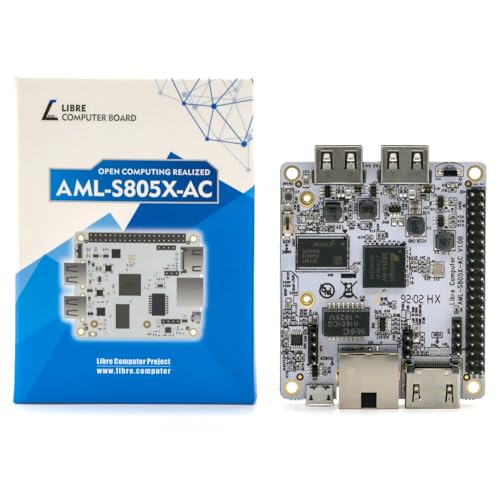
Libre Computer La Frite 1GB SBC
Best for: Low-power embedded Linux development
- Processor
- Quad 64-bit ARM Cortex-A53
- RAM Capacity
- 1GB
- RAM Type
- DDR4
- Operating System Support
- Ubuntu, Debian, Raspbian
- Dimensions
- 3.5 × 2.5 × 0.75 inches
View on Amazon: Libre Computer La Frite 1GB SBC Affiliate link
The Libre Computer La Frite is a compact ARM single-board computer built for low-power projects. It features a quad-core 1.2GHz Cortex-A53 processor and 1GB of DDR4 RAM. This board supports standard Linux distributions like Ubuntu and Debian. Its small footprint and 2W power draw make it ideal for embedded applications. You get hardware extensibility through a 40-pin header. It is a practical option for developers needing a small, efficient ARM platform.
Pros
- Quad-core 1.2GHz ARM Cortex-A53 processor
- 1GB DDR4 RAM for multitasking
- Supports Ubuntu, Debian, and Raspbian
- 40-pin header for hardware expansion
Cons
- Only 1GB of RAM limits heavy workloads
- No built-in eMMC storage included
- Requires external power supply and case
Good fit if
- You need a small, energy-efficient ARM board
- You are developing embedded Linux projects
- You require GPIO expansion via 40-pin header
Skip if
- You need more than 1GB of RAM
- You want a pre-installed operating system
- You require built-in storage like eMMC
Verdict: Libre Computer La Frite ARM SBC fits developers who need a tiny, low-power ARM board for embedded Linux projects. It is not suitable for users requiring higher memory or built-in storage.

WayPonDEV Banana Pi M2 Zero SBC
Best for: Tiny IoT projects needing Android support
- Processor
- Allwinner H3 quad-core Cortex A7
- RAM Capacity
- 512MB
- RAM Type
- DDR3
- Storage
- 32GB TF card
- Wireless Connectivity
- 802.11b/g/n Wi-Fi, Bluetooth
- Operating System Support
- Android, Debian Linux, Ubuntu Linux
View on Amazon: WayPonDEV Banana Pi M2 Zero SBC Affiliate link
This ultra-compact single board computer measures 65mm by 30mm and uses an Allwinner H3 quad-core Cortex-A7 processor. It includes 512MB of DDR3 RAM and supports Android or Linux operating systems. The device features built-in Wi-Fi and Bluetooth, along with a microSD slot for storage. It is designed for IoT projects and educational development, offering a small footprint for embedded applications.
Pros
- Ultra-compact 65mm by 30mm form factor
- Runs Android and Linux operating systems
- Built-in 802.11b/g/n Wi-Fi and Bluetooth
- Compatible with Raspberry Pi GPIO headers
Cons
- Only 512MB of RAM limits multitasking
- No built-in display or HDMI video out
- Quad-core Cortex-A7 CPU lacks high performance
Good fit if
- You need a tiny board for IoT sensors
- You want to run Android on ARM
- You are building an educational project
Skip if
- You require high performance for desktop use
- You need more than 512MB of RAM
- You want a device with a built-in screen
Verdict: WayPonDEV Banana Pi M2 Zero is a small ARM board for basic IoT tasks. It fits users who need Android support in a minimal size.

Libre Computer Le Potato 128GB Starter Kit
Best for: Linux developers needing eMMC storage
- Processor
- AML-S905X-CC
- RAM Capacity
- 2GB
- RAM Type
- DDR3
- Storage
- 128GB eMMC
- Wireless Connectivity
- WiFi 5 BT
- Video Resolution
- 4K 60FPS
View on Amazon: Libre Computer Le Potato 128GB Starter Kit Affiliate link
This kit includes the Libre Computer Le Potato board with 2GB DDR3 RAM and 128GB eMMC storage. It uses an AML-S905X-CC processor and supports WiFi 5 and Bluetooth. You get hardware-accelerated 4K video decoding and support for Ubuntu 23.04, Debian 12, and Raspbian 11. The 40-pin header allows for hardware expansion. It is a solid option for users needing reliable Linux support and decent local storage.
Pros
- 128GB eMMC storage included
- WiFi 5 and Bluetooth connectivity
- 2GB DDR3 RAM
- 4K 60FPS video decoding
- Supports Ubuntu and Debian
Cons
- Only 2GB RAM capacity
- WiFi 5 standard only
- No touchscreen display included
Good fit if
- You need local storage without SD cards
- You want WiFi 5 connectivity
- You prefer Ubuntu or Debian Linux
Skip if
- You require WiFi 6 speeds
- You need more than 2GB RAM
- You want a ready-made desktop PC
Verdict: LoveRPi Le Potato 128GB eMMC Kit offers solid Linux compatibility and local storage for hobbyists. It fits developers who need a stable base for IoT projects.
Specifications side by side
| Spec | DFRobot UNIHIKER ARM Single Board Computer | Taidacent Rock Pi S with Shell | Banana Pi Allwinner H618 SBC | Libre Computer Tritium 1GB Quad-Core Board | Libre Computer La Frite 1GB SBC | WayPonDEV Banana Pi M2 Zero SBC | Libre Computer Le Potato 128GB Starter Kit |
|---|---|---|---|---|---|---|---|
| Processor | Quad-Core ARM | Rockchip RK3308 Quad A35 64bit | Allwinner H618 | not stated | Quad 64-bit ARM Cortex-A53 | Allwinner H3 quad-core Cortex A7 | AML-S905X-CC |
| RAM Capacity | not stated | 256MB | 2GB | 1GB | 1GB | 512MB | 2GB |
| RAM Type | not stated | not stated | LPDDR4 | not stated | DDR4 | DDR3 | DDR3 |
| Storage | 16GB Flash | 1GB NAND | 8GB eMMC | not stated | not stated | 32GB TF card | 128GB eMMC |
| Ethernet | not stated | RJ45 10/100Mbit Ethernet | 100Mbps Ethernet | not stated | not stated | not stated | not stated |
| Wireless Connectivity | Wi-Fi, Bluetooth | not stated | WiFi 4, Bluetooth 4.2 | not stated | not stated | 802.11b/g/n Wi-Fi, Bluetooth | WiFi 5 BT |
| Video Resolution | not stated | not stated | 4K@60Hz | not stated | not stated | not stated | 4K 60FPS |
| Operating System Support | Debian Linux | not stated | Debian, Ubuntu | Ubuntu, Debian, Raspbian, Armbian | Ubuntu, Debian, Raspbian | Android, Debian Linux, Ubuntu Linux | Ubuntu, Debian 12, Raspbian 11 |
| Memory | not stated | not stated | 2GB RAM | not stated | not stated | not stated | not stated |
| Operating System | not stated | not stated | Ubuntu | not stated | not stated | Android | not stated |
| Use | IoT | IoT | IoT | not stated | not stated | IoT | not stated |
| Architecture | ARM | not stated | ARM | not stated | ARM | not stated | not stated |
| Connectivity | not stated | not stated | not stated | not stated | not stated | not stated | WiFi 5 |
| Dimensions | 3.27 × 2.03 × 0.51 inches | not stated | 2.56 × 1.18 × 0.2 inches | not stated | 3.5 × 2.5 × 0.75 inches | 2.56 × 1.18 × 0.12 inches | not stated |
| Color | Black | 256MB Without Bluetooth With 1GB NAND | Bundle2 | not stated | not stated | Mali400MP2 GPU | WiFi 5 BT |
| Model | DFR0706-EN | not stated | BPI M4 Zero Allwinner H618 SBC | not stated | LC-SBC-AML-S805X-AC | Banana Pi M2 Zero Open Source | not stated |
| Size | not stated | With Shell | 2GB LPDDR4 RAM 8GB eMMC | H3 1GB | 1GB+No eMMC | 65mm × 30mm x 3mm | 128GB eMMC |
If you also need desk appliances, you can compare mixpresso single serve single alternatives by capacity and physical footprint.
Frequently asked questions
Which alternative offers the best performance for 4K video projects?
The Banana Pi Allwinner H618 SBC is the best premium choice for this task. It features an Allwinner H618 processor and 2GB of LPDDR4 RAM. This board supports 4K video output and runs Ubuntu. Its size matches the Pi Zero W, making it a direct upgrade for users needing higher performance than older boards.
What is the most budget-friendly option for audio detection?
The Taidacent Rock Pi S with Shell is the best budget pick. It is designed for basic IoT audio detection projects. This board prioritizes Voice Activity Detection capabilities over raw processing speed. It includes 256MB of memory and 1GB of NAND storage, fitting users who need specialized audio features without high costs.
Which board supports Android for tiny IoT projects?
The WayPonDEV Banana Pi M2 Zero is the best Android option. It is a small ARM board measuring 1.18 by 2.56 inches. It supports Android for basic IoT tasks. The board includes a Mali400MP2 GPU, making it suitable for users who need Android support in a minimal physical footprint.
Is there an alternative with built-in WiFi 5?
Yes, the Libre Computer Le Potato 128GB Starter Kit includes WiFi 5. This board is ideal for Linux developers needing local storage. It comes with 128GB of eMMC storage. The kit offers solid Linux compatibility, providing a stable base for IoT projects that require wireless connectivity and reliable data storage.
Which board is best for stable Linux development?
The Libre Computer Tritium 1GB Quad-Core Board is the best for stable Linux support. It is designed for developers who value open-source stability. This board offers Raspberry Pi compatibility without built-in wireless features. It provides a solid foundation for IoT projects that prioritize reliable operating system performance over connectivity options.
What is the smallest board for low-power embedded Linux?
The Libre Computer La Frite 1GB SBC is ideal for low-power embedded Linux development. It measures 2.5 by 3.5 inches and uses ARM architecture. This board fits developers needing a tiny, low-power solution. It does not include built-in storage, so it is best for users who do not require higher memory or internal eMMC.