6 Best Alternatives to the EC Buying Luckfox Pico Linux AI (2026)
As an Amazon Associate we earn from qualifying purchases. Links on this page are affiliate links.
The EC Buying Luckfox Pico RV1103 micro board serves as a capable entry point for developers seeking compact AI vision solutions. It integrates an ARM Cortex-A7 and RISC-V MCU with a dedicated NPU for efficient image processing. This setup allows for fast startup and reliable debugging via standard interfaces. However, you might look for ec buying luckfox pico rv1103 micro alternatives if your project requires different memory, larger form factors, or distinct connectivity options. Some users need more RAM for complex edge computing tasks, while others prioritize specific wireless standards or premium build quality.
We selected these 6 options because their specifications overlap with the original board’s core functions. The list includes other Linux-based RISC-V single-board computers and compatible accessories. For instance, the Orange Pi RV2 offers 4GB of RAM for heavier workloads, while the Luckfox Pico Mini B provides a budget-friendly option for simpler tasks. Each alternative addresses specific gaps in the original’s feature set, such as enhanced wireless capabilities or physical protection. This guide helps you compare these specs to find the hardware that best fits your technical requirements without unnecessary compromise.
Our top pick: EC Buying Luckfox Pico Linux AI Board.
How alternatives differ from Luckfox Pico
EC Buying Luckfox Pico Mini B Linux AI Board
The Luckfox Pico Mini B shares the same RV1103 processor and Linux operating system as the original board. It focuses on simple AI vision tasks rather than complex development. You get fast startup times and efficient encoding modes that save storage space. However, it offers less raw computing power compared to the standard Pico. This board suits users who prioritize compact size and quick deployment over advanced debugging interfaces. It is ideal for basic image processing projects where high precision is not critical. If you need a specialized micro board for straightforward tasks, this is a practical choice.
EC Buying Luckfox Pico Plus Linux Board
The Luckfox Pico Plus also uses the RV1103 chip and runs Linux. It is designed for basic AI inference and embedded Linux prototyping. Like the original, it supports camera input and compact form factors. However, it lacks the high memory capacity and fast networking features found in more powerful systems. This board is not suitable for projects requiring heavy data processing or rapid network communication. It fits developers who need a simple, reliable platform for initial testing. If your project involves light AI tasks and you value simplicity over speed, this alternative provides a stable foundation without unnecessary complexity.
Orange Pi RV RISC-V Single Board Computer
The Orange Pi RV uses the StarFive JH7110 processor, offering distinct RISC-V processing power compared to the RV1103. It supports 4K video decoding, which exceeds the image processing capabilities of the Luckfox Pico. This board is built for edge computing tasks and open architecture development. It includes WiFi 5 and Bluetooth 5.0 for connectivity. While it lacks the dedicated NPU of the original, it provides robust general-purpose computing. Users who prioritize open-source compatibility and high-resolution video handling should choose this option. It is less focused on specialized AI inference but excels in broader development scenarios.
WayPonDEV Banana Pi WiFi 7 NIC Module
The WayPonDEV Banana Pi WiFi 7 Module is an add-on component, not a standalone computer. It is designed to enhance the BPI-R4 board with modern wireless capabilities. This module supports high-speed tri-band networking, which is superior to the connectivity options on the Luckfox Pico. It fits users who already own a compatible board and need upgraded wireless performance. The module does not include processing power or AI features on its own. It is strictly for expanding network functionality. If you require advanced Wi-Fi 7 speeds for existing hardware, this accessory is the correct solution rather than a replacement board.
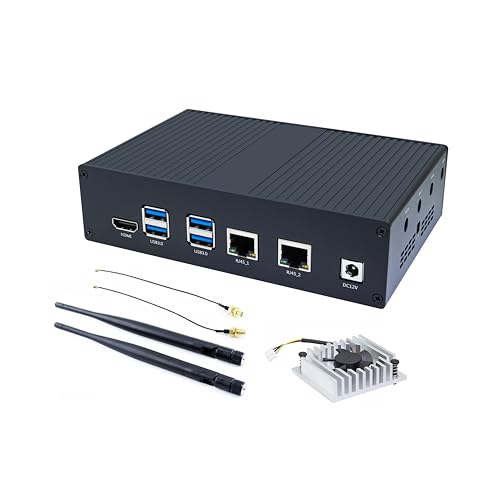
WayPonDEV Banana Pi Aluminum Case with Fan
The WayPonDEV Banana Pi Aluminum Case is a protective housing for the BPI-F3 board. It does not contain a processor or operating system. This case provides physical protection and improved cooling for existing RISC-V projects. It is best for users who need better thermal management for their current hardware. The case does not offer any AI processing or computing capabilities. It is an accessory rather than a functional alternative to the Luckfox Pico. If you are building a project around the BPI-F3 and need durability, this case is useful. It does not replace the need for a development board.
Orange Pi RV2 4GB RISC-V SBC
The Orange Pi RV2 features 4GB of RAM and a RISC-V processor, offering more memory than the Luckfox Pico. It is designed for edge AI projects and smart home controllers. The board supports Ubuntu and includes WiFi 5 connectivity. It provides ample RAM for running complex applications and multiple processes simultaneously. While it lacks the integrated NPU of the original, it offers stronger general computing power. This board suits developers who need substantial memory for edge computing nodes. If your projects require multitasking and robust processing, the RV2 is a capable alternative for larger scale deployments.
Quick picks
Our 7 picks

EC Buying Luckfox Pico Linux AI Board
Best for: compact AI vision projects
- Processor
- RV1103
- Operating System Support
- Linux
- Architecture
- RISC-V
View on Amazon: EC Buying Luckfox Pico Linux AI Board Affiliate link
The EC Buying Luckfox Pico RV1103 is a Linux AI development board built for efficient coding and fast start-up. It integrates an ARM Cortex-A7 processor with a RISC-V MCU and an NPU delivering up to 1.0 TOPS of compute power. You get an integrated ISP for high-definition image processing with HDR and WDR support. Connectivity includes UART, SPI, I2C, and USB-C for easy debugging. This board suits developers needing compact AI hardware with strong visual processing capabilities.
Pros
- RV1103 processor with ARM Cortex-A7 and RISC-V MCU
- NPU provides up to 1.0 TOPS computing precision with int4
- Integrated ISP supports HDR, WDR, and noise reduction
- Interfaces include UART, SPI, I2C, and USB-C
- Intelligent encoding saves over 50% bit rate
Cons
- NPU performance is limited to 1.0 TOPS compared to higher-end alternatives
- No mention of onboard RAM capacity in the provided data
- Lacks explicit mention of wireless connectivity options like Wi-Fi or Bluetooth
Good fit if
- You need a compact board with integrated image processing
- You are developing AI applications requiring moderate NPU power
- You require standard debugging interfaces like UART and USB-C
Skip if
- You need high-end AI compute exceeding 1 TOPS
- You require built-in wireless networking capabilities
- You prefer a complete computer with RAM specifications clearly listed
Verdict: EC Buying Luckfox Pico RV1103 Linux Board offers a balanced mix of AI compute and image processing for developers. It fits those building vision-based projects who need reliable debugging interfaces and efficient encoding.

EC Buying Luckfox Pico Mini B Linux AI Board
Best for: simple AI vision and fast capture
- Processor
- RV1103
- RAM Capacity
- 64MB
- RAM Type
- DDR2
- Storage
- 128MB Flash
- Operating System Support
- Linux
- Architecture
- RISC-V
View on Amazon: EC Buying Luckfox Pico Mini B Linux AI Board Affiliate link
This is a micro Linux AI development board powered by the RV1103 processor. It features a single-core ARM Cortex-A7 and an integrated NPU delivering up to 1.0 TOPS with int4 quantization. The board includes 64MB of DDR2 RAM and 128MB of flash storage. You will appreciate the built-in ISP3.2 for image enhancement and the RISC-V MCU for fast startup. It suits projects requiring efficient, low-power AI processing and rapid image capture.
Pros
- RV1103 processor with integrated NPU up to 1.0 TOPS
- Built-in RISC-V MCU for 250ms fast startup
- ISP3.2 supports 4MP images and HDR/WDR
- Intelligent encoding saves over 50% bitrate
Cons
- Only 64MB RAM limits complex multitasking
- Single-core CPU restricts heavy processing loads
- DDR2 RAM is slower than modern standards
Good fit if
- You need a low-power board for simple AI tasks
- You require fast startup times for image capture
- You are building a dedicated vision sensor node
Skip if
- You need high-performance multi-core processing
- You require large RAM for complex models
- You want a modern high-speed RAM type
Verdict: EC Buying Luckfox Pico Mini B RV1103 is a specialized micro board for simple AI vision tasks. It fits users who prioritize fast startup and efficient encoding over raw computing power.

EC Buying Luckfox Pico Plus Linux Board
Best for: basic AI inference and embedded Linux prototyping
- Processor
- RV1103
- RAM Capacity
- 64MB
- RAM Type
- DDR2
- Storage
- 128MB SPI NAND FLASH
- Ethernet
- 10/100M Ethernet
- Operating System Support
- Linux
View on Amazon: EC Buying Luckfox Pico Plus Linux Board Affiliate link
The Luckfox Pico Plus is a micro Linux AI development board built on the RV1103 chip. It pairs a Cortex-A7 processor with a RISC-V MCU and includes a 0.5 TOPS NPU. You get 64MB of DDR2 RAM and 128MB of SPI NAND flash storage. The board features a 10/100M Ethernet port and MIPI CSI for camera input. It suits developers needing a compact, low-power platform for basic AI inference and embedded Linux tasks.
Pros
- RV1103 chip with Cortex-A7 and RISC-V architecture
- 0.5 TOPS NPU performance for AI tasks
- Integrated MIPI CSI camera interface
- Built-in 10/100M Ethernet controller
Cons
- Only 64MB of RAM limits complex applications
- 128MB storage is very small for large datasets
- 10/100M Ethernet is slower than Gigabit options
Good fit if
- You need a tiny board for simple AI inference
- You are prototyping with low-power embedded Linux
- You require a dedicated camera input interface
Skip if
- You need high-speed Gigabit networking
- You require more than 64MB of RAM
- You need large local storage for models
Verdict: The EC Buying Luckfox Pico Plus RV1103 fits developers who need a compact board for basic AI tasks with camera input. It is not suitable for projects requiring high memory or fast networking.

Orange Pi RV RISC-V Single Board Computer
Best for: RISC-V development and edge video processing
- Processor
- StarFive JH-7110
- RAM Capacity
- 2GB
- RAM Type
- LPDDR4
- Ethernet
- Gigabit Ethernet
- Wireless Connectivity
- Wi-Fi 5.0, Bluetooth 5.0
- Video Resolution
- 4K@30fps
View on Amazon: Orange Pi RV RISC-V Single Board Computer Affiliate link
The Orange Pi RV is a RISC-V single board computer built around the StarFive JH-7110 processor. It features a 4-core 64-bit architecture running at 1.5GHz and supports up to 8GB of LPDDR4 RAM. You get Gigabit Ethernet, Wi-Fi 5, and Bluetooth 5.0 for connectivity. The integrated GPU handles 4K video decoding, making it suitable for edge visual processing tasks.
Pros
- StarFive JH-7110 4-core 64-bit processor at 1.5GHz
- Supports up to 8GB LPDDR4 RAM
- Integrated GPU with 4K@30fps video decoding
- Gigabit Ethernet and Wi-Fi 5.0 connectivity
Cons
- Wi-Fi 5.0 is slower than Wi-Fi 6 or 7
- Bluetooth 5.0 lacks newer speed enhancements
- Dimensions listed as 50 inches tall are likely incorrect
Good fit if
- You need a RISC-V architecture for development
- You require 4K video decoding capabilities
- You want Gigabit Ethernet and Wi-Fi 5
Skip if
- You require Wi-Fi 7 connectivity
- You need a pre-assembled case with the board
- You prefer x86 or ARM architectures over RISC-V
Verdict: The Orange Pi RV StarFive JH7110 RISC-V SBC is a solid choice for developers needing RISC-V processing power and 4K video decoding. It fits users who prioritize open architecture and edge computing tasks over high-speed wireless standards.

WayPonDEV Banana Pi WiFi 7 NIC Module
Best for: BPI-R4 board owners needing Wi-Fi 7
- Processor
- MediaTek MT7995AV
- Ethernet
- 2x 10Gbe SFP, 4x Gbe
- Wireless Connectivity
- Wi-Fi 7
- Operating System Support
- OpenWRT
- Architecture
- RISC-V
- Dimensions
- 5.9 × 4.01 × 0.78 inches
View on Amazon: WayPonDEV Banana Pi WiFi 7 NIC Module Affiliate link
This is a Wi-Fi 7 network interface card designed for the Banana Pi BPI-R4 router board. It uses the MediaTek MT7995AV chip to support tri-band connectivity across 2.4GHz, 5GHz, and 6GHz bands. The module offloads wireless tasks from the host processor to improve efficiency. It fits into the board's miniPCIe slots. You need the BPI-R4 board to use this accessory for high-speed networking.
Pros
- MediaTek MT7995AV chip for Wi-Fi 7 support
- Tri-band connectivity on 2.4GHz, 5GHz, and 6GHz
- Offloads Wi-Fi tasks from the host processor
- Supports 320-MHz bandwidth and 4096-QAM
Cons
- Requires the BPI-R4 router board to function
- Uses miniPCIe interface which limits portability
- Does not include the main router board
Good fit if
- You own a Banana Pi BPI-R4 board
- You need tri-band Wi-Fi 7 connectivity
- You want to offload wireless processing tasks
Skip if
- You do not have a BPI-R4 board
- You need a standalone wireless router
- You require a complete system out of the box
Verdict: WayPonDEV BPI-R4 WiFi 7 Module adds modern wireless capabilities to the BPI-R4 board. It fits users who already have the board and need high-speed tri-band networking.
WayPonDEV Banana Pi Aluminum Case with Fan
Best for: protecting and cooling existing BPI-F3 boards
- Architecture
- RISC-V
View on Amazon: WayPonDEV Banana Pi Aluminum Case with Fan Affiliate link
This is a protective enclosure for the Banana Pi BPI-F3 single board computer. It is not the computer itself. The case uses 2.0mm thick aluminum plate for strong heat dissipation. It includes a cooling fan rated for 10,000 hours of operation. The design fits the board perfectly to prevent damage from shaking. You need to buy the motherboard separately to use this case.
Pros
- 2.0mm thick aluminum plate construction
- Includes a 10,000-hour cooling fan
- Perfect fit prevents board shaking
- Easy assembly with included screws
Cons
- Motherboard not included
- Only protects the board, does not provide computing power
- Limited to specific BPI-F3 model compatibility
Good fit if
- You already own a Banana Pi BPI-F3 board
- You need strong heat dissipation for your RISC-V setup
- You want a durable metal enclosure for your project
Skip if
- You need a complete computer with a processor
- You are looking for a budget-friendly all-in-one solution
- You want to use this case with a different single board computer
Verdict: WayPonDEV Black Metal Case for Banana Pi is a sturdy housing for your existing BPI-F3 board. It is best for users who need better cooling and physical protection for their RISC-V projects.

Orange Pi RV2 4GB RISC-V SBC
Best for: RISC-V development and edge AI projects
- Processor
- RISC-V octa-core
- RAM Capacity
- 4GB
- RAM Type
- LPDDR4X
- Ethernet
- Gigabit Ethernet
- Wireless Connectivity
- Wi-Fi 5, BT 5 with BLE
- Operating System Support
- Ubuntu24.04
View on Amazon: Orange Pi RV2 4GB RISC-V SBC Affiliate link
The Orange Pi RV2 is a compact RISC-V development board featuring an octa-core processor with 2 TOPS of AI arithmetic power. It includes 4GB of LPDDR4X RAM and supports Ubuntu 24.04. You get Wi-Fi 5, Bluetooth 5 with BLE, and a Gigabit LAN port. The board measures 3.5 by 2.2 inches and weighs 2 ounces. It offers two M.2 M-Key slots for NVMe SSDs, making it suitable for edge computing and smart home projects.
Pros
- Octa-core RISC-V processor with 2 TOPS AI power
- 4GB LPDDR4X RAM capacity
- Wi-Fi 5 and Bluetooth 5 with BLE connectivity
- Two M.2 M-Key slots for NVMe SSD expansion
Cons
- Wi-Fi 5 is older than the Wi-Fi 7 found on some competitors
- No eMMC storage included in the base configuration
- Compact size may limit heat dissipation under heavy loads
Good fit if
- You need a RISC-V board with integrated AI capabilities
- You require 4GB of RAM for development tasks
- You want to use Ubuntu 24.04 on your hardware
Skip if
- You require Wi-Fi 7 for maximum wireless speed
- You need a pre-installed operating system on storage
- You prefer an ARM-based architecture over RISC-V
Verdict: Orange Pi RV2 4GB RISC-V Board is a solid choice for developers who need AI processing power and ample RAM in a small form factor. It fits users who are building edge computing nodes or smart home controllers using Ubuntu.
Specifications side by side
| Spec | EC Buying Luckfox Pico Linux AI Board | EC Buying Luckfox Pico Mini B Linux AI Board | EC Buying Luckfox Pico Plus Linux Board | Orange Pi RV RISC-V Single Board Computer | WayPonDEV Banana Pi WiFi 7 NIC Module | WayPonDEV Banana Pi Aluminum Case with Fan | Orange Pi RV2 4GB RISC-V SBC |
|---|---|---|---|---|---|---|---|
| Processor | RV1103 | RV1103 | RV1103 | StarFive JH-7110 | MediaTek MT7995AV | not stated | RISC-V octa-core |
| RAM Capacity | not stated | 64MB | 64MB | 2GB | not stated | not stated | 4GB |
| RAM Type | not stated | DDR2 | DDR2 | LPDDR4 | not stated | not stated | LPDDR4X |
| Storage | not stated | 128MB Flash | 128MB SPI NAND FLASH | not stated | not stated | not stated | not stated |
| Ethernet | not stated | not stated | 10/100M Ethernet | Gigabit Ethernet | 2x 10Gbe SFP, 4x Gbe | not stated | Gigabit Ethernet |
| Wireless Connectivity | not stated | not stated | not stated | Wi-Fi 5.0, Bluetooth 5.0 | Wi-Fi 7 | not stated | Wi-Fi 5, BT 5 with BLE |
| Video Resolution | not stated | not stated | not stated | 4K@30fps | not stated | not stated | not stated |
| Operating System Support | Linux | Linux | Linux | Linux, Debian | OpenWRT | not stated | Ubuntu24.04 |
| Memory | not stated | not stated | not stated | not stated | not stated | not stated | 4GB RAM |
| Operating System | Linux | Linux | Linux | Linux | not stated | not stated | not stated |
| Architecture | RISC-V | RISC-V | RISC-V | RISC-V | RISC-V | RISC-V | RISC-V |
| Connectivity | not stated | not stated | not stated | WiFi 5, Bluetooth 5.0 | not stated | not stated | WiFi 5 |
| Dimensions | not stated | not stated | not stated | 10 × 2 × 50 inches | 5.9 × 4.01 × 0.78 inches | not stated | 3.5 × 2.2 × 0.5 inches |
| Weight | not stated | not stated | not stated | not stated | 8.82 ounces | not stated | 2 ounces |
| Model | not stated | not stated | not stated | XTD-US-RV2G | BPI-R4 NIC BE14 Wi-Fi 7 Module | BPI-F3 Black Metal Case | Orange Pi RV2 |
| Size | not stated | not stated | not stated | not stated | 32-bit RISC-V MCU | Motherboard Not include | not stated |
| Color | not stated | not stated | not stated | not stated | WiFi7 NIC Module | Black Metal Case | 4GB |
If you monitor particulate levels, ec buying dc01 infrared pm2 5 air alternatives provides compatible sensor module specifications.
Frequently asked questions
What architecture do Luckfox Pico alternatives use?
Most alternatives in this list use the RISC-V architecture. The Luckfox Pico series, including the Mini B and Plus models, runs on Linux with RISC-V cores. The Orange Pi RV series also relies on RISC-V processors. This common foundation allows for similar software compatibility across these compact boards.
Can I use these boards for edge AI projects?
Yes, several options support edge AI tasks. The Orange Pi RV2 offers 4GB of RAM, which helps with heavier AI processing. The Luckfox Pico models include dedicated NPUs for efficient image processing. These features make them suitable for smart home controllers or vision-based projects.
Do any alternatives support Wi-Fi 7?
The WayPonDEV Banana Pi WiFi 7 NIC Module provides this capability. It is designed specifically for BPI-R4 board owners. This module adds tri-band networking to existing setups. It does not function as a standalone computer but enhances wireless performance for compatible hardware.
Is there a premium option with better video decoding?
The Orange Pi RV StarFive JH7110 serves as the premium choice. It supports 4K video decoding, which is useful for edge video processing. This board prioritizes open architecture and processing power. It fits developers who need robust performance over compact size.
Which board is best for simple AI vision tasks?
The Luckfox Pico Mini B is ideal for simple AI vision. It focuses on fast startup and efficient encoding rather than raw computing power. This makes it suitable for users who need reliable image processing without complex development overhead. It shares the RV1103 processor with other models.
Are there cases available for cooling and protection?
Yes, the WayPonDEV Aluminum Case offers physical protection and cooling. It is designed for the BPI-F3 board. The black metal housing helps manage heat during operation. This accessory is best for users who already own the board and need better thermal management.
What operating systems are supported by these alternatives?
Linux is the primary operating system for most listed boards. The Luckfox Pico series and Orange Pi RV models all run Linux. This allows for consistent development environments. Users can utilize standard Linux tools and libraries for their embedded projects.