Raspberry Pi Compute Module 5 16GB Alternatives: 6 Similar Picks Compared
As an Amazon Associate we earn from qualifying purchases. Links on this page are affiliate links.
The Raspberry Pi Compute Module 5 Wireless 16GB delivers strong ARM processing with dual 4K HDMI output in a compact footprint. It targets embedded developers who need reliable wireless connectivity and fast eMMC storage for custom hardware projects. You might look for Raspberry Pi Compute Module 5 Wireless alternatives if your project requires a different architecture, such as x86 for Windows compatibility, or if you need a larger form factor for easier handling. Some users may also prefer boards with built-in displays or specific sensor interfaces that the module does not include.
We selected 6 similar picks because their specifications overlap with the original’s key features. The list includes options with varying RAM capacities, storage types, and connectivity standards. You can find single-board computers that support Android, Linux, or Windows 10 depending on your software needs. These alternatives cover a range of sizes, from tiny 65mm boards to slightly larger units with integrated peripherals. This guide helps you compare processors, memory, and I/O options to find the right fit for your specific embedded or IoT development requirements.
Our top pick: Raspberry Pi Compute Module 5 16GB RAM 16GB eMMC.
How alternatives compare to CM5
Libre Computer La Frite 1GB SBC
The Libre Computer La Frite targets developers who need low-power embedded Linux without heavy resource demands. It offers less memory and no internal eMMC storage compared to the 16GB RAM and 16GB eMMC in the Compute Module 5. This trade-off suits projects where power efficiency matters more than multitasking or fast local data handling. The board is larger at 2.5 by 3.5 inches, making it less suitable for ultra-tiny enclosures. You should pick this if your application runs simple Linux tasks and does not require dual 4K display outputs or high-speed wireless connectivity.
Youyeetoo UP Board 16GB eMMC SBC
The Youyeetoo UP Board provides x86 architecture support, which allows you to run Windows 10 and Android. This differs from the ARM-based Compute Module 5, making it better for developers needing HAT compatibility or specific x86 software environments. It includes 16GB eMMC storage but only 1GB RAM, which limits complex multitasking compared to the 16GB RAM option. The board is larger at 2.2 by 3.3 inches. Choose this alternative if your project requires Windows compatibility or standard PC software libraries that do not run on ARM processors.
WayPonDEV Banana Pi 16GB eMMC SBC
The WayPonDEV Banana Pi BPI-M2 Pro includes dual-band Wi-Fi and gigabit Ethernet, offering robust networking in a compact 2.56-inch square form factor. It provides 16GB eMMC storage but lacks the high RAM capacity of the Compute Module 5. This makes it ideal for small Linux projects that need wireless connectivity without heavy processing power. The board supports Android and standard Linux distributions. Pick this option if you prioritize built-in Wi-Fi and Ethernet for IoT devices over the dual 4K display capabilities and higher memory of the Raspberry Pi module.
DFRobot UNIHIKER ARM Single Board Computer
The DFRobot UNIHIKER M10 is designed for beginners building handheld IoT trackers or smart home devices. It offers a pre-configured Python environment and immediate sensor access, simplifying development for students and makers. Unlike the Compute Module 5, it lacks dual 4K HDMI outputs and high RAM, focusing instead on ease of use and integrated sensors. The board measures 2.03 by 3.27 inches. You should choose this if you want a ready-to-use platform for simple IoT projects without dealing with complex wiring or low-level system configuration.
WayPonDEV youyeetoo X1 Celeron SBC
The WayPonDEV youyeetoo X1 Celeron Mini PC delivers x86 processing with 16GB RAM and dual 4K output support. It matches the Compute Module 5 in video capabilities but offers Windows 10 compatibility instead of ARM Linux. The board is larger at 4.53 by 2.95 inches, making it less suitable for ultra-compact embedded enclosures. It supports PoE and includes ample storage. Choose this alternative if you need a compact Windows x86 board for media setups or development projects that require standard PC operating system support and dual 4K displays.
Libre Computer Sweet Potato 2GB SBC
The Libre Computer Sweet Potato 2GB SBC focuses on efficient 4K media playback and low-power always-on computing. It provides 2GB RAM, which is significantly less than the 16GB in the Compute Module 5, limiting multitasking capabilities. The board lacks built-in wireless features and internal eMMC storage. It measures 3 by 4.75 inches, making it larger than the compact module. Select this option if your primary goal is dedicated 4K video playback in a low-power device, and you do not need high memory, wireless connectivity, or general-purpose embedded development features.
Quick picks
Our 7 picks

Raspberry Pi Compute Module 5 16GB RAM 16GB eMMC
Best for: embedded developers needing dual 4K output
- Processor
- Broadcom BCM2712
- RAM Capacity
- 16GB
- Storage
- 16GB eMMC
- Wireless Connectivity
- 802.11 b/g/n/ac Wi-Fi, Bluetooth 5.0 BLE
- Video Resolution
- Dual 4K at 60Hz
- Memory
- 16GB RAM
View on Amazon: Raspberry Pi Compute Module 5 16GB RAM 16GB eMMC Affiliate link
This is a compact ARM-based compute module designed for embedded systems. It features a Broadcom BCM2712 quad-core processor running at 2.4GHz and includes 16GB of RAM. The unit offers dual 4Kp60 HDMI outputs and integrated Wi-Fi 5 and Bluetooth 5.0. Its small form factor measures just 2.17 by 1.57 inches. It suits developers needing reliable, long-term availability for custom projects.
Pros
- Broadcom BCM2712 quad-core 64-bit Arm Cortex-A76 processor at 2.4GHz
- 16GB RAM paired with 16GB eMMC flash storage
- Dual HDMI 2.0 ports supporting simultaneous 4Kp60 output
- Integrated dual-band Wi-Fi and Bluetooth 5.0 BLE
Cons
- Requires external housing and power supply for standard desktop use
- Limited to 16GB eMMC internal storage capacity
- Lacks native USB-A ports for direct peripheral connection
Good fit if
- You need a compact ARM module for embedded projects
- You require dual 4K display outputs for signage
- You want guaranteed production availability until 2036
Skip if
- You need a complete desktop PC with a case
- You require Windows 10 or 11 compatibility
- You want plug-and-play USB connectivity for peripherals
Verdict: Raspberry Pi Compute Module 5 16GB provides robust ARM processing and dual 4K video in a tiny footprint, making it ideal for developers building custom embedded devices rather than standard desktop users.
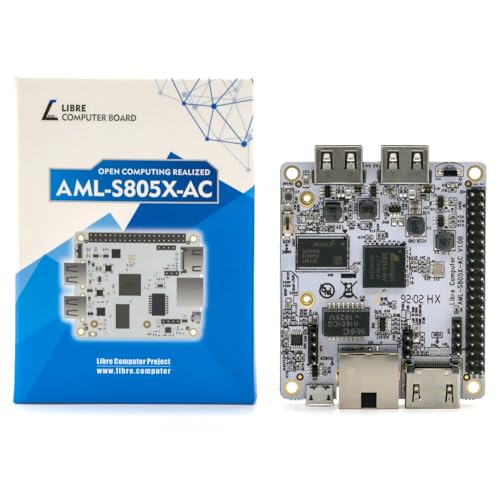
Libre Computer La Frite 1GB SBC
Best for: Low-power embedded Linux projects
- Processor
- Quad 64-bit ARM Cortex-A53
- RAM Capacity
- 1GB
- RAM Type
- DDR4
- Operating System Support
- Ubuntu, Debian, Raspbian
- Dimensions
- 3.5 × 2.5 × 0.75 inches
View on Amazon: Libre Computer La Frite 1GB SBC Affiliate link
The Libre Computer La Frite is a compact ARM single-board computer designed for low-power projects. It features a quad-core 1.2GHz processor and 1GB of DDR4 RAM. This unit does not include onboard eMMC storage, relying instead on microSD cards. It supports Ubuntu and Debian Linux. Its small footprint and 2W power draw make it suitable for always-on embedded tasks.
Pros
- Quad 64-bit ARM Cortex-A53 processor at 1.2GHz
- 1GB DDR4 RAM for standard embedded workloads
- Extremely low 2W power consumption
- Supports Ubuntu, Debian, and Raspbian Linux
Cons
- Only 1GB of RAM limits multitasking
- No onboard eMMC storage included
- Small 1GB capacity restricts heavy applications
Good fit if
- You need a minimal footprint for embedded Linux
- You want to minimize power usage to 2W
- You plan to use microSD storage for OS
Skip if
- You require more than 1GB of RAM
- You need built-in eMMC for faster boot
- You want a pre-installed Windows environment
Verdict: Libre Computer La Frite 1GB ARM SBC fits developers building low-power Linux devices who do not need high memory or internal flash storage.

Youyeetoo UP Board 16GB eMMC SBC
Best for: x86 Raspberry Pi HAT projects
- Processor
- Quad Core Intel CPU
- RAM Capacity
- 1GB
- Storage
- 16GB eMMC
- Operating System Support
- Windows 10, Ubuntu, Android OS
- Dimensions
- 3.3 × 2.2 × 0.8 inches
View on Amazon: Youyeetoo UP Board 16GB eMMC SBC Affiliate link
This x86 single-board computer runs Windows 10 or Linux. It features a quad-core Intel processor and 1GB of RAM. The 16GB eMMC storage provides basic local space. You get compatibility with Raspberry Pi HATs, making it a direct hardware alternative to the Compute Module 5. It supports Android OS as well. This setup suits developers who need x86 architecture in a small form factor.
Pros
- Quad-core Intel CPU for x86 compatibility
- Supports Windows 10, Ubuntu, and Android
- Compatible with most Raspberry Pi HATs
- 16GB eMMC storage included
Cons
- Only 1GB RAM limits multitasking
- No wireless connectivity listed
- Small 16GB storage fills quickly
Good fit if
- You need x86 Windows 10 support
- You want Raspberry Pi HAT compatibility
- You are building an IoT prototype
Skip if
- You require high RAM for heavy apps
- You need built-in Wi-Fi
- You want more than 16GB storage
Verdict: Youyeetoo UP Board 1GB RAM fits developers needing x86 Windows 10 support with Raspberry Pi HAT compatibility. It works best for simple IoT prototypes where low RAM is acceptable.

WayPonDEV Banana Pi 16GB eMMC SBC
Best for: Small Linux projects needing Wi-Fi
- Processor
- Amlogic S905X3 Quad-Core-Cortex-A55
- RAM Capacity
- 2GB
- RAM Type
- LPDDR4
- Storage
- 16GB eMMC
- Ethernet
- Gigabit
- Wireless Connectivity
- 2.4G & 5G WiFi, BT 4.2
View on Amazon: WayPonDEV Banana Pi 16GB eMMC SBC Affiliate link
This single-board computer uses an Amlogic S905X3 quad-core processor with 2GB of LPDDR4 RAM. It includes 16GB of eMMC storage and supports both 2.4GHz and 5GHz Wi-Fi along with Bluetooth 4.2. The board features a gigabit Ethernet port and HDMI output. It runs Android or Linux. This compact unit suits users who need wireless connectivity and basic computing power in a small form factor.
Pros
- Amlogic S905X3 quad-core processor
- Dual-band 2.4G and 5G Wi-Fi
- 16GB eMMC storage
- Gigabit Ethernet port
Cons
- Only 2GB of RAM
- No Windows support
- Bluetooth version 4.2
Good fit if
- You need dual-band Wi-Fi on a budget
- You want a small Linux or Android device
- You require gigabit Ethernet connectivity
Skip if
- You need more than 2GB of RAM
- You require Windows 10 or 11
- You want the latest Bluetooth standard
Verdict: WayPonDEV Banana Pi BPI-M2 Pro offers dual-band Wi-Fi and gigabit Ethernet in a tiny package. It fits users who need wireless networking and Linux compatibility without needing high RAM.

DFRobot UNIHIKER ARM Single Board Computer
Best for: beginners building handheld IoT trackers
- Processor
- Quad-Core ARM
- Storage
- 16GB Flash
- Wireless Connectivity
- Wi-Fi, Bluetooth
- Operating System Support
- Debian Linux
- Use
- IoT
- Dimensions
- 3.27 × 2.03 × 0.51 inches
View on Amazon: DFRobot UNIHIKER ARM Single Board Computer Affiliate link
The DFRobot UNIHIKER M10 is a pocket-sized single board computer designed for IoT projects. It features a quad-core ARM processor and 16GB of flash storage. A 2.8-inch color touchscreen is built directly into the unit. You also get Wi-Fi, Bluetooth, and several sensors like a gyroscope and microphone. This all-in-one design removes the need for extra wiring or displays.
Pros
- 2.8-inch color touchscreen for local visualization
- Built-in Wi-Fi and Bluetooth connectivity
- Integrated sensors including gyroscope and microphone
- Pre-installed Debian Linux with Python environment
Cons
- Small 2.8-inch screen limits complex data viewing
- No dedicated RAM specification listed in data
- ARM architecture limits Windows software compatibility
Good fit if
- You want a ready-to-code Python IoT starter kit
- You need built-in sensors for quick prototyping
- You prefer a compact device with a display
Skip if
- You require a large external monitor
- You need x86 Windows 10 compatibility
- You are building a headless server
Verdict: The DFRobot UNIHIKER M10 IoT Dev Kit suits students and makers who want to build smart home devices without complex wiring. It fits users who value a pre-configured Python environment and immediate sensor access.

WayPonDEV youyeetoo X1 Celeron SBC
Best for: x86 SBC development and dual 4K media setups
- Processor
- Celeron N5105
- RAM Capacity
- 16GB
- RAM Type
- LPDDR4
- Storage
- 256GB eMMC
- Ethernet
- Gigabit
- Video Resolution
- Dual 4K
View on Amazon: WayPonDEV youyeetoo X1 Celeron SBC Affiliate link
This is a 64-bit Windows x86 single board computer featuring the Intel Celeron N5105 processor. It comes with 16GB of LPDDR4 RAM and 256GB of eMMC storage. The unit supports dual 4K video output and includes a Gigabit Ethernet port. You can use it for media streaming or daily tasks. It runs Windows 10 or 11 and supports Linux distributions. The design allows for M.2 SSD expansion and wireless connectivity options.
Pros
- Intel Celeron N5105 processor up to 2.9GHz
- 16GB LPDDR4 RAM and 256GB eMMC storage
- Dual 4K video output via HDMI and Micro HDMI
- Gigabit Ethernet with optional PoE power support
- Pre-installed Windows 10/11 or Linux support
Cons
- Pre-sale status may delay shipping
- Only includes a heat sink, no active cooling fan
- Uses eMMC storage which is slower than NVMe SSDs
Good fit if
- You need a Windows-compatible x86 SBC for development
- You require dual 4K display output for media centers
- You want PoE power options for industrial deployment
Skip if
- You need immediate stock availability
- You require active fan cooling for sustained loads
- You prefer ARM-based architecture over x86
Verdict: WayPonDEV youyeetoo X1 Celeron Mini PC fits developers needing a compact Windows x86 board with ample RAM. It suits users who need dual 4K outputs and PoE support for specific hardware projects.

Libre Computer Sweet Potato 2GB SBC
Best for: low-power 4K media playback
- RAM Capacity
- 2GB
- Video Resolution
- 4K 60 FPS
- Operating System Support
- Fedora 42, Debian 13, Ubuntu 24.04 LTS
- Architecture
- ARM
- Dimensions
- 4.75 × 3 × 1 inches
View on Amazon: Libre Computer Sweet Potato 2GB SBC Affiliate link
The Libre Computer Sweet Potato is a 2GB ARM single-board computer designed for low-power, 24/7 operation. It supports modern Linux distributions like Ubuntu 24.04 LTS and Fedora 42. The board features hardware-accelerated 4K video decoding at 60 FPS. It draws just 1W at idle, making it highly efficient. You can power it via USB-C. It serves as a compact alternative for media or light computing tasks.
Pros
- 2GB RAM capacity for light multitasking
- Hardware-accelerated 4K 60 FPS video decoding
- Ultra-low 1W idle power consumption
- Supports Ubuntu 24.04 LTS and Fedora 42
Cons
- Only 2GB RAM limits heavy workloads
- No built-in Wi-Fi or Bluetooth
- Requires separate mezzanine for PoE
Good fit if
- You need a 24/7 always-on device
- You want to run lightweight Linux OS
- You require 4K media playback
Skip if
- You need high-performance multitasking
- You want built-in wireless connectivity
- You require a pre-installed OS
Verdict: Libre Computer Sweet Potato 2GB ARM SBC fits users needing efficient 4K media playback or low-power always-on computing. It is not suitable for heavy multitasking or users requiring built-in wireless features.
Specifications side by side
| Spec | Raspberry Pi Compute Module 5 16GB RAM 16GB eMMC | Libre Computer La Frite 1GB SBC | Youyeetoo UP Board 16GB eMMC SBC | WayPonDEV Banana Pi 16GB eMMC SBC | DFRobot UNIHIKER ARM Single Board Computer | WayPonDEV youyeetoo X1 Celeron SBC | Libre Computer Sweet Potato 2GB SBC |
|---|---|---|---|---|---|---|---|
| Processor | Broadcom BCM2712 | Quad 64-bit ARM Cortex-A53 | Quad Core Intel CPU | Amlogic S905X3 Quad-Core-Cortex-A55 | Quad-Core ARM | Celeron N5105 | not stated |
| RAM Capacity | 16GB | 1GB | 1GB | 2GB | not stated | 16GB | 2GB |
| RAM Type | not stated | DDR4 | not stated | LPDDR4 | not stated | LPDDR4 | not stated |
| Storage | 16GB eMMC | not stated | 16GB eMMC | 16GB eMMC | 16GB Flash | 256GB eMMC | not stated |
| Ethernet | not stated | not stated | not stated | Gigabit | not stated | Gigabit | not stated |
| Wireless Connectivity | 802.11 b/g/n/ac Wi-Fi, Bluetooth 5.0 BLE | not stated | not stated | 2.4G & 5G WiFi, BT 4.2 | Wi-Fi, Bluetooth | not stated | not stated |
| Video Resolution | Dual 4K at 60Hz | not stated | not stated | not stated | not stated | Dual 4K | 4K 60 FPS |
| Operating System Support | not stated | Ubuntu, Debian, Raspbian | Windows 10, Ubuntu, Android OS | Android, Linux | Debian Linux | Windows 10/11, Ubuntu, Debian | Fedora 42, Debian 13, Ubuntu 24.04 LTS |
| Memory | 16GB RAM | not stated | not stated | not stated | not stated | 16GB RAM | not stated |
| Operating System | not stated | not stated | Android | Android | not stated | Windows 10 | not stated |
| Use | not stated | not stated | not stated | not stated | IoT | not stated | not stated |
| Architecture | ARM | ARM | not stated | not stated | ARM | not stated | ARM |
| Dimensions | 2.17 × 1.58 × 0.19 inches | 3.5 × 2.5 × 0.75 inches | 3.3 × 2.2 × 0.8 inches | 2.56 × 2.56 × 0.39 inches | 3.27 × 2.03 × 0.51 inches | 4.53 × 2.95 × 0.71 inches | 4.75 × 3 × 1 inches |
| Size | not stated | 1GB+No eMMC | not stated | 65mm×65mm, 58g | not stated | 115mm x 75mm x 18mm | 2GB |
| Model | not stated | LC-SBC-AML-S805X-AC | not stated | Banana Pi BPI-M2 Pro | DFR0706-EN | youyeetoo X1 N5105 x86 Mini PC | LC-SBC-AML-S905X-CC-V2-2GB-UPC |
| Color | not stated | not stated | 1G RAM & 16G eMMC | Blue | Black | 16GB RAM+256GB Storage | Board |
If you build a desktop workstation, you can evaluate sennheiser momentum 5 wireless headphones alternatives alongside your core computing hardware.
Frequently asked questions
Does the Raspberry Pi Compute Module 5 16GB support dual 4K displays?
Yes, it provides dual 4K video output capabilities. This feature makes it ideal for embedded developers who need high-resolution visual feedback in custom devices. The compact ARM processing power handles these demands efficiently within its small footprint.
Which alternative is best for low-power embedded Linux projects?
The Libre Computer La Frite is the best budget option for these tasks. It fits developers building low-power Linux devices who do not require high memory or internal flash storage. It offers a simple, efficient solution for basic embedded needs.
Can I use Raspberry Pi HATs with the Youyeetoo UP Board?
Yes, the Youyeetoo UP Board supports Raspberry Pi HAT compatibility. It provides x86 Windows 10 support, making it suitable for developers needing that specific hardware interface. It works best for simple IoT prototypes where low RAM is acceptable.
Does the Banana Pi BPI-M2 Pro include Wi-Fi?
Yes, it offers dual-band Wi-Fi and gigabit Ethernet connectivity. This makes it a great choice for small Linux projects needing wireless networking without high RAM requirements. It comes in a tiny package with 16GB eMMC storage for reliable operation.
Is the DFRobot UNIHIKER good for beginners?
Yes, it suits students and makers who want to build smart home devices without complex wiring. It includes a pre-configured Python environment and immediate sensor access. This makes it an excellent starting point for beginners building handheld IoT trackers.
Which alternative runs Windows on x86 architecture?
The WayPonDEV youyeetoo X1 Celeron Mini PC runs Windows 10 on x86 architecture. It features 16GB RAM and ample storage for developers needing a compact Windows board. It also supports dual 4K outputs and PoE for specific hardware projects.
Is the Libre Computer Sweet Potato suitable for heavy multitasking?
No, it is not suitable for heavy multitasking. It fits users needing efficient 4K media playback or low-power always-on computing. It lacks built-in wireless features and is designed for single-task efficiency rather than complex, resource-heavy operations.