6 Best Alternatives to the KLAYERS Luckfox Lyra Ultra Linux (2026)
As an Amazon Associate we earn from qualifying purchases. Links on this page are affiliate links.
The KLAYERS Luckfox Lyra Ultra Linux Board provides a compact ARM foundation for embedded development. If you are searching for klayers luckfox lyra ultra deveploment alternatives, this guide helps you compare options. The original board features an RK3506B processor with integrated 8GB eMMC storage. It supports Linux and includes built-in audio and video codecs. This setup suits engineers who need a focused tool for custom embedded systems.
You might want a different board if you require more RAM, a different form factor, or additional connectivity. Some projects benefit from larger screens or pre-configured educational kits. The alternatives listed here were chosen because their specifications overlap with the original. They offer varying storage sizes, processor architectures, and interface options. Each product in this list targets specific development needs, from basic GPIO projects to structured learning paths. You can select a board that matches your exact hardware requirements without compromising on essential Linux compatibility.
How alternatives compare to Luckfox
Freenove Ultimate Starter Kit for Raspberry Pi
The Freenove Ultimate Starter Kit shifts focus from raw hardware to guided learning. Unlike the Luckfox Lyra Ultra, which is a bare development board for engineers, this kit includes 223 parts and 128 projects. It is designed for beginners using Raspberry Pi boards rather than the RK3506B Linux micro. You gain structured tutorials in Python, C, or Scratch instead of open-ended embedded development. It sacrifices the compact ARM Cortex-A7 and M0 integration of the Lyra for educational value. Pick this if you are new to electronics and need step-by-step guidance rather than a standalone Linux foundation.
Libre Computer La Frite 1GB SBC
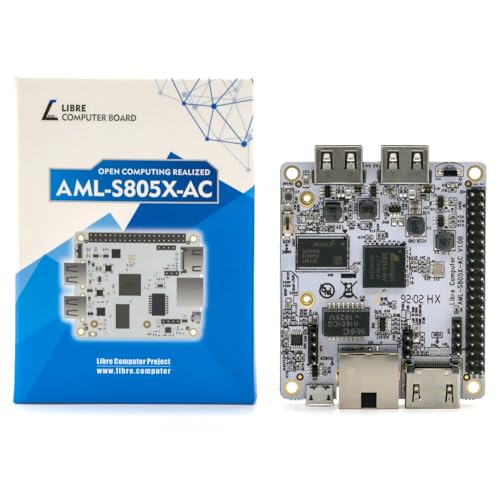
The Libre Computer La Frite offers a smaller, more energy-efficient alternative for basic Linux tasks. It measures 3.5 by 2.5 inches, making it more compact than many desktop alternatives, though larger than some micro boards. It lacks the integrated 8GB eMMC storage found in the Luckfox Lyra Ultra, relying on external media. The La Frite prioritizes low power draw over the multi-core processing and audio/video codec capabilities of the RK3506B. It suits users who need a simple, open-source Linux environment for light duties. Choose this if power efficiency and standard software support matter more than integrated storage or multimedia features.
MiiElAOD Banana Pi Quad-Core Single Board Computer
The MiiElAOD Banana Pi BPI-M2 Zero provides a GPIO-rich option for basic IoT projects. It features an H2+ processor, which differs from the RK3506B architecture in the Luckfox Lyra Ultra. This board emphasizes compatibility and wireless connectivity over raw processing power. It is suitable for users who need extensive general-purpose input/output pins for sensor integration. The Banana Pi lacks the integrated eMMC and advanced audio/video codecs of the Lyra. It is a better fit for developers prioritizing hardware extensibility and standard Linux compatibility for simple embedded tasks rather than complex multimedia or high-performance computing.
Youyeetoo Banana Pi M2 Zero
The Youyeetoo Banana Pi M2 Zero runs Android, offering a different operating system path than the Linux-only Luckfox Lyra Ultra. It uses an ARM Cortex-A7 processor, similar in class to the Lyra’s A7 cores, but lacks the integrated M0 MCU. This board is designed for basic Linux prototyping and GPIO projects, though its Android capability adds versatility. It prioritizes small size and wireless connectivity over the multimedia features of the Lyra. Pick this if you need a compact board with wireless options and potentially Android support. It sacrifices the dedicated Linux development focus and integrated storage of the original for broader OS flexibility.
Libre Computer Tritium 2GB SBC with USB WiFi
The Libre Computer Tritium H5 2GB offers robust open-source Linux support with 2GB of RAM, exceeding the typical memory of micro boards. It measures 4.75 by 3 inches, making it larger than the Luckfox Lyra Ultra. This board prioritizes software compatibility and hardware extensibility over raw wireless speed. It lacks the integrated 8GB eMMC and specific audio/video codecs of the RK3506B. The Tritium is ideal for developers who need more memory and standard SBC form factors. Choose this if you value extensive Linux driver support and expansion options over the compact, integrated design of the Lyra Ultra.
DFRobot UNIHIKER ARM Single Board Computer
The DFRobot UNIHIKER includes a 2.8-inch touchscreen, providing an all-in-one design unlike the bare board Luckfox Lyra Ultra. It is built for Python IoT education and quick prototyping, targeting beginners and students. The board measures 3.27 by 2.03 inches, offering a compact footprint with an integrated display. It sacrifices the raw processing power and integrated eMMC of the Lyra for ease of use. This option is ideal for users who want to start coding immediately with sensors and visual feedback. Pick this if you prioritize an educational, plug-and-play experience over the flexible, headless development environment of the Luckfox Lyra Ultra.
Quick picks
Our 7 picks

KLAYERS Luckfox Lyra Ultra Linux Board
Best for: Embedded Linux development projects
- Processor
- RK3506B Cortex-A7 & Cortex-M0
- Storage
- 8GB eMMC
- Operating System Support
- Linux
- Architecture
- ARM
View on Amazon: KLAYERS Luckfox Lyra Ultra Linux Board Affiliate link
The KLAYERS Luckfox Lyra Ultra is a Linux development board based on the RK3506B processor. It features a triple-core ARM Cortex-A7 and an integrated Cortex-M0 MCU. You get 8GB of onboard eMMC storage and support for DDR2/DDR3 memory expansion. This package includes the development board only, making it a solid base for custom projects requiring low-power ARM computing and audio/video processing capabilities.
Pros
- RK3506B processor with triple-core ARM Cortex-A7
- Integrated ARM Cortex-M0 MCU for SMP/AMP configurations
- 8GB onboard eMMC storage
- Supports DDR2/DDR3/DDR3L memory expansion
- Built-in audio and video codecs
Cons
- Package contains the development board only
- Requires separate memory expansion for higher capacity
- Limited to Linux operating system support
Good fit if
- You need a low-power ARM board for embedded Linux projects
- You require onboard storage for reliable operation
- You want to integrate audio and video processing
Skip if
- You need a complete computer with case and peripherals
- You require Windows or macOS compatibility
- You need high-performance multi-core processing
Verdict: The KLAYERS Luckfox Lyra Ultra RK3506B Board is a focused development tool for engineers building custom Linux-based embedded systems. It suits you if you need a compact ARM foundation with integrated storage and media capabilities.

Freenove Ultimate Starter Kit for Raspberry Pi
Best for: beginners learning Raspberry Pi electronics
View on Amazon: Freenove Ultimate Starter Kit for Raspberry Pi Affiliate link
This kit provides 223 electronic components, modules, and sensors for Raspberry Pi development. It includes five sets of code: Python, C, Java, Scratch, and Processing. A 962-page digital tutorial covers 128 projects with schematics and wiring diagrams. It supports Raspberry Pi 5, 4, Zero 2 W, and older models. The board is not included. It suits learners building hardware projects step by step.
Pros
- Includes 223 electronic components and sensors
- Supports Python, C, Java, Scratch, and Processing code
- Provides 128 detailed projects with schematics
- Compatible with Raspberry Pi 5, 4, and Zero models
Cons
- Raspberry Pi board is not included
- Tutorial is digital only, no paper version
- Limited to specific Raspberry Pi models
Good fit if
- You need a comprehensive set of components for learning electronics
- You want step-by-step guidance for 128 projects
- You use Raspberry Pi 5, 4, or Zero boards
Skip if
- You already own the necessary components
- You prefer a physical paper manual
- You do not use Raspberry Pi boards
Verdict: Freenove Ultimate Starter Kit for Raspberry Pi offers a structured path for beginners with 223 parts and 128 guided projects. It fits those ready to learn hardware integration using Python, C, or Scratch on compatible Raspberry Pi boards.
Libre Computer La Frite 1GB SBC
Best for: low-power Linux development projects
- Processor
- Quad 64-bit ARM Cortex-A53
- RAM Capacity
- 1GB
- RAM Type
- DDR4
- Operating System Support
- Ubuntu, Debian, Raspbian
- Dimensions
- 3.5 × 2.5 × 0.75 inches
View on Amazon: Libre Computer La Frite 1GB SBC Affiliate link
The Libre Computer La Frite is a compact ARM-based single board computer. It features a quad-core 1.2GHz Cortex-A53 processor and 1GB of DDR4 RAM. This unit measures 3.5 by 2.5 inches and consumes only 2W of power. It supports Ubuntu, Debian, and Raspbian. You will appreciate its low energy use and standard Linux compatibility for small projects.
Pros
- Quad 64-bit 1.2GHz ARM Cortex-A53 processor
- 1GB high bandwidth DDR4 RAM
- 2W standard power consumption
- Supports Ubuntu, Debian, and Raspbian
- 40-pin header for hardware extensibility
Cons
- Only 1GB of RAM limits multitasking
- No eMMC storage included
- Smaller processor clock speed than competitors
Good fit if
- You need a low-power Linux device
- You require standard ARMv8 software support
- You want a small form factor board
Skip if
- You need more than 1GB of RAM
- You require built-in eMMC storage
- You want a higher performance CPU
Verdict: Libre Computer La Frite 1GB Mini PC is a practical, energy-efficient board for basic Linux tasks. It suits users who prioritize low power draw and standard open-source software support over raw processing power.

MiiElAOD Banana Pi Quad-Core Single Board Computer
Best for: Basic GPIO and IoT development projects
- Processor
- Allwinner H3/H2+, Quad-core Cortex-A7
- RAM Capacity
- 512MB
- RAM Type
- DDR 3 SDRAM
- Wireless Connectivity
- WiFi (AP6212) & Bluetooth
View on Amazon: MiiElAOD Banana Pi Quad-Core Single Board Computer Affiliate link
The Banana Pi BPI-M2 Zero is a compact single-board computer powered by an Allwinner H2+ quad-core Cortex-A7 processor. It includes 512MB of DDR3 SDRAM and onboard WiFi and Bluetooth. The board features a 40-pin GPIO header compatible with Raspberry Pi. This setup suits hobbyists who need a small, open-source platform for basic Linux projects or IoT experiments without requiring high performance.
Pros
- Allwinner H2+ quad-core Cortex-A7 processor
- 512MB DDR3 SDRAM capacity
- Onboard WiFi and Bluetooth connectivity
- 40-pin Raspberry Pi-compatible GPIO header
Cons
- Only 512MB RAM limits multitasking
- Quad-core A7 CPU lacks high performance
- No dedicated video output listed in specs
Good fit if
- You need a Raspberry Pi-compatible board for GPIO projects
- You require onboard WiFi and Bluetooth for connectivity
- You are building a low-power Linux development node
Skip if
- You need more than 512MB of RAM
- You require high-performance computing tasks
- You need a dedicated graphics output
Verdict: The Banana Pi BPI-M2 Zero H2+ SBC offers a compact, GPIO-rich option for basic Linux development. It fits users who prioritize compatibility and wireless connectivity over raw processing power.

Youyeetoo Banana Pi M2 Zero
Best for: basic Linux prototyping and GPIO projects
- Processor
- Quad Core ARM Cortex A7 CPU H3
- RAM Capacity
- 512MB
- RAM Type
- SDRAM
- Wireless Connectivity
- WiFi (AP6212) & BT
- Operating System Support
- Raspbian, Android, Armbian, Ubuntu
View on Amazon: Youyeetoo Banana Pi M2 Zero Affiliate link
The Youyeetoo Banana Pi M2 Zero is a single-board computer built around the Quad Core ARM Cortex A7 H3 processor. It includes 512MB of SDRAM and onboard WiFi with Bluetooth. You get a Mini HDMI port and 40-pin GPIO headers for hardware projects. It supports operating systems like Raspbian and Ubuntu. This compact board suits makers who need basic Linux capabilities without high power consumption.
Pros
- Quad Core ARM Cortex A7 H3 processor
- 512MB SDRAM memory capacity
- Onboard WiFi and Bluetooth connectivity
- Mini HDMI video output
- 40-pin Raspberry Pi-compatible GPIO
Cons
- Only 512MB RAM limits multitasking
- No Ethernet port for wired networking
- Requires separate power supply purchase
Good fit if
- You need a low-power Linux development board
- You want onboard WiFi without USB adapters
- You are prototyping with GPIO sensors
Skip if
- You require gigabit Ethernet connectivity
- You need more than 512MB of RAM
- You want a pre-installed operating system
Verdict: The Youyeetoo Banana Pi M2 Zero SBC offers a compact ARM Cortex A7 solution for simple Linux projects. It fits developers who prioritize small size and wireless connectivity over processing power.

Libre Computer Tritium 2GB SBC with USB WiFi
Best for: Open-source Linux development projects
- Processor
- Quad 64-bit 1GHz ARM Cortex-A53
- RAM Capacity
- 2GB
- RAM Type
- DDR3
- Wireless Connectivity
- WiFi 4
- Video Resolution
- 4K
- Operating System Support
- Ubuntu, Debian 12, Raspbian 12, Linux
View on Amazon: Libre Computer Tritium 2GB SBC with USB WiFi Affiliate link
The Libre Computer Tritium H5 is a single-board computer built around a quad-core 1GHz ARM Cortex-A53 processor and 2GB of DDR3 RAM. It supports Ubuntu, Debian, and Raspbian with Linux 6.x. The board includes a USB WiFi 4 adapter and a heatsink. It features a 40-pin header for hardware extensibility. This setup suits users who need open-source software support and standard Linux compatibility for development projects.
Pros
- Quad 64-bit 1GHz ARM Cortex-A53 processor
- 2GB High Bandwidth DDR3 RAM
- Supports Ubuntu 23.04, Debian 12, and Raspbian 12
- Includes USB WiFi 4 adapter and heatsink
- 40-pin header with SPI, I2C, PWM, UART, and GPIO
Cons
- Only 2GB of RAM limits multitasking
- WiFi 4 is slower than modern WiFi 5 or 6 standards
- Requires external USB WiFi adapter as connectivity is not onboard
Good fit if
- You need full upstream Linux support with UEFI
- You want a Raspberry Pi 3 form-factor compatible board
- You require hardware extensibility via a 40-pin header
Skip if
- You need more than 2GB of RAM
- You require onboard WiFi without a USB adapter
- You need WiFi 5 or WiFi 6 speeds
Verdict: Libre Computer Tritium H5 2GB Mini PC offers robust open-source Linux support and hardware extensibility for developers who prioritize software compatibility over raw wireless speed or high memory capacity.

DFRobot UNIHIKER ARM Single Board Computer
Best for: Python IoT education and quick prototyping
- Processor
- Quad-Core ARM
- Storage
- 16GB Flash
- Wireless Connectivity
- Wi-Fi, Bluetooth
- Operating System Support
- Debian Linux
- Use
- IoT
- Dimensions
- 3.27 × 2.03 × 0.51 inches
View on Amazon: DFRobot UNIHIKER ARM Single Board Computer Affiliate link
The DFRobot UNIHIKER M10 is a pocket-sized single board computer designed for IoT development. It features a quad-core ARM processor, 16GB of flash storage, and a 2.8-inch color touchscreen. You get pre-installed Debian Linux with a Python environment, eliminating complex setup steps. Built-in Wi-Fi and Bluetooth support wireless connectivity, while integrated sensors like a microphone and gyroscope enable immediate prototyping for educational or hobbyist projects.
Pros
- 2.8-inch color touchscreen for real-time data visualization
- Pre-installed Debian Linux with Python and Jupyter Notebook
- Built-in Wi-Fi and Bluetooth connectivity
- Integrated microphone, gyroscope, accelerometer, and light sensor
Cons
- Small 2.8-inch display limits complex interface design
- 16GB storage is modest for large datasets
- No mention of a power adapter or cable in included accessories
Good fit if
- You need a ready-to-code Python environment without OS flashing
- You want to build handheld IoT devices with sensors
- You are teaching STEM classes and need block-to-code tools
Skip if
- You require a large external monitor for detailed work
- You need extensive expandable storage beyond 16GB
- You prefer a headless server without a built-in display
Verdict: DFRobot UNIHIKER M10 2.8" Touchscreen SBC is ideal for beginners who want to start coding immediately with Python and sensors. It suits students and hobbyists building compact IoT projects who value an all-in-one design over raw computing power.
Specifications side by side
| Spec | KLAYERS Luckfox Lyra Ultra Linux Board | Freenove Ultimate Starter Kit for Raspberry Pi | Libre Computer La Frite 1GB SBC | MiiElAOD Banana Pi Quad-Core Single Board Computer | Youyeetoo Banana Pi M2 Zero | Libre Computer Tritium 2GB SBC with USB WiFi | DFRobot UNIHIKER ARM Single Board Computer |
|---|---|---|---|---|---|---|---|
| Processor | RK3506B Cortex-A7 & Cortex-M0 | not stated | Quad 64-bit ARM Cortex-A53 | Allwinner H3/H2+, Quad-core Cortex-A7 | Quad Core ARM Cortex A7 CPU H3 | Quad 64-bit 1GHz ARM Cortex-A53 | Quad-Core ARM |
| RAM Capacity | not stated | not stated | 1GB | 512MB | 512MB | 2GB | not stated |
| RAM Type | not stated | not stated | DDR4 | DDR 3 SDRAM | SDRAM | DDR3 | not stated |
| Storage | 8GB eMMC | not stated | not stated | not stated | not stated | not stated | 16GB Flash |
| Wireless Connectivity | not stated | not stated | not stated | WiFi (AP6212) & Bluetooth | WiFi (AP6212) & BT | WiFi 4 | Wi-Fi, Bluetooth |
| Video Resolution | not stated | not stated | not stated | not stated | not stated | 4K | not stated |
| Operating System Support | Linux | not stated | Ubuntu, Debian, Raspbian | not stated | Raspbian, Android, Armbian, Ubuntu | Ubuntu, Debian 12, Raspbian 12, Linux | Debian Linux |
| Operating System | Linux | not stated | not stated | not stated | Android | not stated | not stated |
| Use | not stated | not stated | not stated | not stated | not stated | not stated | IoT |
| Architecture | ARM | not stated | ARM | not stated | not stated | not stated | ARM |
| Dimensions | not stated | not stated | 3.5 × 2.5 × 0.75 inches | not stated | not stated | 4.75 × 3 × 1 inches | 3.27 × 2.03 × 0.51 inches |
| Model | not stated | FNK0020 | LC-SBC-AML-S805X-AC | not stated | not stated | LCB-SBC-ALL-H3-CC-H5-2GB | DFR0706-EN |
| Size | not stated | not stated | 1GB+No eMMC | not stated | not stated | H5 2GB 1 Pack | not stated |
| Color | not stated | not stated | not stated | BPI-M2 Zero+Heatsink+Power | not stated | Red WiFi 4 | Black |
Frequently asked questions
Is the KLAYERS Luckfox Lyra Ultra the best option for embedded Linux projects?
Yes, it is ranked as the best overall choice for embedded Linux development. The board provides a compact ARM foundation with integrated 8GB eMMC storage. It suits engineers who need a focused tool for building custom Linux-based systems without extra peripherals.
What is the best starter kit for learning Raspberry Pi electronics?
The Freenove Ultimate Starter Kit is the top pick for beginners. It includes 223 parts and 128 guided projects to help you learn hardware integration. You can use Python, C, or Scratch on compatible Raspberry Pi boards to build your skills.
Which single-board computer is best for low-power Linux development?
The Libre Computer La Frite 1GB SBC is the best budget option. It prioritizes low power draw and standard open-source software support. This board is ideal for basic Linux tasks where energy efficiency matters more than raw processing power.
Can I use a Banana Pi for basic GPIO and IoT projects?
Yes, the MiiElAOD Banana Pi Quad-Core SBC is a strong choice. It offers a compact design with rich GPIO pins for basic Linux development. You get compatibility and wireless connectivity, making it suitable for simple IoT applications and prototyping.
Is there a Banana Pi option that supports Android?
The Youyeetoo Banana Pi M2 Zero is the best Android alternative. It uses a compact ARM Cortex A7 processor for simple Linux and Android projects. You get a small form factor with wireless connectivity, prioritizing size over high processing power.
Which board offers robust open-source Linux support for developers?
The Libre Computer Tritium 2GB SBC is excellent for open-source projects. It provides robust Linux support and hardware extensibility. This board suits developers who value software compatibility and expansion options over high memory capacity or maximum wireless speed.
What single-board computer is best for Python IoT education?
The DFRobot UNIHIKER ARM SBC is the top pick for IoT education. It features a 2.8-inch touchscreen for immediate coding with Python and sensors. This all-in-one design helps students and hobbyists start building compact IoT projects without needing extra displays.