Libre Computer Project Libre Computer Sweet Potato Review (2026): A Spec-Based Look
As an Amazon Associate we earn from qualifying purchases. Links on this page are affiliate links.
This libre computer project libre computer aml s905x cc v2 sweet review focuses on the Sweet Potato single board computer. It is a compact Linux device designed for low-power, always-on tasks. The unit features 2GB of RAM and supports 4K 60 FPS video output. It runs Ubuntu 22.04 LTS, Debian 12, and CoreELEC with hardware-accelerated playback. The board draws only 1W at idle and supports USB-C power input. It also offers PoE capability via a separate mezzanine for remote deployments.
What stands out
- 2GB RAM for efficient multitasking
- 4K 60 FPS video decoding support
- 1W idle power consumption for 24/7 use
- USB-C power input with up to 3A draw
- PoE support via separate mezzanine board
Who it fits
Good fit for
You should consider this board if you need a quiet, energy-efficient system for media centers or network appliances. The 4K decoding and CoreELEC support make it suitable for home theater setups. Its 1W idle draw is ideal for devices that run continuously. The PoE option helps in hard-to-reach installations. The open-source software stack suits developers who need standard Linux environments like Ubuntu or Debian.
Who should skip it
You should look elsewhere if you require high-performance gaming or heavy computational tasks. The 2GB RAM limits multitasking capabilities for complex workloads. The board lacks built-in Wi-Fi and Bluetooth, requiring separate modules for wireless connectivity. It does not include the PoE mezzanine in the base package, which adds to setup complexity. Users needing a complete out-of-the-box wireless experience will find this insufficient.
Verdict: The Sweet Potato is a practical, low-power SBC for media and networking. Its efficient design and open-source support make it a solid choice for specific, constrained use cases.
Key specs explained
RAM Capacity 2GB
This amount of memory handles basic multitasking for lightweight Linux distributions. It is sufficient for web browsing, document editing, and running small servers. You should compare this to larger desktop PCs if you plan to run heavy virtual machines or modern games. For simple media centers or home automation hubs, 2GB provides enough headroom to keep the system responsive without consuming excessive power.
Operating System Support Ubuntu 22.04 LTS, Debian 12, CoreELEC
These operating systems offer stability and long-term support for your projects. Ubuntu and Debian provide general-purpose computing capabilities for development or server use. CoreELEC is specialized for media playback, allowing you to transform the board into a dedicated streaming device. This variety lets you choose the software that best fits your specific needs, whether that is coding, file sharing, or watching movies.
Video Resolution 4K 60 FPS
This specification means the board can output high-definition video at smooth frame rates. You can connect it to a modern display to watch 4K content without stuttering. This is essential for media center applications where visual quality matters. When comparing Mini PCs, this ensures the device can handle current high-resolution standards, making it suitable for living room setups or digital signage displays that require crisp, fluid imagery.
USB Type-C Power
This input method allows you to use standard, widely available power adapters. It simplifies setup by removing the need for proprietary connectors that are often lost or damaged. You can easily replace the power supply if it fails, as compatible cables and bricks are common. This standardization makes the device more practical for permanent installations where accessibility to power sources might be limited or difficult to reach.
Design and Build Overview
The Sweet Potato is a single board computer with a compact footprint. According to the listing, the unit includes a PoE mezzanine board. This combination allows for a single-cable setup for power and data. This design choice simplifies installation in hard-to-reach places. You do not need separate power bricks cluttering your workspace. The board itself is green. The PoE add-on is also green. The listing notes the color as "Board+PoE". This indicates the two components are sold together as a set.
The layout is typical for a single board computer. You get a standard USB Type-C port for power. It draws up to 3A. The listing states that 2A is available for peripherals. This leaves some headroom for connected devices. There is also a standard PC-style USB header. This provides internal connectivity for expansion. You can attach wireless modules like WiFi and Bluetooth. These are sold separately. You can also connect webcams or other internal peripherals through this header.
The finish is functional. The board is designed for 24/7 operation. It has an idle power usage of just 1W. This low consumption makes it suitable for always-on deployments. You can run it continuously without high energy costs. The listing mentions it is efficient enough to encrypt and max out network throughput for VPN operations. This suggests the build supports sustained performance. The UEFI BIOS allows you to customize the boot screen. You can script the BIOS to show custom logos. This adds a layer of personalization for your setup.
Setup and everyday use guide
Setting up the Sweet Potato begins with selecting your operating system. The listing confirms support for Ubuntu 22.04 LTS, Debian 12, and CoreELEC. You can install these onto a MicroSD card, an eMMC module, or a USB flash drive. The device also accepts USB hard drives, provided they have separate power. This flexibility lets you choose the storage method that best fits your workflow.
Powering the unit is straightforward via USB Type-C. The board draws up to 3A, leaving 2A available for connected peripherals. If you need a cleaner cable setup, the included PoE mezzanine allows single-cable power and data transmission. This is useful for installations in tight or hard-to-reach spaces. The design supports 24/7 operation with idle power usage around 1W. This low draw makes it suitable for battery-backed remote deployments.
In daily use, the device handles lightweight tasks efficiently. The 2GB RAM supports basic multitasking and small server operations. You can run web browsers, edit documents, or manage network traffic. The processor provides enough power to encrypt data and max out network throughput for VPNs. For media, the hardware-accelerated 4K codec supports 60 FPS playback of H.264, H.265, and VP9 streams. This works well with CoreELEC for dedicated media centers. The UEFI BIOS allows you to customize boot messages and logos, giving you control over the initial startup experience. You can also expand connectivity using the internal USB header for WiFi or Bluetooth modules, though these are sold separately.
Before you buy Sweet Potato
You should verify your network infrastructure before purchasing this unit. The listing specifies that the Power over Ethernet capability requires a separate mezzanine board. You must also ensure your switch supports PoE standards to utilize this feature. If you need wireless connectivity, the USB header allows for internal WiFi and Bluetooth modules, but these are sold separately. You will need to provide your own storage for the operating system, such as a MicroSD card or USB drive. Keep in mind that 2GB of RAM limits heavy multitasking. This device fits best for lightweight Linux tasks or media playback. It is not a replacement for a full desktop PC. Consider your power requirements carefully, as it draws up to 3A via USB Type-C. This board is ideal for low-power, always-on deployments where space is limited.
Check before you buy
- Confirm your switch supports PoE for the separate mezzanine board.
- Purchase WiFi or Bluetooth modules separately if you need wireless.
- Check if 2GB RAM handles your specific lightweight Linux tasks.
- Ensure you have a MicroSD card or USB drive for OS.
The product at a glance
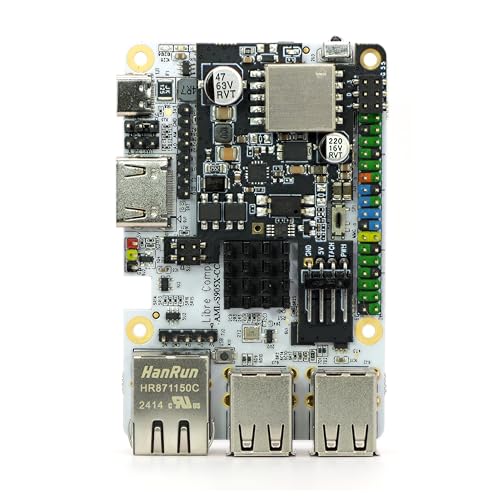
Libre Computer Sweet Potato 2GB SBC with PoE
Best for: Low-power 4K media and server builds
- RAM Capacity
- 2GB
- Video Resolution
- 4K 60 FPS
- Operating System Support
- Ubuntu 22.04 LTS, Debian 12, CoreELEC
View on Amazon: Libre Computer Sweet Potato 2GB SBC with PoE Affiliate link
The Libre Computer Sweet Potato is a single board computer with 2GB of RAM. It supports Ubuntu 22.04 LTS, Debian 12, and CoreELEC. The device handles 4K 60 FPS video decoding for H.264, H.265, and VP9. It draws only 1W at idle and supports USB Type-C power. This board suits users needing efficient, always-on computing for media or network tasks.
Pros
- 2GB RAM capacity for multitasking
- Hardware-accelerated 4K 60 FPS video decoding
- Ultra-low 1W idle power consumption
- Supports Ubuntu 22.04 LTS and Debian 12
Cons
- Only 2GB of RAM limits heavy workloads
- PoE requires a separate mezzanine board
- WiFi and Bluetooth modules are sold separately
Good fit if
- You need a low-power device for 24/7 operation
- You want to run CoreELEC for media playback
- You require hardware-accelerated 4K video decoding
Skip if
- You need more than 2GB of RAM
- You want built-in WiFi and Bluetooth
- You require a complete kit without extra parts
Verdict: Libre Computer Sweet Potato 2GB offers efficient 4K media playback and low power use. It fits users building compact, always-on servers or media centers.
Specifications side by side
| Spec | Libre Computer Sweet Potato 2GB SBC with PoE |
|---|---|
| RAM Capacity | 2GB |
| Video Resolution | 4K 60 FPS |
| Operating System Support | Ubuntu 22.04 LTS, Debian 12, CoreELEC |
| Size | 2GB |
| Color | Board+PoE |
Frequently asked questions
Does the Sweet Potato support 4K video playback?
Yes, the device supports 4K resolution at 60 frames per second. This makes it suitable for high-definition media centers. The 2GB of RAM helps handle basic multitasking while playing video content. You can use it for lightweight streaming tasks without significant lag.
Is Power over Ethernet included with the board?
The listing confirms the unit includes a PoE mezzanine board. This allows for single-cable power and data connections. You must ensure your network switch supports PoE standards to use this feature effectively. It simplifies installation in hard-to-reach locations.
What operating systems are compatible with this SBC?
The device supports Ubuntu 22.04 LTS, Debian 12, and CoreELEC. You can install these operating systems onto a MicroSD card, an eMMC module, or a USB flash drive. This flexibility allows you to choose the best Linux distribution for your specific server or media needs.
Is 2GB of RAM enough for general use?
Yes, 2GB of RAM is sufficient for lightweight Linux distributions. It handles web browsing, document editing, and running small servers well. You should compare this to larger desktop PCs if you plan to run heavy virtual machines, as this amount is for basic multitasking.
What is the primary use case for this device?
It is designed for low-power, always-on tasks like compact server builds. The efficient 4K media playback makes it ideal for media centers. The PoE option simplifies setup for users who want a clean, single-cable installation in hard-to-reach places.
Does the board come with a case?
The provided data does not mention a case or enclosure. The listing specifies a board with a PoE mezzanine. You may need to source a compatible case separately if you require physical protection or specific mounting options for your project.