Libre Computer Project Libre Computer Sweet Potato Alternatives: 4 Similar Picks Compared
As an Amazon Associate we earn from qualifying purchases. Links on this page are affiliate links.
The libre computer project libre computer sweet potato alternatives list helps you find compatible boards if the original does not fit your exact needs. This single-board computer offers ARM architecture with 2GB of RAM and supports 4K video playback at 60 FPS. It runs Fedora, Debian, and Ubuntu while drawing just 1W at idle. These specs make it ideal for low-power media servers or always-on Linux projects. However, you might need more RAM, built-in wireless connectivity, or a different form factor. Some users prefer a larger storage capacity or a specific processor architecture for their embedded tasks. The alternatives were chosen because their specifications overlap with the original sweet potato. We compared the RAM, processor type, and supported operating systems to ensure compatibility. Each option on this list of 4 picks shares key traits with the sweet potato. You will find boards that prioritize budget, educational use, or specific IoT capabilities. This guide focuses on the technical details that matter for your project.
Our top pick: Libre Computer Sweet Potato 2GB SBC.
How these boards differ from the original
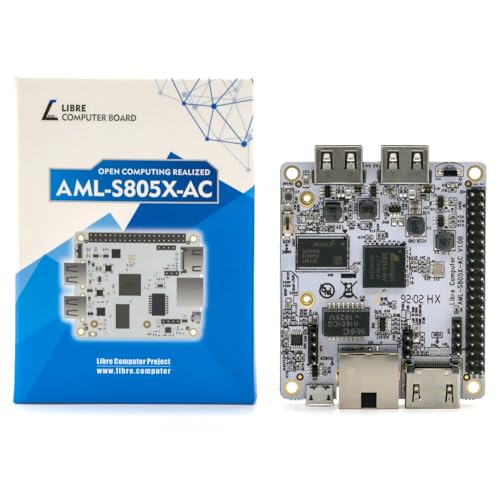
Libre Computer La Frite 1GB SBC
The Libre Computer La Frite 1GB SBC reduces the footprint significantly. It measures 2.5 by 3.5 inches with a height of 0.75 inches, compared to the original’s 3 by 4.75 inches. You get 1GB of RAM instead of 2GB, which limits multitasking. It also lacks eMMC storage, relying entirely on external media. This board targets low-power embedded Linux projects where space and cost matter more than performance. If you need a smaller board for specific hardware integration, this fits. However, you sacrifice RAM capacity and internal storage speed. It is not suitable for general computing tasks that require more memory or faster boot times from internal drives. Choose this if your project prioritizes compact size over raw processing power and storage convenience.
DFRobot UNIHIKER ARM Single Board Computer
The DFRobot UNIHIKER ARM Single Board Computer differs by including a 2.8-inch touchscreen. It measures 2.03 by 3.27 inches, making it smaller than the original. This board is designed for Python education and IoT prototyping rather than media playback. It integrates sensors and offers instant Python setup, which the original does not. You give up the original’s 4K video capabilities and extensive OS support like Fedora and Debian. Instead, you get a specialized development kit for educators and makers. This choice is best if you value interactive displays and quick coding workflows over raw processing power. It lacks the video decoding features needed for media centers. Pick this if your focus is on learning, teaching, or rapid IoT development with visual feedback.
Banana Pi Allwinner H618 SBC
The Banana Pi Allwinner H618 SBC offers 2GB of LPDDR4 RAM and 8GB of eMMC storage, matching the original’s RAM but adding internal storage. It measures 1.18 by 2.56 inches, significantly smaller than the original. This board includes dual-band wireless connectivity, which the original requires a separate header and module for. It runs Ubuntu, providing a familiar Linux environment for IoT projects. You gain built-in wireless and storage, simplifying setup for Raspberry Pi Zero W compatible projects. However, it uses an Allwinner H618 processor instead of the original’s Amlogic chip. This affects video decoding capabilities and software compatibility. Choose this if you need compact size, internal storage, and wireless connectivity for IoT applications without adding extra modules.
KLAYERS Luckfox Lyra Ultra Linux Board
The KLAYERS Luckfox Lyra Ultra Linux Board focuses on embedded development and IoT projects. It features an RK3506B processor, differing from the original’s Amlogic chip. This board is designed for Linux embedded applications, offering specific audio or video capabilities suited for development. It lacks the detailed specifications for RAM and storage in the provided data, but its architecture targets embedded use cases. The original provides clear 2GB RAM and 4K video support, which this board may not match in raw media performance. You gain a specialized board for developers needing specific hardware interfaces for IoT. This is ideal if your project requires custom audio or video processing rather than general media playback. Pick this if you prioritize embedded Linux development and specialized hardware features over the original’s broad OS support and video capabilities.
Quick picks
| # | Product | Best for | Price |
|---|---|---|---|
| 1 | Libre Computer Sweet Potato 2GB SBC Best overall | low-power 24/7 Linux media and server projects | Check price of Libre Computer Sweet Potato 2GB SBC on Amazon |
| 2 | Libre Computer La Frite 1GB SBC Best budget | low-power embedded Linux projects | Check price of Libre Computer La Frite 1GB SBC on Amazon |
| 3 | DFRobot UNIHIKER ARM Single Board Computer Also great | Python education and quick IoT prototyping | Check price of DFRobot UNIHIKER ARM Single Board Computer on Amazon |
| 4 | Banana Pi Allwinner H618 SBC Best premium | Raspberry Pi Zero W compatible IoT projects | Check price of Banana Pi Allwinner H618 SBC on Amazon |
| 5 | KLAYERS Luckfox Lyra Ultra Linux Board Best linux | Linux embedded development and IoT projects | Check price of KLAYERS Luckfox Lyra Ultra Linux Board on Amazon |
Our 5 picks

Libre Computer Sweet Potato 2GB SBC
Best for: low-power 24/7 Linux media and server projects
- RAM Capacity
- 2GB
- Video Resolution
- 4K 60 FPS
- Operating System Support
- Fedora 42, Debian 13, Ubuntu 24.04 LTS
- Architecture
- ARM
- Dimensions
- 4.75 × 3 × 1 inches
View on Amazon: Libre Computer Sweet Potato 2GB SBC Affiliate link
The Libre Computer Sweet Potato is a 2GB ARM single-board computer designed for low-power, 24/7 operation. It supports major Linux distributions like Ubuntu 24.04 LTS and Fedora 42. The board handles 4K 60 FPS video decoding via hardware acceleration. Its compact 3x4.75 inch form factor fits tight spaces. USB-C power input allows for flexible deployment options in home or office environments.
Pros
- 2GB RAM capacity for general computing tasks
- Supports Ubuntu 24.04 LTS, Debian 13, and Fedora 42
- Hardware-accelerated 4K 60 FPS video playback
- Ultra-low 1W idle power consumption
- USB-C power input with 3A capability
Cons
- Only 2GB RAM limits heavy multitasking
- No built-in Wi-Fi or Bluetooth; requires separate mezzanine or header add-ons
- Requires external storage such as MicroSD or eMMC modules
Good fit if
- You need a low-power device for 24/7 operation
- You want to run a specific Linux distribution like Ubuntu or Fedora
- You require hardware-accelerated 4K video decoding for media centers
Skip if
- You need built-in wireless connectivity without adding extra modules
- You require more than 2GB of RAM for your workload
- You prefer a pre-assembled desktop computer with a case and peripherals
Verdict: Libre Computer Sweet Potato 2GB ARM SBC is a practical choice for users who need a compact, energy-efficient ARM board for Linux-based projects. It fits those who prioritize low power draw and 4K video support over high RAM capacity or built-in wireless features.
Libre Computer La Frite 1GB SBC
Best for: low-power embedded Linux projects
- Processor
- Quad 64-bit ARM Cortex-A53
- RAM Capacity
- 1GB
- RAM Type
- DDR4
- Operating System Support
- Ubuntu, Debian, Raspbian
- Dimensions
- 3.5 × 2.5 × 0.75 inches
View on Amazon: Libre Computer La Frite 1GB SBC Affiliate link
The Libre Computer La Frite is a compact ARM single-board computer built for low-power tasks. It features a quad-core 1.2GHz Cortex-A53 processor and 1GB of DDR4 RAM. The board supports Ubuntu and Debian Linux with hardware-accelerated video decoding. Its small 2.5 by 3.5-inch footprint and 2W power draw make it ideal for embedded projects. You get a 40-pin header for hardware expansion, allowing you to connect various peripherals and sensors.
Pros
- Quad-core 1.2GHz ARM Cortex-A53 processor
- 1GB DDR4 RAM for basic multitasking
- 2W power consumption for energy efficiency
- Hardware-accelerated H.265 and H.264 video decoding
- 40-pin header for hardware extensibility
Cons
- Only 1GB of RAM limits complex applications
- No onboard eMMC storage included
- Small form factor restricts expansion options
Good fit if
- You need a low-power device for embedded projects
- You require hardware expansion via the 40-pin header
- You want to run standard Linux distributions like Ubuntu
Skip if
- You need more than 1GB of RAM for heavy workloads
- You require built-in eMMC storage for faster boot times
- You prefer a pre-assembled PC with a case included
Verdict: Libre La Frite 1GB ARM Mini PC fits users who need a tiny, energy-efficient board for specific hardware projects. It is not suitable for general computing due to its limited RAM and lack of storage.

DFRobot UNIHIKER ARM Single Board Computer
Best for: Python education and quick IoT prototyping
- Processor
- Quad-Core ARM
- Storage
- 16GB Flash
- Wireless Connectivity
- Wi-Fi, Bluetooth
- Operating System Support
- Debian Linux
- Use
- IoT
- Dimensions
- 3.27 × 2.03 × 0.51 inches
View on Amazon: DFRobot UNIHIKER ARM Single Board Computer Affiliate link
The DFRobot UNIHIKER M10 is a pocket-sized ARM single board computer designed for immediate Python development. It features a quad-core processor, 16GB of flash storage, and a 2.8-inch color touchscreen. Built-in Wi-Fi, Bluetooth, and sensors like a microphone and gyroscope allow for rapid IoT prototyping. This all-in-one kit includes pre-installed Debian Linux, making it ideal for STEM education and beginners who want to bypass complex OS setup.
Pros
- 2.8-inch color touchscreen for real-time data visualization
- Pre-installed Debian Linux with Python environment
- Integrated sensors including microphone, gyroscope, and accelerometer
- Built-in Wi-Fi and Bluetooth connectivity
- 16GB flash storage for projects and OS
Cons
- No external RAM specified, relying on shared or limited memory
- Small 2.8-inch screen limits complex data viewing
- Lacks Gigabit Ethernet, relying on wireless connections only
Good fit if
- You are a student learning Python or block-based coding
- You need a portable IoT dev kit with built-in sensors
- You want to start coding without flashing an OS
Skip if
- You require a desktop-sized PC with full-size ports
- You need high-performance computing for heavy workloads
- You prefer a standard keyboard and mouse setup
Verdict: DFRobot UNIHIKER M10 2.8" Touchscreen SBC is a specialized dev kit for educators and makers who value integrated sensors and instant Python setup over raw processing power.

Banana Pi Allwinner H618 SBC
Best for: Raspberry Pi Zero W compatible IoT projects
- Processor
- Allwinner H618
- RAM Capacity
- 2GB
- RAM Type
- LPDDR4
- Storage
- 8GB eMMC
- Ethernet
- 100Mbps Ethernet
- Wireless Connectivity
- WiFi 4, Bluetooth 4.2
View on Amazon: Banana Pi Allwinner H618 SBC Affiliate link
The WayPonDEV BPI M4 Zero is a compact single-board computer built around the Allwinner H618 processor. It pairs a quad-core ARM Cortex-A53 CPU with 2GB of LPDDR4 RAM and 8GB of eMMC storage. You get dual-band WiFi 4 and Bluetooth 4.2 for connectivity. The board supports 4K video output and fits standard Raspberry Pi Zero W cases, making it a practical option for IoT projects and educational development.
Pros
- Allwinner H618 quad-core CPU up to 1.5GHz
- 2GB LPDDR4 RAM with 8GB eMMC storage
- Dual-band 2.4G/5G WiFi 4 and Bluetooth 4.2
- 4K@60Hz HDMI output with HDR10 support
- Compatible with Raspberry Pi Zero W form factor
Cons
- Only 100Mbps Ethernet speed
- WiFi 4 lacks modern WiFi 6 speeds
- Bluetooth 4.2 is an older standard
Good fit if
- You need a Raspberry Pi Zero W compatible board
- You require dual-band wireless connectivity
- You are building an IoT or educational project
Skip if
- You need Gigabit Ethernet networking
- You require WiFi 6 or newer standards
- You want more than 2GB of RAM
Verdict: WayPonDEV BPI M4 Zero Allwinner H618 SBC fits developers who need a compact, Raspberry Pi Zero W compatible board with dual-band wireless for IoT projects.

KLAYERS Luckfox Lyra Ultra Linux Board
Best for: Linux embedded development and IoT projects
- Processor
- RK3506B Cortex-A7 & Cortex-M0
- Storage
- 8GB eMMC
- Operating System Support
- Linux
- Architecture
- ARM
View on Amazon: KLAYERS Luckfox Lyra Ultra Linux Board Affiliate link
The KLAYERS Luckfox Lyra Ultra is a Linux-based ARM development board built around the RK3506B processor. It pairs a triple-core Cortex-A7 with a Cortex-M0 MCU for efficient task handling. You get 8GB of onboard eMMC storage, which simplifies setup. The board supports DDR2, DDR3, and DDR3L memory expansion. It also includes built-in audio and video codecs for multimedia tasks.
Pros
- Triple-core ARM Cortex-A7 processor
- Integrated Cortex-M0 MCU
- 8GB onboard eMMC storage
- Built-in audio and video codecs
Cons
- No RAM included; requires external DDR2/3/3L expansion
- Development board only; no case or accessories
- Limited to ARM Cortex-A7 performance
Good fit if
- You need a dedicated Linux development board
- You require onboard storage for quick setup
- You are building an audio or video project
Skip if
- You want a ready-to-use desktop computer
- You need high-performance x86 processing
- You prefer a complete kit with case and power supply
Verdict: The KLAYERS Luckfox Lyra Ultra RK3506B suits developers who need a compact Linux board with onboard storage. It is ideal for embedded projects requiring specific audio or video capabilities.
Specifications side by side
| Spec | Libre Computer Sweet Potato 2GB SBC | Libre Computer La Frite 1GB SBC | DFRobot UNIHIKER ARM Single Board Computer | Banana Pi Allwinner H618 SBC | KLAYERS Luckfox Lyra Ultra Linux Board |
|---|---|---|---|---|---|
| Processor | not stated | Quad 64-bit ARM Cortex-A53 | Quad-Core ARM | Allwinner H618 | RK3506B Cortex-A7 & Cortex-M0 |
| RAM Capacity | 2GB | 1GB | not stated | 2GB | not stated |
| RAM Type | not stated | DDR4 | not stated | LPDDR4 | not stated |
| Storage | not stated | not stated | 16GB Flash | 8GB eMMC | 8GB eMMC |
| Ethernet | not stated | not stated | not stated | 100Mbps Ethernet | not stated |
| Wireless Connectivity | not stated | not stated | Wi-Fi, Bluetooth | WiFi 4, Bluetooth 4.2 | not stated |
| Video Resolution | 4K 60 FPS | not stated | not stated | 4K@60Hz | not stated |
| Operating System Support | Fedora 42, Debian 13, Ubuntu 24.04 LTS | Ubuntu, Debian, Raspbian | Debian Linux | Debian, Ubuntu | Linux |
| Memory | not stated | not stated | not stated | 2GB RAM | not stated |
| Operating System | not stated | not stated | not stated | Ubuntu | Linux |
| Use | not stated | not stated | IoT | IoT | not stated |
| Architecture | ARM | ARM | ARM | ARM | ARM |
| Dimensions | 4.75 × 3 × 1 inches | 3.5 × 2.5 × 0.75 inches | 3.27 × 2.03 × 0.51 inches | 2.56 × 1.18 × 0.2 inches | not stated |
| Size | 2GB | 1GB+No eMMC | not stated | 2GB LPDDR4 RAM 8GB eMMC | not stated |
| Color | Board | not stated | Black | Bundle2 | not stated |
| Model | LC-SBC-AML-S905X-CC-V2-2GB-UPC | LC-SBC-AML-S805X-AC | DFR0706-EN | BPI M4 Zero Allwinner H618 SBC | not stated |
Frequently asked questions
Which Libre Computer board is best for low-power 24/7 Linux media projects?
The Libre Computer Sweet Potato 2GB SBC is the top choice for these tasks. It features an ARM architecture and 2GB of RAM. This board supports 4K video playback at 60 FPS. It is designed for energy efficiency, making it ideal for running servers or media centers continuously without high power consumption.
What is the most budget-friendly alternative to the Sweet Potato?
The Libre Computer La Frite 1GB SBC is the best budget option. It offers 1GB of RAM and lacks eMMC storage. Its compact size measures 2.5 by 3.5 inches. This board is suitable for specific embedded Linux projects rather than general computing due to its limited memory and storage options.
Is there a Sweet Potato alternative with a built-in display?
The DFRobot UNIHIKER ARM Single Board Computer includes a 2.8-inch touchscreen. It is designed for Python education and quick IoT prototyping. This board integrates sensors and offers instant Python setup. It prioritizes educational features and ease of use over raw processing power, making it distinct from standard server boards.
Which board is compatible with Raspberry Pi Zero W form factors?
The Banana Pi Allwinner H618 SBC fits this category. It measures 1.18 by 2.56 inches, matching the compact form factor. The board includes 2GB of LPDDR4 RAM and 8GB of eMMC storage. It supports dual-band wireless connectivity, making it suitable for IoT projects that require a small footprint and network access.
Can I use an ARM board for Linux embedded development?
Yes, the KLAYERS Luckfox Lyra Ultra Linux Board is designed for this purpose. It runs Linux and uses an ARM architecture. This board is ideal for embedded development and IoT projects. It offers onboard storage and specific audio or video capabilities, catering to developers needing compact solutions for specialized tasks.
How does the Sweet Potato compare in size to the La Frite?
The Sweet Potato measures 3 by 4.75 inches with a height of 1 inch. The La Frite is smaller, measuring 2.5 by 3.5 inches with a height of 0.75 inches. The La Frite sacrifices RAM capacity and storage for this reduced footprint. You should choose the Sweet Potato if you need more memory and space for connections.
Which board supports Ubuntu operating system out of the box?
The Banana Pi Allwinner H618 SBC supports Ubuntu. It comes with 2GB of LPDDR4 RAM and 8GB of eMMC storage. This board is built for IoT projects and offers dual-band wireless. It provides a familiar Linux environment for developers who need a compact, pre-configured system for their applications.
What is the primary use case for the DFRobot UNIHIKER?
The DFRobot UNIHIKER is best for Python education and IoT prototyping. It features a 2.8-inch touchscreen and integrated sensors. This board allows for instant Python setup, making it ideal for educators and makers. It focuses on ease of use and learning rather than high-performance computing or server tasks.