WayPonDEV vs LattePanda Single Board Computers: Which Brand Fits You?
As an Amazon Associate we earn from qualifying purchases. Links on this page are affiliate links.
When comparing WayPonDEV vs LattePanda single board computer options, you face two distinct paths. Both are compact development boards for makers. The WayPonDEV Banana Pi M2 Zero is a tiny, lightweight Linux-focused unit. The LattePanda V1 is larger, offering Windows 10 support and significant storage. Your choice depends on whether you need a small IoT node or a full desktop-like environment.
Key differences
| Aspect | WayPonDEV Banana Pi Quad-Core SBC | LattePanda V1 4GB RAM 64GB eMMC |
|---|---|---|
| Processor | Allwinner H3 Quad-core Cortex-A7 | Intel Cherry Trail Z8350 Quad-core |
| RAM | 512MB DDR3 SDRAM | 4GB |
| Storage | Not listed | 64GB eMMC |
| Operating System | Android, Debian Linux, Ubuntu | Windows 10, Linux |
| Weight | 0.53 ounces | 3.68 ounces |
Which one should you choose?
Choose WayPonDEV Banana Pi Quad-Core SBC if
- You need a very small form factor for space-limited IoT projects.
- You prefer lightweight Linux distributions like Debian or Ubuntu.
- You want a board with integrated Wi-Fi and Bluetooth for simple connectivity.
Choose LattePanda V1 4GB RAM 64GB eMMC if
- You require Windows 10 compatibility for specific software.
- You need 4GB of RAM and 64GB of built-in storage.
- You are building projects that benefit from an Arduino-compatible processor.
Verdict: Choose the WayPonDEV Banana Pi M2 Zero if you are building lightweight, space-constrained IoT devices. Select the LattePanda V1 if you need a more powerful system that runs Windows 10 and includes ample storage and memory for complex development tasks.
WayPonDEV vs LattePanda Spec Breakdown
Processor performance
The WayPonDEV Banana Pi M2 Zero uses an Allwinner H3 quad-core Cortex-A7 processor. This chip is designed for efficiency in lightweight tasks. The LattePanda V1 features an Intel Cherry Trail Z8350 quad-core processor with speeds up to 1.92GHz. Intel’s architecture generally handles more complex workloads better than the ARM-based Allwinner. If you need raw processing power for heavier applications, the LattePanda’s CPU offers a clear advantage. The WayPonDEV is sufficient for basic scripting or simple IoT monitoring but lacks the headroom for demanding software.
Memory capacity
Memory determines how many programs can run simultaneously. The WayPonDEV Banana Pi M2 Zero comes with 512MB of DDR3 SDRAM. This is quite limited by modern standards. The LattePanda V1 includes 4GB of RAM. This is eight times more memory than the WayPonDEV. With 4GB, you can run Windows 10 smoothly alongside other tools. The WayPonDEV’s 512MB restricts you to lightweight Linux distributions or Android. For any serious development work, the LattePanda’s larger memory pool is essential for multitasking.
Storage options
Storage is critical for installing operating systems and saving projects. The WayPonDEV Banana Pi M2 Zero does not list internal storage in its specifications. You likely need to use a microSD card for the operating system. The LattePanda V1 includes 64GB of eMMC storage. This is built-in, faster, and more reliable than external card solutions. Having 64GB allows you to install multiple operating systems and keep large files on the board itself. This makes the LattePanda a more complete out-of-the-box solution for developers.
Operating system support
Your software choices depend on OS compatibility. The WayPonDEV Banana Pi M2 Zero supports Android, Debian Linux, and Ubuntu. It is strictly a Linux/Android device. The LattePanda V1 supports both Windows 10 and Linux. This dual support is rare for single-board computers. If you need to run Windows-specific software or use Windows development tools, the LattePanda is your only option here. The WayPonDEV is better if you prefer a pure Linux environment without the overhead of Windows.
Form factor and weight
Size matters for portable or embedded projects. The WayPonDEV Banana Pi M2 Zero measures 65mm by 30mm and weighs only 15 grams. It is extremely small and light. The LattePanda V1 is larger, measuring 4.72 inches by 4.13 inches by 1.57 inches, and weighs 3.68 ounces. The WayPonDEV fits into tight spaces where the LattePanda cannot. If you are building a small drone or a compact sensor node, the WayPonDEV’s tiny footprint is a significant advantage over the bulkier LattePanda.
Choose the Right Mini PC for Your Needs
IoT developers needing tiny Linux boards
The WayPonDEV Banana Pi M2 Zero measures just 65mm by 30mm and weighs 15 grams. It runs Android, Debian, or Ubuntu on an Allwinner H3 processor with 512MB DDR3 RAM. The 40-pin GPIO supports UART, SPI, and I2C connections. This compact size and Linux support make it ideal for space-limited IoT projects and educational development.
Users requiring Windows and Arduino support
The LattePanda V1 supports Windows 10 and Linux, powered by an Intel Cherry Trail Z8350 processor up to 1.92GHz. It includes 4GB RAM and 64GB eMMC storage. A built-in Arduino-compatible processor allows easy hardware expansion. This combination of full OS support and microcontroller integration suits developers needing versatile computing capabilities.
Projects needing more RAM and storage
The LattePanda V1 offers 4GB of RAM and 64GB of eMMC storage. This is significantly more than the WayPonDEV's 512MB RAM and lack of onboard storage. The Intel processor provides higher performance for multitasking. If you need ample memory and persistent storage for your single board computer projects, this option provides the necessary capacity.
The products compared
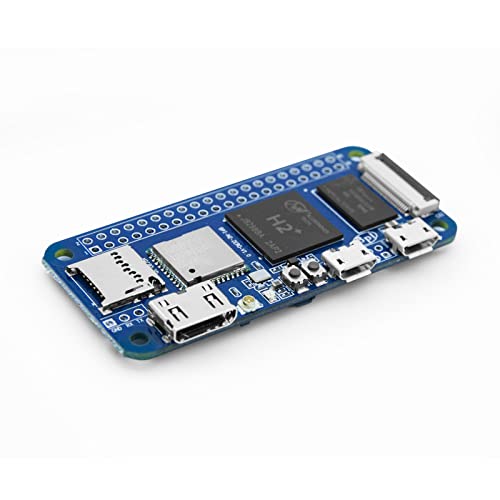
WayPonDEV Banana Pi Quad-Core SBC
Best for: IoT and educational Linux projects
- Processor
- Allwinner H3, Quad-core Cortex-A7
- RAM Capacity
- 512MB
- RAM Type
- DDR3 SDRAM
- Wireless Connectivity
- Wi-Fi (AP6212), BT
- Operating System Support
- Android, Debian linux, Ubuntu
- Weight
- 0.53 ounces
View on Amazon: WayPonDEV Banana Pi Quad-Core SBC Affiliate link
This WayPonDEV Banana Pi M2 Zero is a compact single-board computer built around an Allwinner H3 quad-core processor. It includes 512MB of DDR3 SDRAM and supports Android, Debian, and Ubuntu operating systems. The board features Wi-Fi and Bluetooth connectivity via an AP6212 module. Its small footprint and 40-pin GPIO header make it suitable for IoT projects and educational development where space is limited.
Pros
- Allwinner H3 quad-core Cortex-A7 processor
- 512MB DDR3 SDRAM memory
- Supports Android, Debian, and Ubuntu
- Integrated Wi-Fi and Bluetooth
- 40-pin Raspberry Pi-compatible GPIO header
Cons
- Only 512MB RAM limits multitasking
- No Windows support
- Requires external case and power
Good fit if
- You need a tiny board for IoT sensors
- You are learning Linux on ARM hardware
- You want GPIO access for electronics projects
Skip if
- You require Windows for development
- You need more than 512MB RAM
- You want a ready-to-use desktop PC
Verdict: WayPonDEV Banana Pi M2 Zero SBC is a specialized tool for developers and hobbyists who need a small, Linux-based board with GPIO pins. It fits niche projects but is not suitable for general computing tasks.

LattePanda V1 4GB RAM 64GB eMMC
Best for: Arduino projects and Windows learning
- Processor
- Intel Cherry Trail Z8350
- RAM Capacity
- 4GB
- Storage
- 64GB eMMC
- Operating System Support
- Windows 10, Linux
- Dimensions
- 4.72 × 4.13 × 1.57 inches
- Weight
- 3.68 ounces
View on Amazon: LattePanda V1 4GB RAM 64GB eMMC Affiliate link
The LattePanda V1 is a single-board computer built around the Intel Cherry Trail Z8350 processor, which reaches up to 1.92GHz. It includes 4GB of RAM and 64GB of eMMC storage. This board supports both Windows 10 and Linux operating systems. It also features an integrated Arduino-compatible processor for hardware expansion. This setup suits developers who need a flexible platform for learning and prototyping.
Pros
- Intel Cherry Trail Z8350 quad-core processor up to 1.92GHz
- 4GB RAM and 64GB eMMC storage
- Integrated Arduino-compatible processor for hardware projects
- Supports Windows 10 and Linux operating systems
Cons
- Older Intel Cherry Trail Z8350 processor may limit modern software performance
- 4GB RAM is lower than many current mini PCs
- 64GB eMMC storage fills up quickly with Windows 10
Good fit if
- You need an Arduino-compatible processor for hardware projects
- You want to run Windows 10 or Linux on a small board
- You are looking for a Raspberry Pi alternative with higher CPU power
Skip if
- You require high performance for demanding tasks
- You need more than 4GB of RAM
- You want a modern processor with faster speeds
Verdict: LattePanda V1 4GB/64GB Mini PC is a solid choice for hobbyists who need Arduino integration and Windows support on a small board. It fits those who prioritize hardware flexibility over raw processing speed.
Specifications side by side
| Spec | WayPonDEV Banana Pi Quad-Core SBC | LattePanda V1 4GB RAM 64GB eMMC |
|---|---|---|
| Processor | Allwinner H3, Quad-core Cortex-A7 | Intel Cherry Trail Z8350 |
| RAM Capacity | 512MB | 4GB |
| RAM Type | DDR3 SDRAM | not stated |
| Storage | not stated | 64GB eMMC |
| Wireless Connectivity | Wi-Fi (AP6212), BT | not stated |
| Operating System Support | Android, Debian linux, Ubuntu | Windows 10, Linux |
| Operating System | Android | Windows 10 |
| Weight | 0.53 ounces | 3.68 ounces |
| Dimensions | not stated | 4.72 × 4.13 × 1.57 inches |
| Model | Banana Pi M2 Zero Allwinner H3 SBC | DFR0419 |
| Color | not stated | 4G/64GB without Win10 product key |
Frequently asked questions
Can the WayPonDEV Banana Pi run Windows?
No, it does not support Windows. The WayPonDEV Banana Pi M2 Zero runs Android according to its listed attributes. It is designed for lightweight Linux tasks and IoT projects. You should choose a different board if you require the Windows operating system for your development work.
Does the LattePanda V1 include a Windows license?
The listing specifies a version without a Windows 10 product key. You can still use the board with Windows 10, but you may need to acquire a separate license. The device itself supports the OS, making it suitable for learning and Arduino integration projects.
Which board is better for Arduino projects?
The LattePanda V1 is the better choice for Arduino integration. Its verdict highlights it as a solid option for hobbyists needing this specific hardware support. The WayPonDEV board focuses on Linux-based IoT tasks and does not mention Arduino compatibility in its specifications.
How small is the WayPonDEV Banana Pi?
It is extremely compact and lightweight. The board weighs just 0.53 ounces. This small form factor makes it ideal for embedded applications where space is limited. You can easily integrate it into tight enclosures or portable IoT devices without adding significant bulk.
What operating system does the WayPonDEV board use?
The WayPonDEV Banana Pi M2 Zero uses Android. This is listed in its attributes section. While it can also run Linux distributions like Debian, its primary listed OS is Android. This makes it distinct from boards that are exclusively Linux-focused.
Is the LattePanda V1 suitable for general computing?
It is not designed for heavy general computing tasks. The verdict notes it prioritizes hardware flexibility over raw processing speed. It is best for learning and light projects. You should look elsewhere if you need high performance for demanding applications.
What is the storage capacity of the LattePanda V1?
The LattePanda V1 includes 64GB of eMMC storage. This built-in memory allows you to install an operating system and basic applications without needing external drives. It provides sufficient space for educational projects and light development work.
Can I use the WayPonDEV board for educational purposes?
Yes, it is well-suited for education. The verdict describes it as a specialized tool for developers and hobbyists. Its small size and Linux focus make it a practical learning device for students exploring IoT concepts and basic programming without complex setup requirements.