WayPonDEV vs LoveRPi: Single Board Computers Compared by Specs
As an Amazon Associate we earn from qualifying purchases. Links on this page are affiliate links.
When you compare the WayPonDEV vs LoveRPi single board computer options, you see two distinct paths for embedded projects. Both boards offer GPIO headers for hardware connectivity and support Linux-based operating systems. The main difference lies in their hardware capacity and included accessories. The WayPonDEV Banana Pi M2 Zero provides a compact, bare-bones quad-core solution. The LoveRPi Libre Computer Le Potato bundle delivers more memory and includes a heatsink and USB Wi-Fi dongle for immediate use.
Key differences
| Aspect | WayPonDEV Banana Pi Quad-Core SBC | Libre Computer Le Potato 2GB SBC with Heatsink |
|---|---|---|
| Processor | Allwinner H3, Quad-core Cortex-A7 | AML-S905X-CC |
| RAM Capacity | 512MB DDR3 SDRAM | 2GB |
| Included Accessories | Board only | Heatsink and USB Wi-Fi dongle |
| Weight | 15g | not listed |
Which one should you choose?
Choose WayPonDEV Banana Pi Quad-Core SBC if
- You need the smallest possible footprint for tight spaces
- You require a bare board for custom enclosures
- You are building low-power IoT devices
Choose Libre Computer Le Potato 2GB SBC with Heatsink if
- You want more RAM for heavier Linux tasks
- You need a heatsink for sustained performance
- You prefer a plug-and-play Wi-Fi solution
Verdict: Choose the WayPonDEV Banana Pi M2 Zero if your project demands minimal size and weight. Select the LoveRPi Le Potato bundle if you need more memory and ready-to-use thermal and wireless components.
Specs: WayPonDEV vs LoveRPi SBCs
Processor power
The WayPonDEV Banana Pi M2 Zero uses an Allwinner H3 quad-core Cortex-A7 processor. This chip is designed for light-weight systems and educational development. It handles basic tasks efficiently. The LoveRPi Libre Computer Le Potato uses the AML-S905X-CC processor. This platform is described as powerful, capable of handling many computing tasks while consuming less than a watt. The Le Potato offers more processing headroom for complex embedded applications compared to the simpler H3 in the WayPonDEV board.
Memory capacity
Memory size matters for multitasking and running larger operating system images. The WayPonDEV Banana Pi M2 Zero includes 512MB of DDR3 SDRAM. This is sufficient for very lightweight Linux distributions or simple IoT projects. The LoveRPi Le Potato comes with 2GB of RAM. This is four times the memory of the WayPonDEV option. The extra RAM allows the Le Potato to run more demanding software, maintain more open connections, and handle heavier workloads without slowing down.
Cooling solution
Thermal management affects sustained performance. The WayPonDEV Banana Pi M2 Zero data does not list a specific cooling solution, such as a heatsink or fan. It relies on its small 65mm by 30mm form factor for passive dissipation. The LoveRPi Le Potato bundle includes a bespoke anodized heatsink. This heatsink provides a protective oxide layer and offers significantly better thermal performance. It helps increase sustained performance and reliability by reducing temperature cycling during operation.
Wireless connectivity
Both boards offer wireless options, but the implementation differs. The WayPonDEV Banana Pi M2 Zero has built-in Wi-Fi (AP6212) and Bluetooth. This integrated approach saves space and simplifies setup for projects needing both radio types. The LoveRPi Le Potato includes a plug-and-play USB Wi-Fi 4 dongle. This dongle supports AP mode, ad-hoc mode, and packet injection. While it lacks built-in Bluetooth, the USB dongle offers specific wireless features that may suit advanced embedded network tasks.
Form factor and weight
Size constraints often dictate which board you choose. The WayPonDEV Banana Pi M2 Zero is very compact, measuring 65mm by 30mm and weighing only 15 grams. It is ideal for space-limited applications where footprint is critical. The LoveRPi Le Potato data does not specify exact dimensions or weight, but it is a standard SBC size. It also includes a USB dongle and heatsink, which add bulk. If you need the smallest possible board, the WayPonDEV option is superior.
GPIO compatibility
Hardware connectivity is essential for many projects. Both boards feature GPIO headers. The WayPonDEV Banana Pi M2 Zero has a 40-pin Raspberry Pi-compatible GPIO header. This includes UART, SPI, and I2C connections, making it easy to plug into existing Raspberry Pi accessories. The LoveRPi Le Potato also maintains a GPIO header with the same layout for hardware I2C, SPI, PWM, and UART. However, it notes that I2S and PCM pins do not match, requiring re-routing for some audio peripherals. Both are compatible, but the WayPonDEV is explicitly Pi-compatible.
Choose Your Single Board Computer
Need 2GB RAM for heavier Linux tasks
You should pick the LoveRPi Le Potato if you require 2GB of RAM. The WayPonDEV board only offers 512MB, which limits multitasking. The Le Potato handles more complex computing tasks efficiently. Its included USB WiFi dongle simplifies setup for networked projects. You get better performance for data-heavy embedded applications without needing external memory upgrades.
Want compact size for space-limited IoT
Choose the WayPonDEV Banana Pi M2 Zero for projects with strict space constraints. It measures just 65mm by 30mm and weighs only 15 grams. This tiny footprint is ideal for lightweight systems where size matters more than raw power. The onboard Wi-Fi and Bluetooth keep the design clean. It fits easily into small enclosures for educational or IoT prototypes.
Prefer included heatsink for thermal stability
The LoveRPi Le Potato includes a bespoke anodized heatsink to manage heat. This accessory resists corrosion and improves thermal performance significantly. It helps maintain sustained performance by reducing temperature cycling. The WayPonDEV board does not list an included heatsink. If you plan to run the processor for long periods, the Le Potato offers better passive cooling reliability out of the box.
Need basic GPIO for simple sensors
Select the WayPonDEV Banana Pi M2 Zero for straightforward sensor projects. It features a 40-pin GPIO header compatible with Raspberry Pi designs. This includes UART, SPI, and I2C connections for basic hardware interfacing. The Allwinner H3 processor is sufficient for simple control loops. It is a cost-effective choice for educational development where high processing power is not required.
The products compared
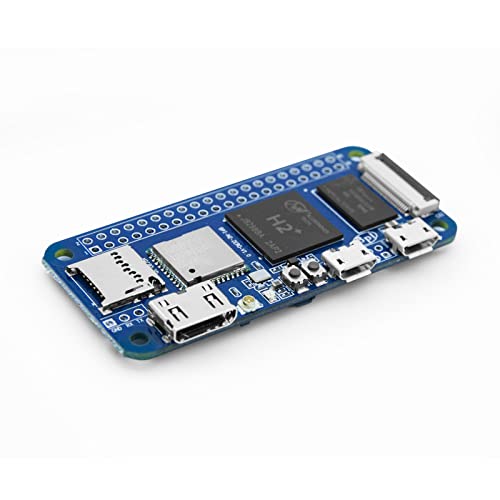
WayPonDEV Banana Pi Quad-Core SBC
Best for: small IoT and educational projects
- Processor
- Allwinner H3, Quad-core Cortex-A7
- RAM Capacity
- 512MB
- RAM Type
- DDR3 SDRAM
- Wireless Connectivity
- Wi-Fi (AP6212), BT
- Operating System Support
- Android, Debian linux, Ubuntu
- Weight
- 0.53 ounces
View on Amazon: WayPonDEV Banana Pi Quad-Core SBC Affiliate link
The WayPonDEV Banana Pi M2 Zero is a compact single-board computer built around the Allwinner H3 quad-core processor. It includes 512MB of DDR3 SDRAM for light tasks. The board measures 65mm by 30mm and weighs only 15g. It features onboard Wi-Fi and Bluetooth. You can use it with Android, Debian, or Ubuntu. The 40-pin GPIO header allows for easy hardware integration in small projects.
Pros
- Allwinner H3 quad-core Cortex-A7 processor
- Compact 65mm x 30mm form factor
- Onboard Wi-Fi and Bluetooth connectivity
- 40-pin Raspberry Pi-compatible GPIO header
Cons
- Only 512MB of RAM limits multitasking
- No onboard storage included in specs
- Requires external power supply setup
Good fit if
- You need a tiny board for IoT projects
- You are building educational hardware prototypes
- You want GPIO access for sensors
Skip if
- You require high-performance computing
- You need more than 512MB of RAM
- You want a plug-and-play desktop replacement
Verdict: WayPonDEV Banana Pi M2 Zero SBC fits hobbyists who need a small board with GPIO access for simple IoT or educational tasks. It is not suitable for users needing high performance or large memory.

Libre Computer Le Potato 2GB SBC with Heatsink
Best for: Low-power embedded projects needing included WiFi and cooling
- RAM Capacity
- 2GB
- Wireless Connectivity
- WiFi 4
- Operating System Support
- Linux, Raspbian
View on Amazon: Libre Computer Le Potato 2GB SBC with Heatsink Affiliate link
This Libre Computer board uses the Amlogic S905X-CC processor to handle embedded tasks while drawing less than a watt. It includes 2GB of RAM and a plug-and-play USB WiFi 4 dongle. The package also features a bespoke anodized heatsink for better thermal performance. You get a reliable single-board computer that supports Linux and Raspbian images via conversion tools.
Pros
- Includes a plug-and-play USB WiFi 4 dongle with AP and monitor mode support
- Comes with a bespoke anodized heatsink that resists corrosion and improves thermal performance
- Consumes less than a watt of power during operation
- Supports Linux and Raspbian with portability tools for image conversion
Cons
- WiFi connectivity is limited to WiFi 4 standards
- Raspbian software is not compatible out of the box and requires conversion
- Requires a separate MicroSD card or eMMC module to operate
Good fit if
- You need a low-power single-board computer for embedded applications
- You want a board that includes a WiFi dongle and heatsink in the box
- You are comfortable converting Raspbian images for Linux compatibility
Skip if
- You require WiFi 5 or newer wireless standards
- You want a system that runs standard Raspbian images without modification
- You need a device with built-in eMMC storage
Verdict: LoveRPi Le Potato 2GB WiFi 4 SBC is a practical option for hobbyists who need low-power computing with included wireless and cooling accessories. It fits users who can manage image conversion for their operating system.
Specifications side by side
| Spec | WayPonDEV Banana Pi Quad-Core SBC | Libre Computer Le Potato 2GB SBC with Heatsink |
|---|---|---|
| Processor | Allwinner H3, Quad-core Cortex-A7 | not stated |
| RAM Capacity | 512MB | 2GB |
| RAM Type | DDR3 SDRAM | not stated |
| Wireless Connectivity | Wi-Fi (AP6212), BT | WiFi 4 |
| Operating System Support | Android, Debian linux, Ubuntu | Linux, Raspbian |
| Operating System | Android | not stated |
| Weight | 0.53 ounces | not stated |
| Model | Banana Pi M2 Zero Allwinner H3 SBC | not stated |
| Size | not stated | 2GB 1 Pack |
| Color | not stated | Libre Blue WiFi 4 |
Frequently asked questions
Which board is better for small IoT projects?
The WayPonDEV Banana Pi M2 Zero is the better choice for small IoT projects. It is designed specifically for hobbyists who need a compact board with GPIO access. Its small form factor makes it easy to integrate into simple embedded systems. The LoveRPi Le Potato is larger and includes WiFi, which may be unnecessary for basic IoT tasks.
Does the WayPonDEV board come with WiFi?
The provided data does not list WiFi as a feature for the WayPonDEV Banana Pi M2 Zero. It focuses on its compact size and GPIO headers. In contrast, the LoveRPi Le Potato explicitly includes WiFi 4 connectivity. If wireless capability is essential for your project, the LoveRPi option provides this feature out of the box.
What operating system does the WayPonDEV SBC support?
The WayPonDEV Banana Pi M2 Zero supports the Android operating system. This makes it suitable for educational tasks or specific Android-based embedded applications. The LoveRPi Le Potato is noted for its Linux-based compatibility. You should choose the WayPonDEV board if your project specifically requires an Android environment rather than a standard Linux distribution.
Is cooling included with the LoveRPi board?
Yes, the LoveRPi Libre Computer Le Potato comes with an included heatsink. This accessory helps manage thermal performance during operation. The product description highlights this as a practical benefit for low-power embedded projects. The WayPonDEV board description does not mention included cooling accessories, so you may need to source them separately if needed.
Which board has more RAM?
The LoveRPi Le Potato has 2GB of RAM. The WayPonDEV Banana Pi M2 Zero has only 512MB. The larger memory on the LoveRPi board allows for more complex computing tasks and better multitasking. The WayPonDEV board is limited by its smaller memory capacity, making it less suitable for demanding software workloads.
What is the weight of the WayPonDEV board?
The WayPonDEV Banana Pi M2 Zero weighs 0.53 ounces. This lightweight design contributes to its suitability for portable or space-constrained projects. The LoveRPi Le Potato is a larger 2GB pack, which implies a heavier and bulkier form factor. You should choose the WayPonDEV board if minimizing weight is a priority for your build.