Architecture Explained: What It Means for Single Board Computers
As an Amazon Associate we earn from qualifying purchases. Links on this page are affiliate links.
SBC Architecture Explained: ARM vs RISC-V
The core of every single board computer is its central processing unit. This component dictates speed, power consumption, and software compatibility. When you browse listings for these compact devices, the processor architecture is the first spec you will see. It defines how the chip interprets instructions. The two dominant standards today are ARM and RISC-V. Understanding architecture explained helps you choose the right tool for your project.
ARM processors are the industry standard for mobile and embedded devices. You will find them in almost every smartphone and tablet. This design uses a reduced instruction set, which allows for high efficiency. The chips deliver strong performance while using very little electricity. This makes ARM ideal for small form factor computers that must run cool and quiet. Most Linux distributions and Android-based systems support ARM out of the box. You can expect broad software compatibility. Drivers for peripherals are also widely available. If you need a plug-and-play experience with minimal configuration, ARM is the reliable choice.
RISC-V is an open-source instruction set architecture. It is gaining traction as a modern alternative to proprietary designs. The open nature allows manufacturers to customize the core without licensing fees. This flexibility can lead to innovative hardware designs. However, software support is still evolving. You may need to compile specific applications for RISC-V. The ecosystem is smaller than ARM’s. Yet, the potential for customization is significant. Developers who need transparency in their hardware design often prefer RISC-V. It offers a path away from vendor lock-in.
When you compare these options, consider your software needs. ARM provides immediate compatibility with a vast library of programs. RISC-V offers future-proofing and customization. Both architectures enable powerful computing in tiny packages. Your decision depends on whether you prioritize ease of use or technical flexibility. Check the product specifications carefully. The architecture label tells you what to expect from performance and support. Make sure the operating system you plan to use is compatible with the chosen architecture.
RISC-V vs ARM Architecture
RISC-V
RISC-V is an open-source instruction set architecture. You will find it in high-performance networking modules like the WayPonDEV Banana Pi BPI-R4. This module uses a 32-bit RISC-V MCU to handle Wi-Fi 7 and 10GbE traffic. The open nature allows for custom hardware designs without licensing fees. You get flexibility in building specialized routers. However, software support is still growing compared to established architectures. You may need to compile code from source for specific tasks. This option suits builders who need raw networking power and do not mind a steeper learning curve for software setup. The trade-off is potential compatibility hurdles with legacy applications.
ARM
ARM is a widely adopted architecture known for efficiency. You will see it in devices like the DFRobot UNIHIKER and Libre Computer La Frite. These boards prioritize low power consumption and broad software compatibility. The DFRobot UNIHIKER includes pre-loaded environments for Python, making it ideal for education. The Libre Computer La Frite offers hardware flexibility for embedded Linux projects. You benefit from a vast ecosystem of operating systems and libraries. This architecture suits beginners and developers who want plug-and-play stability. The trade-off is less freedom to modify the instruction set itself compared to open-source alternatives. You get proven reliability and extensive community support for troubleshooting and development.
Who Needs This Architecture
Who needs it
You should prioritize the specific processor architecture if your project demands extreme energy efficiency or open-source hardware control. RISC-V offers a transparent instruction set that appeals to developers who need to modify low-level system behaviors without licensing restrictions. This is critical for custom networking gear or specialized embedded applications where every milliwatt counts. ARM remains the standard for broad software compatibility. If you rely on mainstream operating systems like Linux distributions or Android, ARM provides a vast ecosystem of pre-compiled binaries. You will save significant time on driver development and software porting. Choose the architecture that matches your primary workload. For general computing, media playback, and standard desktop tasks, ARM is the safer, more supported choice. For niche industrial uses or custom firmware development, RISC-V provides the necessary flexibility and transparency.
Who can skip it
You can ignore the architectural debate if you only need a basic media center or simple home automation hub. The underlying silicon matters less than the available ports and connectivity options for casual users. Focus on whether the device has enough USB ports for your peripherals or HDMI output for your monitor. The performance difference between these architectures is negligible for web browsing and video streaming. Do not overthink the instruction set if you are not writing custom code. Prioritize RAM capacity and storage speed instead. These factors impact daily responsiveness far more than the CPU design. Also, check the physical size and mounting options to ensure it fits your enclosure. The architecture is a backend detail that rarely affects the user experience for standard tasks. Stick to the most common option to ensure easy software installation and community support.
Key SBC Specs Guide
ARM Architecture
A processor design focused on low power consumption. It powers most mini PCs and smartphones, offering strong performance for general tasks while keeping heat and energy use minimal.
RISC-V Architecture
An open-source instruction set allowing for customizable hardware. You find this in niche modules like the Banana Pi BPI-R4, ideal for developers needing transparent control over system behaviors.
SoC
System on Chip. This integrates the CPU, GPU, and memory controllers onto a single silicon piece. It reduces size and power draw, making it essential for compact single board computers.
LPDDR5
Low-power double data rate memory. This type of RAM is common in mini PCs. It offers high bandwidth for smooth multitasking while consuming less energy than standard desktop memory modules.
NVMe SSD
A high-speed storage drive using the PCIe interface. It provides rapid boot times and file transfers. Look for M.2 slots on your mini PC to support these fast drives.
Wi-Fi 7
The latest wireless standard offering faster speeds and lower latency. Modules like the BPI-R4 use dedicated MCUs to handle this traffic, ensuring stable connections for high-bandwidth applications.
10GbE
Ten-gigabit Ethernet port. This provides significantly faster wired network speeds than standard ports. It is crucial for home servers or NAS setups that need to move large data files quickly.
Passive Cooling
A fanless heat dissipation method using metal chassis or heatsinks. It eliminates moving parts, reducing noise and failure points. This is common in small form factor computers designed for silent operation.
Quick picks
| # | Product | Best for | Price |
|---|---|---|---|
| 1 | WayPonDEV Banana Pi WiFi 7 NIC Module | High-speed custom router builds | Check price of WayPonDEV Banana Pi WiFi 7 NIC Module on Amazon |
| 2 | Libre Computer La Frite 1GB SBC | low-power embedded Linux projects | Check price of Libre Computer La Frite 1GB SBC on Amazon |
| 3 | WayPonDEV Banana Pi Aluminum Case with Fan | BPI-F3 owners needing metal protection | Check price of WayPonDEV Banana Pi Aluminum Case with Fan on Amazon |
| 4 | DFRobot UNIHIKER ARM Single Board Computer | Beginner Python and IoT education | Check price of DFRobot UNIHIKER ARM Single Board Computer on Amazon |
Our 4 picks

WayPonDEV Banana Pi WiFi 7 NIC Module
Best for: High-speed custom router builds
- Architecture
- RISC-V (what this guide is about)
- Processor
- MediaTek MT7995AV
- Ethernet
- 2x 10Gbe SFP, 4x Gbe
- Wireless Connectivity
- Wi-Fi 7
- Operating System Support
- OpenWRT
- Dimensions
- 5.9 × 4.01 × 0.78 inches
View on Amazon: WayPonDEV Banana Pi WiFi 7 NIC Module Affiliate link
This MediaTek MT7995AV module adds Wi-Fi 7 connectivity to the Banana Pi BPI-R4 router board. It supports tri-band frequencies including 6GHz and offers 36Gbps throughput. You get two 10GbE SFP ports and four Gigabit Ethernet jacks. The hardware offloads Wi-Fi tasks from the main processor. It is designed for users building high-performance home networks or gateways.
Pros
- MediaTek MT7995AV chip for Wi-Fi 7
- Tri-band support with 6GHz capability
- Two 10GbE SFP ports
- Hardware offload engine for host processor
Cons
- Requires compatible BPI-R4 board
- No built-in display
- OpenWRT only
Good fit if
- You need 10GbE uplinks
- You want Wi-Fi 7 speeds
- You build custom routers
Skip if
- You need a standalone PC
- You require Windows OS
- You want plug-and-play setup
Verdict: WayPonDEV BPI-R4 Wi-Fi 7 Module delivers high-end networking for builders who need 10GbE and Wi-Fi 7 on a compatible SBC.
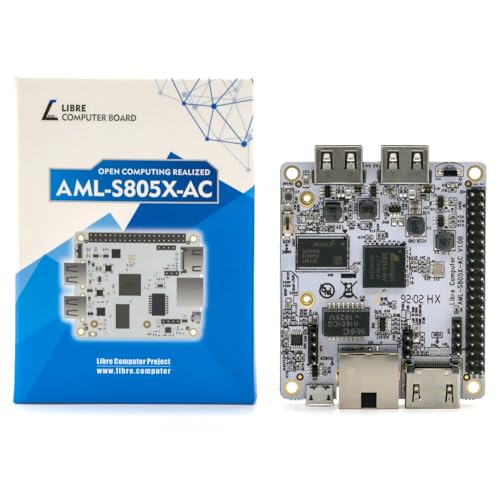
Libre Computer La Frite 1GB SBC
Best for: low-power embedded Linux projects
- Architecture
- ARM (what this guide is about)
- Processor
- Quad 64-bit ARM Cortex-A53
- RAM Capacity
- 1GB
- RAM Type
- DDR4
- Operating System Support
- Ubuntu, Debian, Raspbian
- Dimensions
- 3.5 × 2.5 × 0.75 inches
View on Amazon: Libre Computer La Frite 1GB SBC Affiliate link
The Libre Computer La Frite is a compact ARM single-board computer built for low-power projects. It features a quad-core 1.2GHz ARM Cortex-A53 processor and 1GB of DDR4 RAM. The board supports hardware-accelerated video decoding and runs standard Linux distributions like Ubuntu and Debian. Its small footprint and 2W power consumption make it ideal for embedded systems. You will appreciate the open-source software support and hardware extensibility via the 40-pin header.
Pros
- Quad-core ARM Cortex-A53 processor at 1.2GHz
- 1GB DDR4 RAM for efficient multitasking
- Hardware-accelerated H.265 and H.264 video decoding
- Supports Ubuntu, Debian, and Raspbian operating systems
- 40-pin header for hardware extensibility
Cons
- Only 1GB of RAM limits complex application usage
- No onboard eMMC storage included
- Small 2.5 by 3.5 inch form factor requires careful case planning
Good fit if
- You need a low-power ARM board for embedded tasks
- You want to run standard Linux distributions on hardware
- You require hardware extensibility via a 40-pin header
Skip if
- You need high-performance computing for heavy workloads
- You require built-in Wi-Fi or Bluetooth connectivity
- You prefer a system with ample onboard storage
Verdict: Libre Computer La Frite ARM SBC is a practical choice for developers building low-power embedded devices. It fits users who value open-source software compatibility and hardware flexibility over raw processing power.
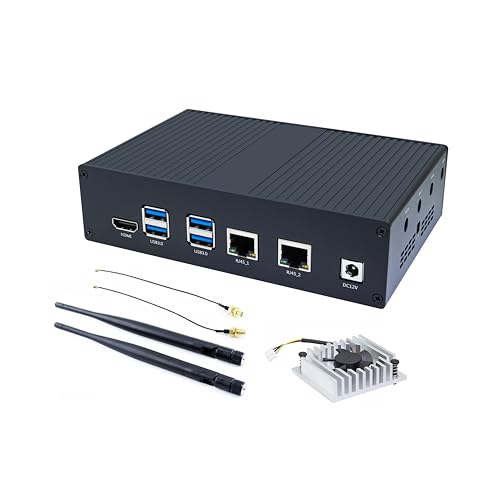
WayPonDEV Banana Pi Aluminum Case with Fan
Best for: BPI-F3 owners needing metal protection
- Architecture
- RISC-V (what this guide is about)
View on Amazon: WayPonDEV Banana Pi Aluminum Case with Fan Affiliate link
This is a protective enclosure for the Banana Pi BPI-F3 single board computer. It uses a 2.0mm thick aluminum plate with an oxidized lacquer finish. The design includes a cooling fan rated for 10,000 hours of operation. The case fits the bare board without extra gaps. It does not include the motherboard itself. This metal shell provides strong heat dissipation and anti-corrosion capabilities for your RISC-V project.
Pros
- 2.0mm thick aluminum plate construction
- Includes a cooling fan for heat dissipation
- Fits the bare board with no extra gaps
- Oxidized lacquer finish for anti-corrosion
Cons
- Motherboard is not included
- Only protects the board without adding ports
- Assembly requires separate screws
Good fit if
- You need a sturdy metal shell for the BPI-F3
- You want passive and active cooling combined
- You prefer a compact, gap-free fit
Skip if
- You do not already own the BPI-F3 board
- You need a case for a different single board computer
- You prefer an acrylic enclosure over metal
Verdict: WayPonDEV Black Metal Case for Banana Pi BPI-F3 offers durable aluminum protection and integrated cooling for users who already have the BPI-F3 board and need a secure, heat-managed enclosure.

DFRobot UNIHIKER ARM Single Board Computer
Best for: Beginner Python and IoT education
- Architecture
- ARM (what this guide is about)
- Processor
- Quad-Core ARM
- Storage
- 16GB Flash
- Wireless Connectivity
- Wi-Fi, Bluetooth
- Operating System Support
- Debian Linux
- Use
- IoT
View on Amazon: DFRobot UNIHIKER ARM Single Board Computer Affiliate link
The DFRobot UNIHIKER M10 is a pocket-sized single board computer with an ARM quad-core processor. It features 16GB of flash storage and a 2.8-inch color touchscreen. You get pre-installed Debian Linux and a Python environment. Built-in Wi-Fi and Bluetooth support IoT projects. It includes sensors like a gyroscope and microphone. This kit suits beginners who want to code without complex setup.
Pros
- Pre-installed Debian Linux and Python environment
- 2.8-inch color touchscreen for visualization
- Quad-core ARM processor with 16GB flash
- Built-in Wi-Fi and Bluetooth connectivity
- Integrated sensors including microphone and gyroscope
Cons
- Small 2.8-inch display limits complex data viewing
- No Ethernet port listed for wired connections
- Limited to 1GB RAM in similar ARM SBCs
Good fit if
- You are a beginner avoiding complex OS setup
- You need a handheld IoT development kit
- You want to learn Python with visual feedback
Skip if
- You require high-performance desktop computing
- You need a large external display
- You prefer open-source hardware without proprietary software
Verdict: The DFRobot UNIHIKER M10 ARM SBC is ideal for students and makers starting with IoT. It simplifies coding with its pre-loaded environment and integrated sensors. You get a complete, portable kit for learning ARM architecture.
Specifications side by side
| Spec | WayPonDEV Banana Pi WiFi 7 NIC Module | Libre Computer La Frite 1GB SBC | WayPonDEV Banana Pi Aluminum Case with Fan | DFRobot UNIHIKER ARM Single Board Computer |
|---|---|---|---|---|
| Processor | MediaTek MT7995AV | Quad 64-bit ARM Cortex-A53 | not stated | Quad-Core ARM |
| RAM Capacity | not stated | 1GB | not stated | not stated |
| RAM Type | not stated | DDR4 | not stated | not stated |
| Storage | not stated | not stated | not stated | 16GB Flash |
| Ethernet | 2x 10Gbe SFP, 4x Gbe | not stated | not stated | not stated |
| Wireless Connectivity | Wi-Fi 7 | not stated | not stated | Wi-Fi, Bluetooth |
| Operating System Support | OpenWRT | Ubuntu, Debian, Raspbian | not stated | Debian Linux |
| Use | not stated | not stated | not stated | IoT |
| Architecture | RISC-V | ARM | RISC-V | ARM |
| Dimensions | 5.9 × 4.01 × 0.78 inches | 3.5 × 2.5 × 0.75 inches | not stated | 3.27 × 2.03 × 0.51 inches |
| Weight | 8.82 ounces | not stated | not stated | not stated |
| Size | 32-bit RISC-V MCU | 1GB+No eMMC | Motherboard Not include | not stated |
| Color | WiFi7 NIC Module | not stated | Black Metal Case | Black |
| Model | BPI-R4 NIC BE14 Wi-Fi 7 Module | LC-SBC-AML-S805X-AC | BPI-F3 Black Metal Case | DFR0706-EN |
Frequently asked questions
Is RISC-V good for networking projects?
Yes, it is excellent for high-speed custom router builds. The WayPonDEV Banana Pi WiFi 7 NIC Module uses a 32-bit RISC-V MCU to handle complex traffic. This architecture supports Wi-Fi 7 and 10GbE connections. You get high-end networking capabilities in a compact module designed for builders who need reliable performance.
Does ARM work for low-power embedded Linux?
It is a practical choice for low-power embedded Linux projects. The Libre Computer La Frite SBC uses ARM architecture to deliver efficiency. It fits users who value open-source software compatibility and hardware flexibility. You get a small device that balances processing needs with minimal energy consumption for continuous operation.
Can I use ARM for beginner IoT education?
Yes, ARM is ideal for students and makers starting with IoT. The DFRobot UNIHIKER M10 SBC simplifies coding with a pre-loaded environment. It includes integrated sensors to help you learn quickly. You get a complete, portable kit that makes understanding ARM architecture accessible for educational purposes.
What size is the RISC-V networking module?
The WayPonDEV Banana Pi WiFi 7 NIC Module measures 5.9 inches in length, 4.01 inches in width, and 0.78 inches in height. It weighs 8.82 ounces. This compact form factor allows you to integrate high-speed networking into various builds without taking up excessive space in your project enclosure.
Is the Libre Computer La Frite portable?
Yes, it is highly portable due to its small footprint. The board measures 3.5 inches in length, 2.5 inches in width, and 0.75 inches in height. This size makes it easy to embed into small devices. You can carry it easily for field testing or classroom demonstrations.
Does the DFRobot UNIHIKER include sensors?
Yes, it features integrated sensors to aid learning. The DFRobot UNIHIKER M10 ARM SBC comes with built-in sensors to simplify IoT projects. You do not need to buy extra components to start experimenting. This integration helps you focus on coding and understanding how data flows in connected systems.
What is the difference between these architectures?
RISC-V is an open-source instruction set, while ARM focuses on low power consumption. RISC-V allows for customizable hardware without licensing restrictions. ARM offers strong performance for general tasks. You choose RISC-V for networking flexibility and ARM for efficient, widely supported embedded applications.