Risc-V vs ARM Single Board Computers in 2026: Key Differences
As an Amazon Associate we earn from qualifying purchases. Links on this page are affiliate links.
Choosing between a RISC-V vs ARM single board computer depends on your specific hardware needs. Both platforms offer compact computing solutions for embedded projects. The main difference lies in their processor architecture and target use cases. One unit focuses on high-speed networking with Wi-Fi 7 capabilities. The other prioritizes energy efficiency and standard Linux software support. You should evaluate the specifications carefully to match your project requirements.
Key differences
| Aspect | WayPonDEV Banana Pi WiFi 7 NIC Module | Libre Computer La Frite 1GB SBC |
|---|---|---|
| Processor | MediaTek MT7995AV | Quad 64-bit ARM Cortex-A53 |
| Architecture | RISC-V | ARM |
| Memory | not listed | 1GB DDR4 |
| Networking | Wi-Fi 7, 2x 10Gbe SFP, 4x Gbe | not listed |
| Operating System | OpenWRT | Ubuntu, Debian, Raspbian |
| Dimensions | 5.9 x 4.01 x 0.78 inches | 3.5 x 2.5 x 0.75 inches |
Which one should you choose?
Choose WayPonDEV Banana Pi WiFi 7 NIC Module if
- You need advanced Wi-Fi 7 connectivity with tri-band support
- You require multiple high-speed Ethernet ports for networking tasks
- You are building a router or gateway using OpenWRT
Choose Libre Computer La Frite 1GB SBC if
- You prefer standard Linux distributions like Ubuntu or Debian
- You need a smaller form factor for compact projects
- You prioritize low power consumption for always-on applications
Verdict: The RISC-V module is better for networking-heavy roles requiring high-speed wireless and wired connections. The ARM board suits general-purpose computing tasks with standard Linux support. Choose based on whether you prioritize network performance or software compatibility.
RISC-V vs ARM SBC Specs
Processor architecture
The WayPonDEV Banana Pi BPI-R4 NIC BE14 Module uses a RISC-V architecture, specifically the MediaTek MT7995AV chip. This design focuses on offloading Wi-Fi tasks from the host processor using hardware data processing accelerators. In contrast, the Libre Computer La Frite 1GB SBC features a Quad 64-bit ARM Cortex-A53 processor running at 1.2GHz. This ARM setup is paired with an ARM Mali-450 GPU. The RISC-V approach prioritizes wireless connectivity efficiency, while the ARM option provides a traditional general-purpose computing core with dedicated graphics capabilities for standard desktop or embedded tasks.
Networking capabilities
Networking is the clear strength of the WayPonDEV Banana Pi BPI-R4 NIC BE14 Module. It supports Wi-Fi 7 with tri-band connectivity across 2.4GHz, 5GHz, and 6GHz bands, delivering up to 36Gbps throughput. It also includes two 10Gbe SFP ports and four Gigabit Ethernet ports. The Libre Computer La Frite 1GB SBC does not list specific onboard Ethernet or Wi-Fi ports in its key specs. It relies on a 40-pin header for hardware extensibility, which may require adding external network adapters. For high-speed wired or wireless routing, the Banana Pi offers significantly more robust and modern connectivity options out of the box.
Memory and storage
The Libre Computer La Frite 1GB SBC comes with 1GB of High Bandwidth DDR4 RAM. It supports UHS Micro SD cards and offers an eMMC module expansion connector for additional storage. The WayPonDEV Banana Pi BPI-R4 NIC BE14 Module does not list its RAM capacity in the provided data. However, it does include an M.2 interface that supports NVMe SSDs, which typically offer faster storage performance than SD cards. The Banana Pi also supports 4G/5G signal reception via its M.2 slot, adding mobile connectivity options that the La Frite lacks. You need more details on the Banana Pi's RAM to fully compare memory performance.
Operating system support
Software compatibility differs between the two platforms. The WayPonDEV Banana Pi BPI-R4 NIC BE14 Module is designed to run OpenWRT, an operating system specialized for routers and network gateways. This makes it ideal for network management tasks. The Libre Computer La Frite 1GB SBC supports standard Linux distributions, including Ubuntu 22.04 and 23.04 LTS, Debian 12, and Raspbian 11. This broader OS support allows for more general-purpose computing applications. If you need a router, OpenWRT is suitable. If you need a mini PC for desktop tasks, the ARM-based La Frite offers more versatile software options.
Form factor and size
The physical dimensions vary significantly between the two devices. The Libre Computer La Frite 1GB SBC is very compact, measuring 2.5 inches in width, 3.5 inches in length, and 0.75 inches in height. This small footprint makes it easy to fit into tight spaces. The WayPonDEV Banana Pi BPI-R4 NIC BE14 Module is larger, with dimensions of 4.01 inches in width, 5.9 inches in length, and 0.78 inches in height. It also weighs 8.82 ounces. The La Frite is better for space-constrained projects, while the Banana Pi requires more room but provides more ports and connectivity features.
Which RISC-V or ARM SBC suits you
You need high-speed tri-band Wi-Fi 7 networking
This module uses the MediaTek MT7995AV chip to deliver Wi-Fi 7 connectivity across 2.4GHz, 5GHz, and 6GHz bands. It supports 320-MHz bandwidth and 4096-QAM for high throughput. The intelligent MAC design offloads Wi-Fi tasks from the host processor, ensuring reliable performance for router or gateway applications requiring advanced wireless standards.
You want a compact ARM board for Linux desktops
This ARM single board computer features a quad-core Cortex-A53 processor and 1GB of DDR4 RAM. It runs Ubuntu, Debian, or Raspbian with hardware-accelerated video decoding. The 40-pin header allows for hardware extensibility, making it suitable for small form factor projects where standard ARMv8 code compatibility and low power consumption are essential.
You require extensive wired connectivity options
The Banana Pi module provides two 10Gbe SFP ports and four Gigabit Ethernet ports. This setup supports high-bandwidth network connections for routers or NAS devices. It also includes USB 3.2 and M.2 interfaces for NVMe SSDs and 4G/5G modules, offering versatile wired and wireless expansion capabilities for complex network infrastructure.
Quick picks
| # | Product | Best for | Price |
|---|---|---|---|
| 1 | WayPonDEV Banana Pi WiFi 7 NIC Module | Advanced OpenWRT routers with 10Gbe ports | Check price of WayPonDEV Banana Pi WiFi 7 NIC Module on Amazon |
| 2 | Libre Computer La Frite 1GB SBC | Low-power embedded ARM projects | Check price of Libre Computer La Frite 1GB SBC on Amazon |
The products compared

WayPonDEV Banana Pi WiFi 7 NIC Module
Best for: Advanced OpenWRT routers with 10Gbe ports
- Architecture
- RISC-V (what this guide is about)
- Processor
- MediaTek MT7995AV
- Ethernet
- 2x 10Gbe SFP, 4x Gbe
- Wireless Connectivity
- Wi-Fi 7
- Operating System Support
- OpenWRT
- Dimensions
- 5.9 × 4.01 × 0.78 inches
View on Amazon: WayPonDEV Banana Pi WiFi 7 NIC Module Affiliate link
This MediaTek MT7995AV module brings Wi-Fi 7 tri-band connectivity to the Banana Pi BPI-R4 router board. You get 2x 10Gbe SFP and 4x Gigabit Ethernet ports for robust wired connections. It supports OpenWRT and handles high-throughput tasks via hardware offloading. The module measures 5.9 by 4.01 inches. It suits users needing advanced wireless routing capabilities with modern standards.
Pros
- MediaTek MT7995AV CPU with Wi-Fi 7 support
- 2x 10Gbe SFP and 4x Gigabit Ethernet ports
- Tri-band connectivity across 2.4GHz, 5GHz, and 6GHz
- Hardware offload engine for efficient data processing
Cons
- Requires the separate BPI-R4 router board to function
- Limited to OpenWRT operating system support
- No integrated display or user interface included
Good fit if
- You need Wi-Fi 7 speeds on a custom router build
- You require 10Gbe wired uplink options
- You are building an OpenWRT based network gateway
Skip if
- You want a standalone all-in-one computer
- You prefer Windows or macOS operating systems
- You need plug-and-play consumer router simplicity
Verdict: WayPonDEV BPI-R4 Wi-Fi 7 Router Module delivers high-end wireless specs for network enthusiasts. It fits those building advanced OpenWRT routers who need 10Gbe ports and Wi-Fi 7 performance. It is not for general desktop users.
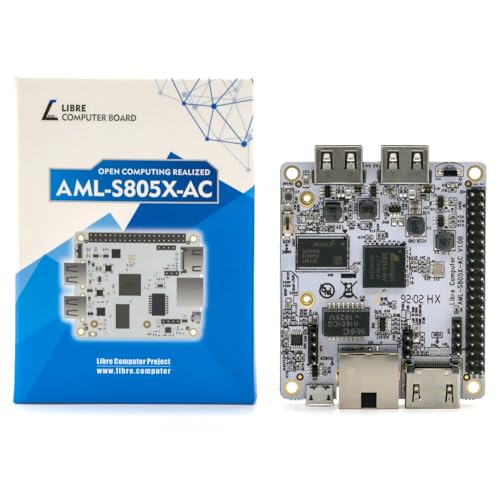
Libre Computer La Frite 1GB SBC
Best for: Low-power embedded ARM projects
- Architecture
- ARM (what this guide is about)
- Processor
- Quad 64-bit ARM Cortex-A53
- RAM Capacity
- 1GB
- RAM Type
- DDR4
- Operating System Support
- Ubuntu, Debian, Raspbian
- Dimensions
- 3.5 × 2.5 × 0.75 inches
View on Amazon: Libre Computer La Frite 1GB SBC Affiliate link
The Libre Computer La Frite is an ARM-based single board computer built around a quad-core 1.2GHz Cortex-A53 processor. It includes 1GB of DDR4 RAM and a Mali-450 GPU for hardware-accelerated video decoding. This compact unit consumes only 2W of power. It supports Ubuntu, Debian, and Raspbian operating systems. You will find this board suitable for low-power embedded projects or lightweight Linux desktop tasks.
Pros
- Quad 64-bit ARM Cortex-A53 processor at 1.2GHz
- 1GB DDR4 RAM capacity
- Hardware-accelerated H.265 and H.264 video decoding
- Low 2W power consumption
- 40-pin header for hardware extensibility
Cons
- Only 1GB of RAM limits multitasking
- No eMMC storage included in this configuration
- Small size may limit connectivity options
Good fit if
- You need a low-power ARM SBC for embedded projects
- You want hardware-accelerated video playback for media
- You require a 40-pin header for expansion
Skip if
- You require more than 1GB of RAM
- You need built-in eMMC storage
- You are looking for a high-performance desktop replacement
Verdict: Libre Computer La Frite ARM Mini PC offers a compact, energy-efficient ARM platform for basic computing. It fits users needing lightweight Linux support and hardware expansion headers.
Specifications side by side
| Spec | WayPonDEV Banana Pi WiFi 7 NIC Module | Libre Computer La Frite 1GB SBC |
|---|---|---|
| Processor | MediaTek MT7995AV | Quad 64-bit ARM Cortex-A53 |
| RAM Capacity | not stated | 1GB |
| RAM Type | not stated | DDR4 |
| Ethernet | 2x 10Gbe SFP, 4x Gbe | not stated |
| Wireless Connectivity | Wi-Fi 7 | not stated |
| Operating System Support | OpenWRT | Ubuntu, Debian, Raspbian |
| Architecture | RISC-V | ARM |
| Dimensions | 5.9 × 4.01 × 0.78 inches | 3.5 × 2.5 × 0.75 inches |
| Weight | 8.82 ounces | not stated |
| Size | 32-bit RISC-V MCU | 1GB+No eMMC |
| Color | WiFi7 NIC Module | not stated |
| Model | BPI-R4 NIC BE14 Wi-Fi 7 Module | LC-SBC-AML-S805X-AC |
Frequently asked questions
Is RISC-V better than ARM for single board computers?
It depends on your project goals. RISC-V offers open-source flexibility and specialized hardware acceleration, like Wi-Fi offloading in the WayPonDEV module. ARM provides established software support and energy efficiency, as seen in the Libre Computer La Frite. Choose based on whether you need cutting-edge networking features or proven embedded stability.
What is the main difference between RISC-V and ARM architectures?
The core difference lies in instruction set design and ecosystem maturity. RISC-V is an open-standard architecture allowing custom extensions for specific tasks. ARM uses a proprietary but widely licensed design optimized for general-purpose computing and low power consumption. Your choice affects available software libraries and hardware expansion options.
Can I use a RISC-V SBC as a desktop computer?
Generally, no. Current RISC-V single board computers often target specialized roles like networking or embedded systems. For example, the WayPonDEV Banana Pi module is designed for advanced OpenWRT routers and lacks general desktop utility. It is not intended for everyday computing tasks or standard operating systems used on desktops.
Which architecture is more energy efficient?
ARM architectures are typically optimized for low power consumption in compact forms. The Libre Computer La Frite exemplifies this with its efficient design for basic computing tasks. While RISC-V can be efficient, its current SBC implementations often prioritize specific high-performance features like Wi-Fi 7 over raw energy savings.
Does RISC-V support Wi-Fi 7 out of the box?
Yes, specific modules are built for this. The WayPonDEV Banana Pi BPI-R4 NIC BE14 Module integrates Wi-Fi 7 capabilities directly. It uses the MediaTek MT7995AV chip to handle high-throughput wireless connections. This makes it suitable for users needing advanced networking hardware without relying on external USB adapters.
Are there many software options for ARM SBCs?
Yes, ARM has a mature software ecosystem. The Libre Computer La Frite supports lightweight Linux distributions effectively. Its widespread adoption means many developers create compatible software and drivers. This makes it easier to find tutorials, operating systems, and community support compared to newer or niche architectures.
What size differences exist between these single board computers?
Sizes vary based on component density and purpose. The WayPonDEV module measures 5.9 by 4.01 inches to accommodate networking hardware. The Libre Computer La Frite is smaller at 3.5 by 2.5 inches, fitting compact embedded projects. Your available space will determine which form factor suits your enclosure or mounting needs.