Orange Pi or Libre Computer Project? Single Board Computers Compared in 2026
As an Amazon Associate we earn from qualifying purchases. Links on this page are affiliate links.
When you compare orange pi vs libre computer project single board computer options, you see two distinct approaches to small computing. Both brands support open-source software and Linux environments. The Orange Pi Zero LTS is a complete single-board computer with a processor and memory. The Libre Computer Project item is a storage module, not a full board. This comparison highlights how one provides a ready-to-use system while the other offers high-speed storage expansion for compatible boards.
Key differences
| Aspect | Orange Pi Zero LTS Single Board Computer | Libre Computer 128GB eMMC 5.x Module |
|---|---|---|
| Product Type | Single Board Computer | Storage Module |
| Processor | Allwinner H3 Quad-core Cortex-A7 | not listed |
| RAM | 512MB | not listed |
| Storage | Onboard storage | 128GB eMMC 5.x |
| Networking | 100M Ethernet | not listed |
Which one should you choose?
Choose Orange Pi Zero LTS Single Board Computer if
- You need a complete, ready-to-run computer with a processor and network port.
- You want to run Android, Ubuntu, or Debian on a compact board.
- You require onboard storage and a 100M Ethernet connection for basic tasks.
Choose Libre Computer 128GB eMMC 5.x Module if
- You already have a compatible Libre Computer board and need extra storage.
- You prioritize high-speed read and write performance for data-heavy applications.
- You want robust eMMC storage that offers better endurance than MicroSD cards.
Verdict: Choose the Orange Pi Zero LTS if you need a complete, functional single-board computer out of the box. Select the Libre Computer Project eMMC module only if you already own a compatible board and specifically need high-speed, durable storage expansion.
Orange Pi vs Libre Computer Comparison
Processor performance
The Orange Pi Zero LTS features an Allwinner H3 quad-core Cortex-A7 processor. This chip includes a Mali400MP2 GPU running at 600MHz and supports H.265/HEVC decoding for 4K video output. The Libre Computer Project product listed is a storage module, not a computing board. It does not contain a processor or GPU. You cannot compare processing power directly because the Libre item is an accessory. The Orange Pi offers actual computing capabilities with its integrated CPU and graphics unit for running applications.
Memory capacity
The Orange Pi Zero LTS comes with 512MB of RAM. This memory allows the board to run lightweight operating systems like Android, Ubuntu, or Debian. The Libre Computer Project listing describes a 128GB eMMC 5.x module. This component provides flash storage, not system memory. It does not specify any RAM capacity because it is not a computer board. If you need operational memory for running software, the Orange Pi provides the necessary 512MB. The Libre module stores data but does not contribute to the system's working memory.
Storage capabilities
The Libre Computer Project offers a 128GB eMMC 5.x module. This storage provides up to 250MB/s read speeds and 125MB/s write speeds. It also handles 10K random 4K block operations, which is faster than typical MicroSD cards. The Orange Pi Zero LTS includes onboard storage, but specific capacity and speed metrics are not listed in the data. The Libre module is designed for robust, long-term read/write workloads. If you require high-speed, durable storage for embedded systems, the Libre Computer option provides detailed performance specifications.
Networking options
The Orange Pi Zero LTS integrates a 100M Ethernet port directly on the board. This allows for wired network connections without needing adapters. The Libre Computer Project listing is for a storage module and does not mention any networking hardware. It focuses on flash storage performance rather than connectivity. The Orange Pi provides the necessary hardware for networked applications. You can connect this board to a router or switch using the onboard Ethernet. The Libre module does not offer networking features as it is not a complete computer.
Operating system support
Both brands support open-source software ecosystems. The Orange Pi Zero LTS runs Android, Ubuntu, and Debian. It is compatible with Raspberry Pi GPIO ports, allowing for broad peripheral support. The Libre Computer eMMC module supports Linux and Android operating systems. It can be accessed via u-boot and works with upstream software support. The Orange Pi offers a complete board ready for these OS options. The Libre module provides storage that works with these same operating systems. Both align with Linux-based environments, but the Orange Pi is the active computing platform.
Choose based on your storage needs
Users needing a complete small computer
The Orange Pi Zero LTS is a fully functional single-board computer. It includes an Allwinner H3 quad-core processor and 512MB of RAM. You get built-in 100M Ethernet and USB ports. It supports Android, Ubuntu, and Debian. This unit handles basic computing tasks and 4K video output directly.
Users needing fast, durable flash storage
This Libre Computer module provides 128GB of eMMC 5.x storage. It offers up to 250MB/s read speeds and higher endurance than SD cards. It is ideal for embedded systems requiring reliable data retention. The module supports Linux and Android, providing a robust alternative to slower micro-SD storage solutions.
Developers building custom embedded projects
The Orange Pi Zero LTS features a compact form factor suitable for limited spaces. It is compatible with Raspberry Pi GPIO ports and includes a debugging serial port. This makes it easier to integrate into various devices. The open-source nature allows for flexible software development and customization for specific hardware needs.
The products compared

Orange Pi Zero LTS Single Board Computer
Best for: basic embedded projects and 4K media playback
- Processor
- Allwinner H3 Quad-core Cortex-A7
- RAM Capacity
- 512MB
- Ethernet
- 100M
- Video Resolution
- 4K
- Operating System Support
- Android, Ubuntu, Debian
View on Amazon: Orange Pi Zero LTS Single Board Computer Affiliate link
The Orange Pi Zero LTS is a compact single-board computer built around the Allwinner H3 quad-core processor. It includes 512MB of RAM and a 100M Ethernet port. The board supports 4K video output and runs Android, Ubuntu, or Debian. Its small size makes it suitable for embedded projects. It features USB 2.0 ports and GPIO compatibility for various hardware integrations.
Pros
- Allwinner H3 quad-core Cortex-A7 processor
- 100M onboard Ethernet port
- Supports 4K H.265/HEVC video decoding
- Compatible with Raspberry Pi GPIO ports
Cons
- Only 512MB of RAM limits multitasking
- 100M Ethernet speed is slower than modern Gigabit standards
- USB ports are limited to USB 2.0
Good fit if
- You need a low-cost board for simple embedded tasks
- You require 4K video output for media centers
- You are building a project with limited space
Skip if
- You need Gigabit Ethernet for high-speed networking
- You require more than 512MB of RAM for heavy workloads
- You need USB 3.0 for fast data transfer
Verdict: The Orange Pi Zero LTS 512MB H3 is a practical entry-level board for hobbyists needing basic computing and 4K display support. It fits users who prioritize size and cost over high-speed connectivity.
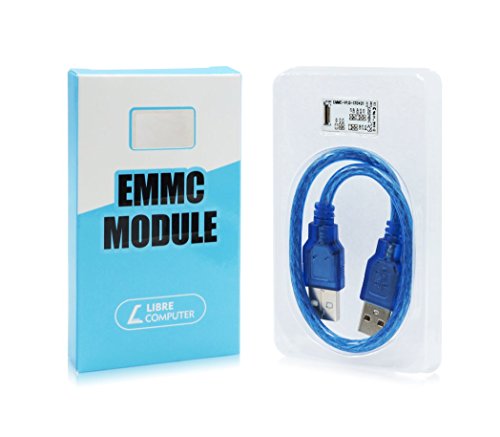
Libre Computer 128GB eMMC 5.x Module
Best for: Libre Computer boards needing durable storage
- Storage
- 128GB eMMC 5.x
- Operating System Support
- Linux, Android
View on Amazon: Libre Computer 128GB eMMC 5.x Module Affiliate link
This is a 128GB eMMC 5.x storage module designed for Libre Computer boards. It offers up to 250MB/s read and 125MB/s write speeds. The module supports Linux and Android operating systems. It provides better endurance and random read/write performance than MicroSD cards. You should use this if you need robust storage for sensitive data on compatible single-board computers.
Pros
- 128GB eMMC 5.x storage capacity
- Up to 250MB/s read speed
- Up to 125MB/s write speed
- Higher endurance than MicroSD cards
- Supports Linux and Android
Cons
- Only supports Linux and Android operating systems
- Requires a compatible Libre Computer board
- Does not include the main computer board
Good fit if
- You need high endurance storage for secure data
- You want faster random read/write performance than MicroSD
- You are using a Libre Computer board
Skip if
- You need storage for a different brand of board
- You require Windows operating system support
- You are looking for a complete computer system
Verdict: Libre Computer 128GB eMMC Module is a robust storage solution for Libre Computer boards running Linux or Android. It suits users who prioritize data endurance and speed over the convenience of MicroSD cards.
Specifications side by side
| Spec | Orange Pi Zero LTS Single Board Computer | Libre Computer 128GB eMMC 5.x Module |
|---|---|---|
| Processor | Allwinner H3 Quad-core Cortex-A7 | not stated |
| RAM Capacity | 512MB | not stated |
| Storage | not stated | 128GB eMMC 5.x |
| Ethernet | 100M | not stated |
| Video Resolution | 4K | not stated |
| Operating System Support | Android, Ubuntu, Debian | Linux, Android |
| Operating System | Android | not stated |
| Size | Pi Zero Lts | 128GB |
| Model | Orange Pi Zero LTS | LC-EMMC-5X-128GB |
| Color | not stated | 5.x |
Frequently asked questions
Is Orange Pi better than Libre Computer Project for beginners?
Orange Pi offers complete single-board computers like the Zero LTS, which are ready to use out of the box. Libre Computer Project lists storage modules like the 128GB eMMC. Beginners typically need a full computer with a processor and RAM, making Orange Pi the more practical starting point for basic projects.
What operating systems do these boards support?
The Orange Pi Zero LTS supports Android. The Libre Computer 128GB eMMC module is designed for boards running Linux or Android. Both ecosystems support open-source software, allowing you to choose the operating system that best fits your specific embedded project or media playback needs.
Can I play 4K video on an Orange Pi?
Yes, the Orange Pi Zero LTS supports 4K media playback. It features an Allwinner H3 processor with a Mali400MP2 GPU that handles H.265/HEVC decoding. This makes it suitable for users who need to display high-resolution content without requiring a high-end desktop computer or expensive graphics card.
Is the Libre Computer Project item a full computer?
No, the listed Libre Computer Project product is a 128GB eMMC storage module. It is not a complete computer. You need to pair it with a compatible Libre Computer board. It provides durable storage and faster data access compared to standard MicroSD cards for your existing hardware.
Which option is smaller and more compact?
The Orange Pi Zero LTS is designed in a Pi Zero LTS form factor, making it very compact. It fits users who prioritize small size. The Libre Computer option is a storage module, which is also small but is an accessory rather than a standalone computing device for your projects.
Do I need extra storage for the Orange Pi Zero?
The Orange Pi Zero LTS is a complete board with 512MB of RAM and a processor. While the data does not specify built-in storage, it is a complete system. You may need to add storage depending on your setup. The Libre Computer option provides dedicated eMMC storage if your board lacks it.
What is the main difference between these two brands?
Orange Pi sells complete single-board computers with processors and memory. Libre Computer Project, in this list, offers storage solutions like eMMC modules. You choose Orange Pi for a full computer experience. You choose Libre Computer Project to upgrade the storage endurance and speed of your existing compatible board.