Orange Pi R2S RISC-V Single Board Review: Specs, Pros and Cons
As an Amazon Associate we earn from qualifying purchases. Links on this page are affiliate links.
This orange pi r2s 2gb 4gb 8gb risc v single review focuses on the Orange Pi R2S. It is a compact single-board computer built for edge computing. The device features an 8-core Ky X1 RISC-V AI CPU. This processor delivers 2 TOPS of AI computing power. It also includes dual 2.5G LAN ports for high-speed networking. These two specs define its role in modern industrial setups. The board supports LPDDR4X RAM and 8GB onboard eMMC storage. You get flexible connectivity through USB ports and a TF card slot. This makes it suitable for space-constrained environments. The compact form factor allows easy integration into various devices.
What stands out
- Ky X1 8-core RISC-V AI CPU with 2 TOPS computing power
- Dual 2.5G LAN ports for high-speed data transfer
- 8GB onboard eMMC storage with LPDDR4X RAM options
- Compact 79.2mm × 46mm × 1.6mm form factor
- Support for OpenWrt and Ubuntu operating systems
Who it fits
Good fit for
This board suits developers and engineers working on enterprise gateways or industrial automation. If you need high-speed networking for smart cities or energy management, the dual 2.5G ports are ideal. The RISC-V architecture and AI capabilities make it good for compute-intensive edge applications. You will appreciate the compact size for space-constrained installations. The support for OpenWrt and Ubuntu allows flexibility for embedded and networked projects. It is a practical choice for building robust, small-footprint systems.
Who should skip it
You should look at another option if you require a full desktop experience. This board lacks a dedicated GPU for heavy graphics workloads. It is not designed for general-purpose consumer computing tasks. If you need extensive peripheral support beyond USB 2.0 and 3.0, this may be limiting. The RISC-V architecture might not support all standard desktop applications. Users expecting a plug-and-play consumer device will find the setup process complex. It is strictly for specialized embedded and industrial use cases.
Verdict: The Orange Pi R2S is a specialized tool for edge computing and industrial networking. Its dual 2.5G ports and AI CPU make it a strong choice for specific technical projects.
Key specs explained for this board
Processor: Ky X1
The listing specifies an 8-core Ky X1 CPU based on RISC-V architecture. This architecture is distinct from the x86 or ARM chips found in most traditional mini PCs. You should note that software compatibility may differ from standard Windows or Linux desktops. It is designed for edge computing tasks rather than general-purpose office work. Check if your required applications support RISC-V before purchasing.
RAM: 4GB LPDDR4X
This model comes with 4GB of LPDDR4X memory. LPDDR stands for Low Power Double Data Rate, which is optimized for energy efficiency in compact devices. Four gigabytes is sufficient for light multitasking and running Linux-based operating systems like Ubuntu. If you plan to run heavier virtual machines or multiple containers, you might want to look for models with higher RAM capacities.
Storage: 8GB eMMC
The device includes 8GB of onboard eMMC storage. eMMC is a flash storage standard similar to what is found in smartphones or budget laptops. Eight gigabytes is quite limited for a primary operating system drive. You will likely need to use a microSD card or an external USB drive for additional storage space. This setup is suitable for lightweight gateway or router functions.
Ethernet: Dual 2.5G, Dual Gigabit
Connectivity includes dual 2.5G LAN ports and dual Gigabit Ethernet ports. This high-speed networking capability is ideal for enterprise gateways or industrial automation. You can handle higher bandwidth traffic than standard gigabit-only mini PCs. This makes it a strong candidate for smart home hubs or network infrastructure projects where fast data transfer between multiple interfaces is required.
OS Support: OpenWrt, Ubuntu
The board supports OpenWrt and Ubuntu operating systems. OpenWrt is a popular choice for router and firewall applications. Ubuntu provides a full Linux desktop environment for development or server use. You do not get a pre-installed Windows license. Ensure you are comfortable setting up Linux-based software, as this is not a plug-and-play Windows mini PC experience.
Compact Design and Physical Build
The Orange Pi R2S measures 79.2mm by 46mm by 1.6mm according to the listing. This small form factor allows you to place it in tight spaces. The board is designed for integration into industrial or commercial environments where space is limited. You can mount it easily in confined areas without taking up much room.
The listing highlights a compact and efficient design. This physical layout supports its role as an edge computing device. The small size means you can deploy multiple units in a rack or cabinet. It fits well in settings like smart cities or industrial automation where many devices are needed in a small footprint.
Connectivity options are built directly into the board. You get dual 2.5G LAN ports and dual Gigabit Ethernet ports. There are also USB 2.0 and USB 3.0 ports, a Type-C power input, a TF card slot, and a debug serial port. These interfaces provide flexible connectivity for various network setups. The presence of high-speed LAN ports suggests it handles heavy data traffic. The debug port allows for technical troubleshooting. This combination of ports makes it suitable for enterprise gateways and energy management systems. The physical design prioritizes function and space efficiency over aesthetics.
Setup and everyday use
Setting up this Orange Pi R2S requires attention to its specific interface layout. The listing highlights a debug serial port, which suggests you may need additional hardware for initial system configuration. Power is delivered through a Type-C input, simplifying cable management compared to proprietary connectors. For storage, the device includes 8GB of onboard eMMC. You should consider whether this capacity suffices for your operating system and data needs, as the listing does not mention external storage expansion options beyond the TF card slot. Connectivity is robust for a board of this size. You get dual 2.5G LAN ports and dual Gigabit Ethernet ports. This allows you to configure complex network topologies, such as routing or firewall setups, directly on the hardware. The listing notes support for OpenWrt and Ubuntu. This means you can choose an OS tailored for network gateways or general-purpose computing. The Ky X1 processor provides 2 TOPS of AI computing power. This enables the board to handle edge computing tasks efficiently. In daily use, the dual 2.5G ports ensure high-speed data transfer between connected devices. The compact form factor allows you to mount the board in tight spaces. You can integrate it into industrial automation or smart city infrastructure without taking up much room. The LPDDR4X RAM and eMMC storage provide a responsive base for these operations. You do not need to worry about moving parts, as the design relies on solid-state components. This makes the system suitable for continuous operation in commercial environments.
Before You Buy The Orange Pi R2S
This board is not a traditional mini PC. It is a specialized single-board computer for edge tasks. You must check software compatibility before purchasing. The RISC-V architecture differs from x86 or ARM. Many standard desktop applications will not run on this chip. You should verify that your required software supports OpenWrt or Ubuntu on RISC-V. The listing includes 8GB of onboard eMMC storage. You may still need a TF card for additional data or system expansion. Power comes via a Type-C input. Ensure you have a compatible high-wattage adapter. The dual 2.5G ports are ideal for network routing or gateway duties. If you need a general-purpose desktop replacement, this is not the right choice. It fits best in industrial or smart home setups where space is tight and network performance is critical. Check your specific use case against these constraints.
Check before you buy
- Verify your software supports RISC-V architecture.
- Confirm OpenWrt or Ubuntu meets your needs.
- Ensure you have a suitable Type-C power adapter.
- Check if you need extra storage beyond eMMC.
The product at a glance
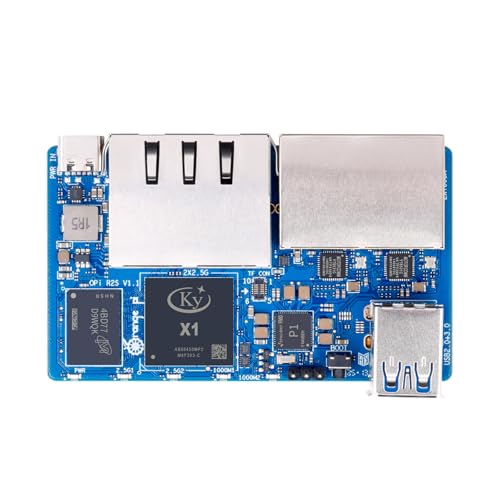
Orange Pi R2S RISC-V Single Board Computer
Best for: industrial edge networking and RISC-V development
- Processor
- Ky X1
- RAM Capacity
- 4GB
- RAM Type
- LPDDR4X
- Storage
- 8GB eMMC
- Ethernet
- Dual 2.5G, Dual Gigabit Ethernet
- Operating System Support
- OpenWrt, Ubuntu
View on Amazon: Orange Pi R2S RISC-V Single Board Computer Affiliate link
The Orange Pi R2S is a compact single board computer built on the RISC-V architecture. It features an 8-core Ky X1 CPU with integrated AI capabilities and 4GB of LPDDR4X RAM. The board includes 8GB of onboard eMMC storage and dual 2.5G Ethernet ports alongside dual Gigabit ports. It supports Ubuntu and OpenWrt, making it suitable for edge computing and industrial networking tasks.
Pros
- 8-core Ky X1 RISC-V AI CPU with 2TOPS computing power
- Dual 2.5G and dual Gigabit Ethernet ports
- 4GB LPDDR4X RAM with 8GB onboard eMMC
- Compact 79.2mm x 46mm x 1.6mm form factor
Cons
- Limited to 4GB RAM in this configuration
- Only 8GB of onboard storage
- Requires separate power supply via Type-C
Good fit if
- You need high-speed dual 2.5G networking
- You are building an edge computing gateway
- You require RISC-V architecture support
Skip if
- You need more than 4GB of RAM
- You require Windows operating system support
- You need extensive USB peripheral connectivity
Verdict: The Orange Pi R2S RISC-V SBC offers specialized RISC-V performance with dual 2.5G networking for industrial gateways. It fits developers needing edge AI compute and specific OS support.
Specifications side by side
| Spec | Orange Pi R2S RISC-V Single Board Computer |
|---|---|
| Processor | Ky X1 |
| RAM Capacity | 4GB |
| RAM Type | LPDDR4X |
| Storage | 8GB eMMC |
| Ethernet | Dual 2.5G, Dual Gigabit Ethernet |
| Operating System Support | OpenWrt, Ubuntu |
| Operating System | Ubuntu |
| Architecture | RISC-V |
| Model | 4GB |
Frequently asked questions
What RAM options are available for the Orange Pi R2S?
You can choose from 2GB, 4GB, or 8GB of memory. The product listing highlights a 4GB model as the featured version. This variety lets you select the capacity that matches your specific edge computing needs. Higher RAM supports more complex tasks and better multitasking for industrial applications.
Is the Orange Pi R2S compatible with standard Windows software?
No, it is not compatible with standard Windows software. The board uses RISC-V architecture, which differs from the x86 chips found in traditional PCs. You should plan to use supported operating systems like Ubuntu. Many desktop applications will not run on this specialized hardware.
What is the main use case for this single board computer?
This board is best for industrial edge networking and RISC-V development. It features dual 2.5G networking ports, making it ideal for industrial gateways. Developers needing edge AI compute power will find it suitable. It is designed for specialized tasks rather than general desktop computing.
Does the Orange Pi R2S support Ubuntu Linux?
Yes, the listing confirms support for Ubuntu. This operating system is compatible with the RISC-V architecture of the Ky X1 CPU. You can install Ubuntu to leverage the board’s capabilities for development or industrial edge tasks. It provides a stable environment for your specific projects.
How powerful is the AI processing on this board?
The Ky X1 CPU delivers 2 TOPS of AI computing performance. This 8-core processor is designed to handle edge AI tasks efficiently. You can use this power for specialized applications requiring local processing. It supports the board’s role in industrial and development environments.
What networking capabilities does the Orange Pi R2S offer?
The device offers dual 2.5G networking ports. This high-speed connectivity is essential for industrial gateways and edge computing. You can connect multiple high-bandwidth devices directly. The robust networking options make it suitable for demanding data transfer tasks in compact spaces.
Can I use this board as a replacement for a mini PC?
It is not a direct replacement for a traditional mini PC. The RISC-V architecture limits software compatibility with standard desktop applications. You should use it for specialized tasks like edge networking or development. It fits tight spaces but serves a different purpose than a general-purpose computer.